+1 478-339-5356
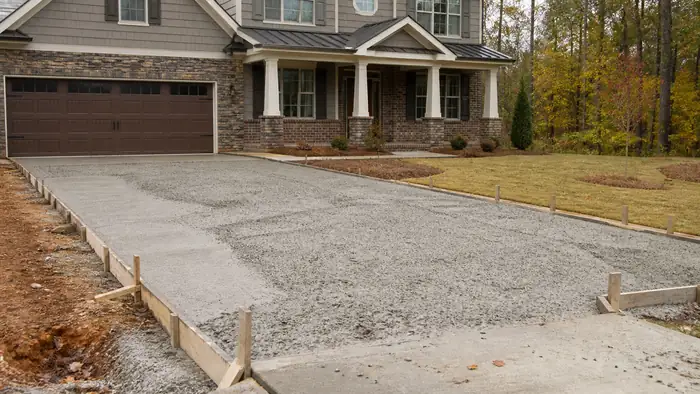
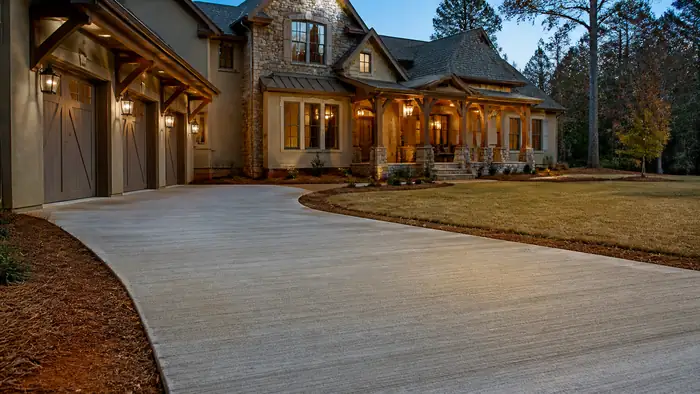
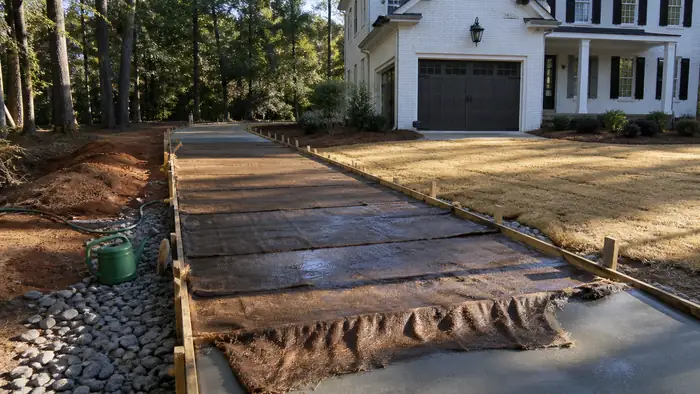
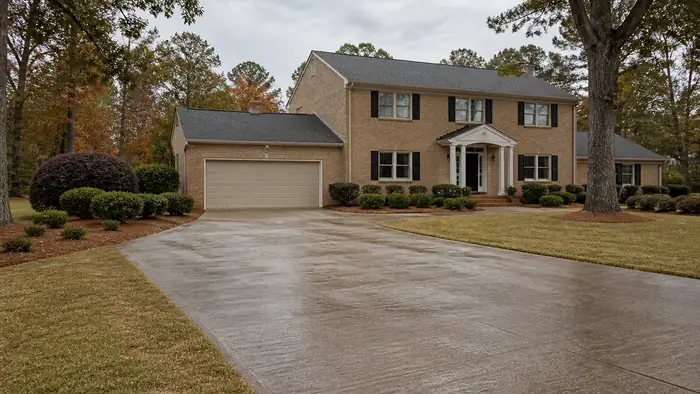
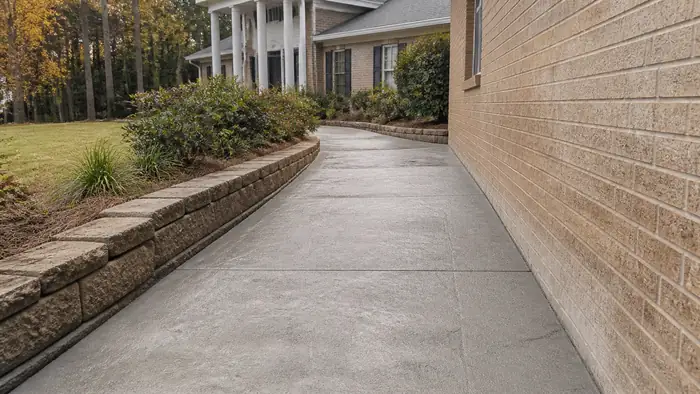
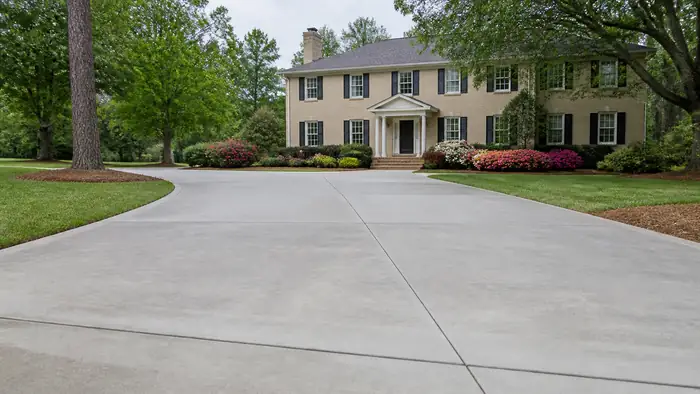
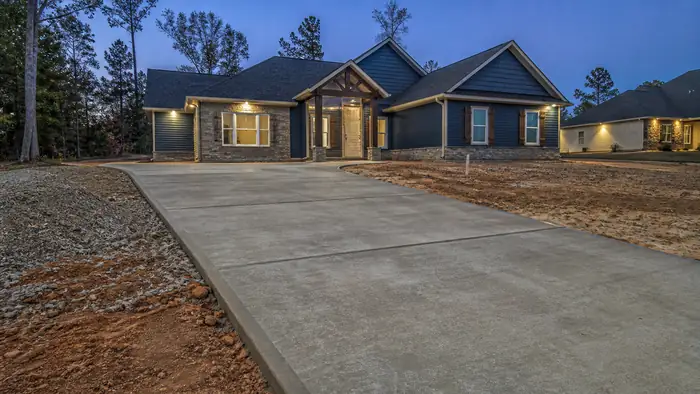
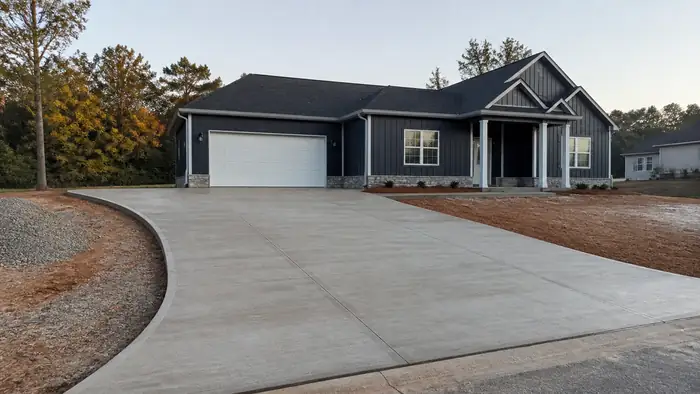
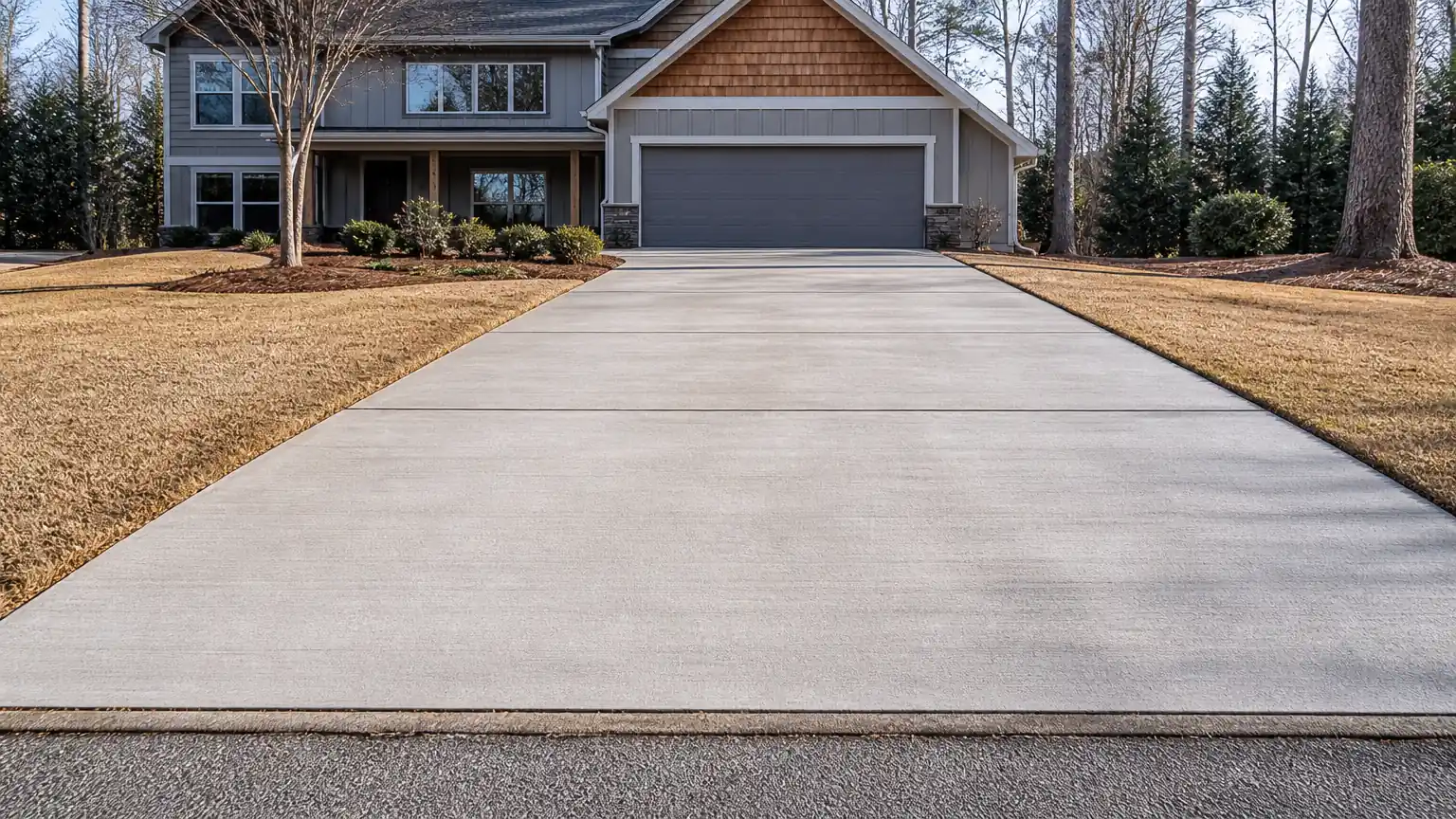
A finished concrete driveway sweeping from the street to the garage, clean-edged and evenly toned in the sun. at a grey split-level home in Warner Robins, GA.

Warner Robins Premier Concrete: Residential & Commercial concrete slab installations, concrete driveway installations, concrete flooring installations & concrete slab repairs

We pour and repair concrete for homes and businesses in Warner Robins: slabs, driveways, interior floors, and the cracked or sunken sections that need fixing. Residential work might be a patio behind the house or a driveway that has finally given out. Commercial work gets the same care, whether it is a shop floor or a slab for a new building. The finished surface is the last thing we do, and the only part anyone sees.

The median home here was built in 1989, so a good deal of the concrete we meet has been down a long while. Before any installation, we look at what sits under it. The land around here is hilly, and it changes from one block to the next, so every site is graded and tested on its own. We set forms, place reinforcement where the load calls for it, and handle the permit.

When a slab fails, the trouble usually starts underneath it. Water is the common cause: this area takes about 44 inches of rain a year, and a pour without proper grading or drainage will settle, crack, or hold puddles. Getting the base, the slope, and the joints right at the start is far less work than tearing out a failed slab later. If you have a driveway, floor, or slab in mind, call us for a free estimate.

Call +1 478-339-5356

Licensed, Bonded, and Insured ยท A combined 15 years of experience

Get Free Estimates

We warranty all of our work because we believe in what we do.

Our Warranty and Guarantee

What protects a slab over the long run is the ground under it and the steel inside it, and both are settled before any concrete arrives. We treat every residential and commercial installation as something that has to carry its load for decades on its own. That means building to the conditions on your lot, not to a standard drawing. A driveway on a slope gets different base work than a patio on flat ground. The structural parts you never see after the pour are where most of our hours go. They are what we would point to first.

The work runs in a fixed order. Houston County has 212 feet of rise and fall within a few miles, so we grade and test each site on its own before anything else happens. Soft spots get cut out. The base gets compacted in lifts. Reinforcement sits at the height where it does its job, held up on chairs instead of left lying in the dirt. We handle the permit. Forms get checked for pitch so water runs off the surface instead of sitting on it.

Concrete cracks. Anyone who says otherwise has not poured much of it. What we control is where it cracks and whether a crack ever matters. Control joints cut to the right depth and spacing give the slab a clean line to break along. The failures that do matter usually come from water, which finds every low spot, every gap along the house, every base that was never compacted. Plenty of the slabs we replace have had decades to show what was under them. We fix that cause along with the surface.

Getting this right costs time more than anything else. Proper base preparation adds days a rushed crew would skip, and nobody can hurry a cure. We would rather tell you a slab needs deeper excavation than pour over a problem we can already see. The concrete solutions we recommend are the ones we expect to hold up on your property, whether that is a plain broom finish or stamped decorative work on a patio. If you want to know exactly how we would build yours, call for a free estimate and ask us anything about it.

How We Handle a Concrete Job

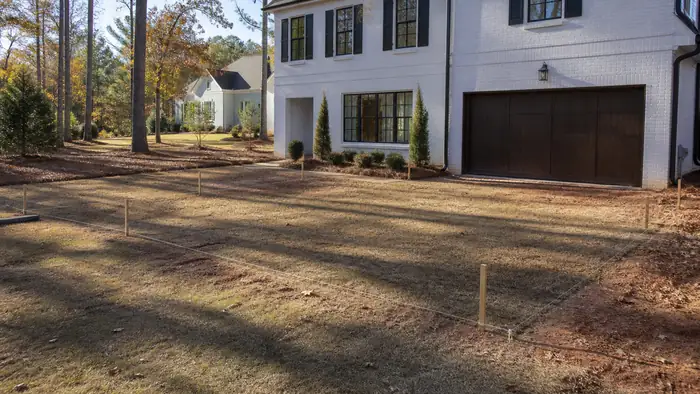
A contractor checks slope and drainage before work begins. at a painted-white-brick two-story home in Warner Robins, GA, under low winter sun.

Step 1: Site Assessment

We walk the property with a level, a tape and a steel probe before we write up anything. Every site gets graded and tested on its own. We check where water runs after a storm, how firm the ground is under the sod, and whether roots, old fill or buried lines sit in the way. If the project needs a permit, we handle it.
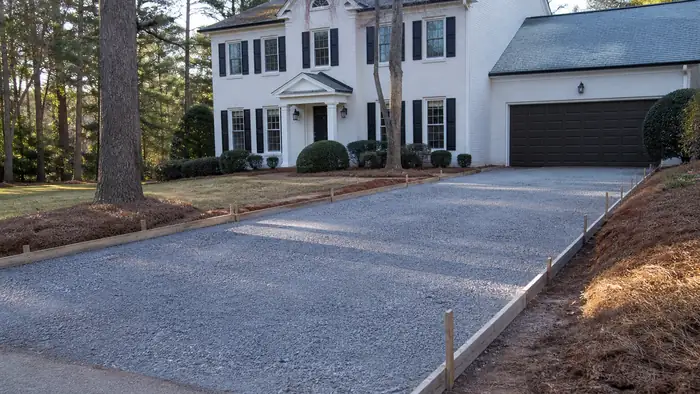
Crushed stone base is raked level inside driveway forms. at a painted-white-brick two-story home in Warner Robins, GA, under low winter sun.

Step 2: Site Preparation

Most cracked slabs fail from the ground up, not from the concrete. We strip the topsoil and anything organic, cut to grade, and pitch the finished surface so water runs away from the house instead of pooling against it. That slope earns its keep in every heavy storm. Then we lay a gravel base in lifts and run a plate compactor over each one. Soft spots get dug out and replaced with good material, never covered over.

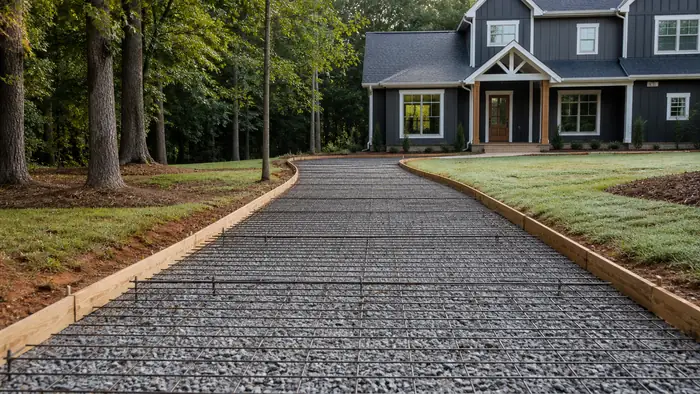
Wire mesh is unrolled across a driveway base before pouring. at a charcoal farmhouse-modern home in Warner Robins, GA, in early morning light.

Step 3: Forming & Reinforcement

Forms go in next: straight lumber, staked tight, set to string lines and checked for pitch before any steel goes down. For driveways and residential slabs that carry weight, we tie rebar in a grid and set it on chairs so it sits in the middle of the pour, where it actually does its work. Rebar lying flat on the gravel does nothing. Edges that take a truck tire get thickened. Where new concrete meets the house or an old walk, we place isolation joint material.

A ready-mix truck discharges concrete into a driveway form. at a brick-and-siding two-story home in Warner Robins, GA, under an overcast sky.

Step 4: Pouring

Pour day depends on the weather more than anything else. Heat speeds up the set, and concrete that stiffens too early can't be finished properly, so on warm days we start at first light and bring enough hands for the size of the slab. The truck backs in as close as the property allows. Concrete gets placed near where it belongs rather than dragged across the forms, and we work it hard along the boards so no voids are left at the edges.

A broom drags across a driveway creating a slip-resistant texture. at a stacked-stone and stucco home in Warner Robins, GA, at blue hour.

Step 5: Finishing

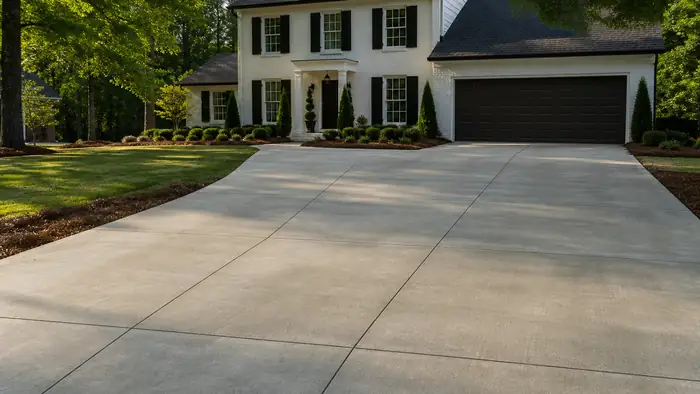
This is where a slab gets its look and much of its durability. We screed it flat, float it, and wait for the bleed water to leave the surface before touching it again, because troweling that water back in makes a weak top that flakes. Driveways get a broom finish for traction. Patios can be left smooth or stamped with a decorative pattern. Control joints are tooled or cut at regular spacing so the slab cracks where we choose, in a straight line.

Damp burlap covers a small slab section during curing. at a painted-white-brick two-story home in Warner Robins, GA, under low winter sun.

Step 6: Curing

Concrete doesn't dry; it cures, and that chemistry needs water. For the first several days we keep the surface damp or coated with a curing compound so it doesn't lose moisture too fast, which is how surface cracking and dusting start. Foot traffic can come fairly soon. Cars have to wait until the slab is strong enough to carry the load, and we'll tell you when that is. Rushing this step quietly undoes everything done in the steps before it.

A sprayer applies sealer across a driveway. at a tan-brick colonial in Warner Robins, GA, under bright midday cloud.

Step 7: Sealing

Once the slab has cured and dried out, we seal it. A penetrating or film-forming sealer helps the surface shed water, oil and stains, and on stamped or colored work it brings the color back up. We apply it in thin, even coats, since a heavy coat turns cloudy and slick underfoot. Sealer wears with sun and traffic, so it needs renewing now and then. Of all the concrete solutions we offer, it's one of the simplest and one of the most worthwhile.

Concrete Systems and Materials We Use

stamped concrete installation completed by a local contractor at a tan-brick colonial in Warner Robins, GA, under bright midday cloud.

Stamped Concrete Installation

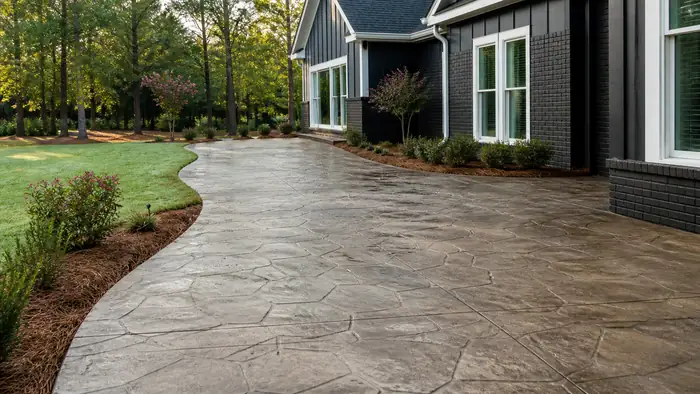
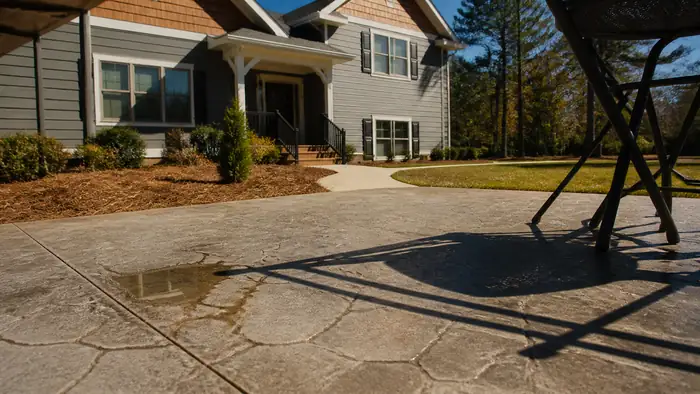
We pour stamped work four inches thick for patios and walks and five for driveways, over a compacted base with rebar or wire mesh reinforcement. Color goes into the mix or gets broadcast as a hardener, then comes the release agent and the mats. Timing decides everything. Stamp too early and the pattern slumps; too late and the texture comes out shallow and patchy. Once cured, every stamped surface gets a sealer chosen to stand up to the weather.

colored concrete installation completed by a local contractor at a tan-brick colonial in Warner Robins, GA, under bright midday cloud.

Colored Concrete Installation

Integral color is dosed at the plant by weight of cement, so the whole slab carries the same shade through its depth and a chip shows no gray. What goes wrong is usually on site: extra water added to the truck lightens the color, and plastic laid over curing concrete leaves dark blotches. We order every load from the same plant and cure with a compatible compound. It is one of the simpler concrete solutions for a property that wants something besides gray.

stained concrete installation completed by a local contractor at a charcoal farmhouse-modern home in Warner Robins, GA, in early morning light.

Stained Concrete Installation

Acid stain reacts with the lime in the concrete, so the color comes out mottled and no two slabs match. Water-based stain sits on top and gives a more even surface. Preparation decides the result either way. Old sealer, curing compound, paint or grease blocks the stain, so we test every existing slab with a few drops of water and grind or strip what needs it. Acid stain gets neutralized and rinsed before sealing. Stained surfaces suit patios, garage floors and interior slabs.

What Decides the Price

Most of the price sits in the ground before any concrete arrives. Size counts, but so does what the site asks for: how much grading it needs, where the water runs, how close the truck can get, and what has to be broken out first. Every site gets graded and tested on its own. Thickness, reinforcement and finish come after that. A plain broom finish costs less than stamped or decorative work, which takes more hands and more hours on the slab.

Two bids for the same driveway can look far apart and still be close, or look close and describe different jobs. Lay them side by side and check:

  • Slab thickness, written down, not assumed.
  • Reinforcement: rebar, wire mesh or fiber, and how it is held up off the ground during the pour.
  • Base preparation: how much gravel goes down and whether it gets compacted.
  • Tear-out and haul-away of the old concrete.
  • Control joints: where they go and how deep they are cut.
  • Whether the permit is included.
  • Sealing, especially on decorative surfaces.

A low bid usually gets low by leaving something out. Thinner concrete, mesh lying flat in the dirt, a base that was never compacted: none of it shows on the day of the pour. It shows later, as cracks that wander across driveways or a corner that drops. Drainage and base prep are the wrong places to save. We put every part of the job in writing so you can hold our estimate against anyone else's. Call us for a free estimate.

What We Do for Warner Robins

concrete slab installation completed by a local contractor at a painted-white-brick two-story home in Warner Robins, GA, under low winter sun.

Concrete Slab Installation Cost

What a slab costs depends on what it has to carry and what it sits on. A shed pad on firm, level ground is a smaller job than a garage slab on a lot that drops away at the back. We grade and test every site before we price the base, the forms and the reinforcement. You get a quote for the slab your property needs, not a number off a chart. Call for a free estimate.

concrete driveway installation completed by a local contractor at a stacked-stone and stucco home in Warner Robins, GA, at blue hour.

Concrete Driveway Installation

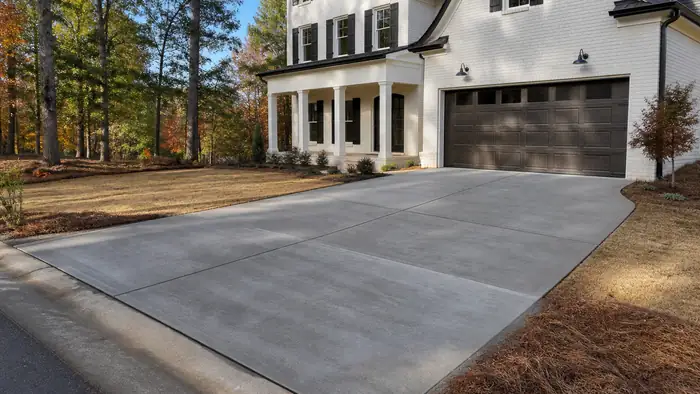
Driveways carry the heaviest loads most homes ever see, and they fail first at the edges and at the apron where the drive meets the street. We dig down to firm ground, compact a gravel base, and set rebar on chairs so the steel sits in the middle of the slab instead of lying on the dirt. Control joints go in at the right spacing, so the concrete cracks where we tell it to. The finish is your call: broom, exposed aggregate or stamped.

concrete flooring installation completed by a local contractor at a brick-and-siding two-story home in Warner Robins, GA, under an overcast sky.

Concrete Flooring Installation

Inside a garage, shop or retail space, a floor has to be flat, dense and dry. We lay a vapor barrier under interior slabs so ground moisture does not push up through coatings or flooring added later. A power trowel gives a hard, tight surface, and we can leave it ready for epoxy, polish or sealer. On commercial floors we plan the joint layout around racking and traffic lanes. That way the saw cuts do not end up under a shelf leg.

concrete slab repair completed by a local contractor at a buff-brick ranch home in Warner Robins, GA, after a rain shower.

Concrete Slab Repair

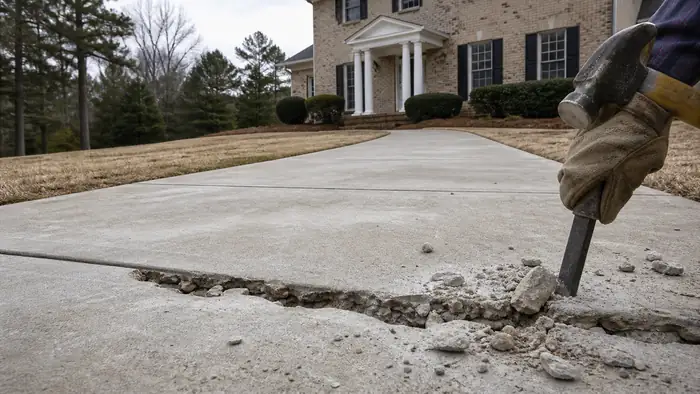
Not every cracked slab needs to come out. A hairline shrinkage crack is cosmetic. A crack with one side higher than the other means the ground underneath has moved, and we find out which you have before recommending anything. Small settled sections can often be lifted and the voids filled. Structural cracks get sealed with a flexible filler or bonded with epoxy, depending on whether they still move. When a slab is broken in several places, we cut out the bad section and pour new, doweled into the old.

concrete sidewalk installation completed by a local contractor at a red-brick ranch home in Warner Robins, GA, in late afternoon light.

Concrete Sidewalk Installation

Sidewalks are simple to pour and easy to get wrong. A walk needs a slight cross slope so rain runs off instead of sitting on it. We set forms to a string line, tool the joints so cracks stay in the grooves, and give the surface a broom finish for grip. Where a walk meets a driveway or a step, an expansion joint goes in so the two can move on their own.

concrete driveway crack repair completed by a local contractor at a tan-brick colonial in Warner Robins, GA, under bright midday cloud.

Concrete Driveway Crack Repair

A driveway crack is worth sealing while it is still narrow. Once water gets in, the gravel base underneath starts to wash out, the edges lose support, and the crack widens with every car. We clean the crack out, set backer rod in the deeper ones, and fill with a flexible sealant that moves with the slab. If one side has already dropped, sealing will not fix it. We say so plainly and show you what will.

concrete installation completed by a local contractor at a charcoal farmhouse-modern home in Warner Robins, GA, in early morning light.

Concrete Installation

Whatever the pour, the same things decide whether it lasts: a compacted base, reinforcement sized to the load, a mix with no extra water added at the truck, and proper curing. We do not skip any of them on small jobs. That covers equipment pads, steps, footings, curbs, and slabs for sheds and carports. A good share of our new work ties into concrete that has been down for decades.

concrete patio repair completed by a local contractor at a grey split-level home in Warner Robins, GA, in clear late-morning sun.

Concrete Patio Repair

Older patios tend to show the same problems: a low spot that holds water, a sunken edge by the lawn, or flaking where the top layer has worn thin. Flaking can often be ground back and resurfaced with a polymer-modified overlay, which is also a way to put a stamped or stained finish on a plain slab. A patio that has settled toward the house is a different matter. That one gets lifted or replaced, because water running at your foundation is the bigger problem.

concrete construction services completed by a local contractor at a painted-white-brick two-story home in Warner Robins, GA, under low winter sun.

Concrete Construction Services

For builders, property managers and business owners, we take on the concrete scope of residential and commercial construction: footings, foundation slabs, parking pads, dumpster pads, loading areas and walks. We handle the permit, work from your drawings, and schedule pours around the other trades on site. Site conditions come first. Every lot is graded and tested before forms go up, materials are matched to the use, and reinforcement is placed to the plan, not guessed at.

Areas We Cover

  • Warner Robins
  • Centerville
  • Byron
  • Perry
  • Fort Valley
  • Unadilla
  • Roberta
  • Hawkinsville

Common Questions About Concrete

What areas beyond Warner Robins does Warner Robins Premier Concrete serve?

We work the towns around Warner Robins across Houston County and just past its edges, and every one of them gets the same crews, the same materials and the same way of pricing a job. A driveway in Perry is measured, formed and poured exactly like one in Warner Robins. The full list sits in the areas section of this page. If your town is on it, call for a free estimate.

How much does it cost to install a 4-footconcrete retaining wall in Warner Robins?

A retaining wall gets priced after we've stood on the site, because no two walls at that height carry the same load. What matters is what's behind it: how much soil it holds back, how water reaches it, and how much footing and reinforcement it needs to stay plumb. Drainage behind the wall is never optional. Call for a free estimate.

What specific areas and neighborhoods do you serve outside of Warner Robins?

Every neighborhood inside the towns we list is covered. We don't split the area into zones, and we don't keep a favored list of subdivisions. Older streets with tired driveways sit right beside newer builds, and both get the same site check before any concrete goes down. Rural property and farm lots count too. Give us the address when you call for a free estimate.

What type of foundation is best for Warner Robins homes?

It depends on the lot more than the house. A flat, well-drained lot often suits a slab foundation, while a sloped one may call for a stem wall or deeper footings. We grade and test every site on its own before recommending anything, so the answer comes from your ground, not a rule of thumb.

Can you provide custom wire mesh sizes for specific projects?

Yes. Wire mesh comes in standard gauges and spacings, and we choose the one that fits the load, then cut and lap it to the exact footprint of the pour. A patio slab and a commercial floor carrying racking or forklifts don't need the same reinforcement. Sometimes the right answer is rebar instead of mesh, or both together. We set it up on chairs so it sits inside the slab where it does its work, not lying on the dirt.

Will Warner Robins Premier Concrete take care of our city permits and inspections?

Yes. We handle the permit for the work we do, along with the inspections the job calls for. You don't need to stand in line or guess which forms apply to a driveway widening or a new garage slab. If a project needs an inspection before the pour, we build the schedule around it rather than pouring first and hoping. You'll know what's been filed before any installation starts on your property.

Are you fully licensed, insured, and bonded for commercial work in Southern Warner Robins?

Commercial work deserves paperwork, not a promise on a web page. Before anyone pours a slab on your property in southern Warner Robins or anywhere else, ask for current proof of licensing, insurance and bonding, and check it against the issuing records yourself. Ask us for the same documents you'd ask any contractor for, and read them before you sign. A retail pad or a clinic floor is too much concrete to take on faith.

Should a damaged Warner Robins patio be repaired or replaced?

Surface damage usually points to repair, and structural damage points to replacement. Hairline cracks, light scaling and a worn top can often be cleaned, filled and resurfaced, and a plain patio can even come back stamped or decorative. Sections that have sunk, heaved or broken into pieces that rock underfoot mean the base or reinforcement has failed. A new surface coat won't hold over that. Call for a free estimate and show us the cracks.

Tap to call +1 478-339-5356