+1 478-339-5356
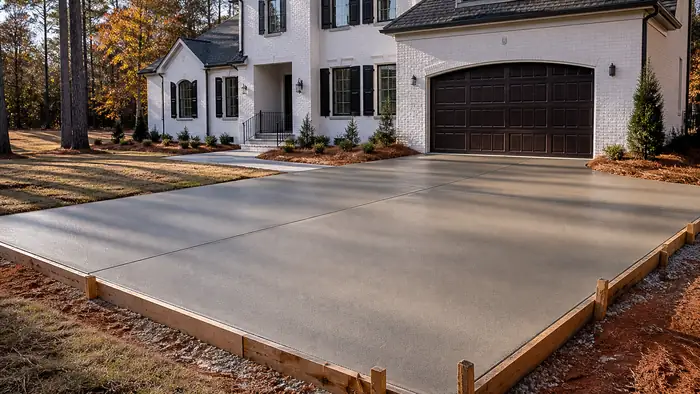
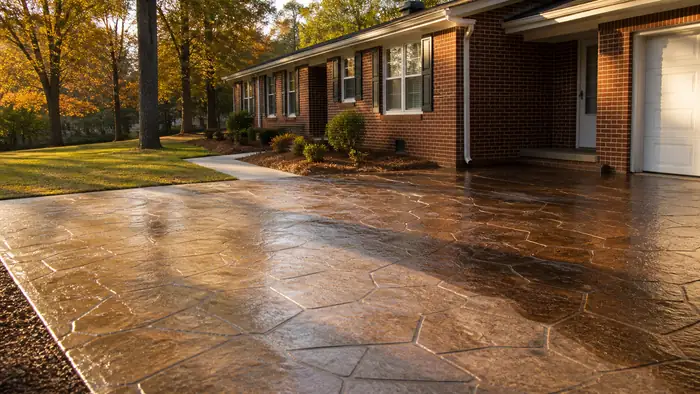
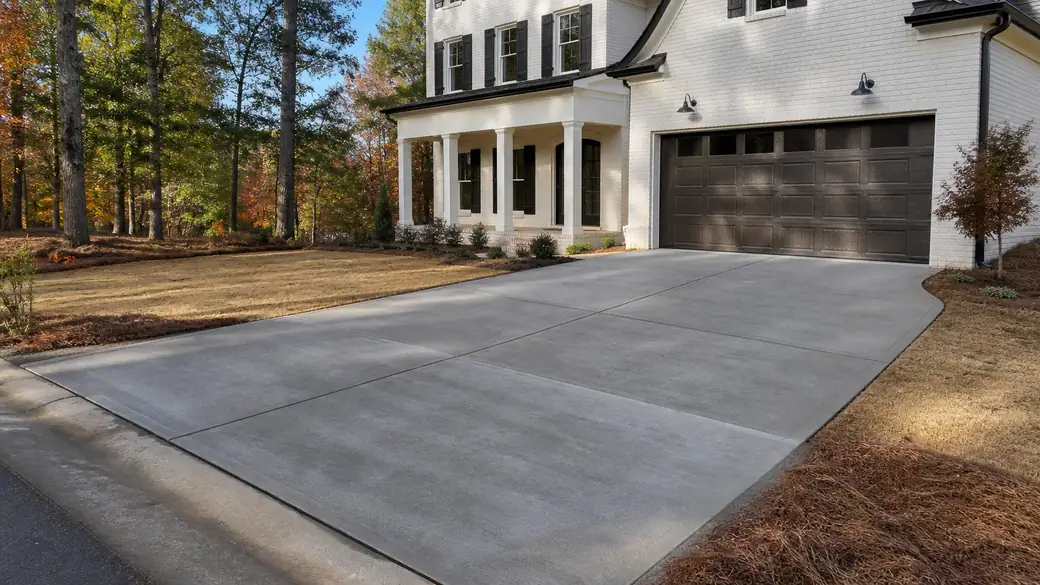
concrete slab installation completed by a local contractor at a painted-white-brick two-story home in Warner Robins, GA, under low winter sun.

Concrete Slab Installation in Perry, Georgia

A slab is the flat, load-bearing surface everything else sits on: a garage floor, a shed pad, a patio, the base under a workshop or a home addition. We pour residential and light commercial slabs across Perry, and the work that matters most happens before any concrete arrives. We cut the grade to a consistent depth, compact the base, set forms to the right height and pitch, and place reinforcement where the load will actually land. Get those steps right and a slab has what it needs to stay flat and shed water. Skip them and no finish on top will save it.

Water is what we plan around. With about 44 inches of rain a year here, every slab we pour gets a slight fall away from the building, and the base beneath it is built to drain rather than hold water. We watch the forecast before a pour and keep covers on site, because rain on fresh concrete can ruin a finish. Once it sets, each slab gets days of careful curing before it takes real weight. Thickness, reinforcement and finish depend on what it has to carry, so call for a free estimate and we can talk through yours.

Call +1 478-339-5356

Licensed, Bonded, and Insured ยท A combined 15 years of experience

Get Free Estimates

We warranty all of our work because we believe in what we do.

Concrete Services in Perry

Concrete Slab Installation Cost

What moves the number on a slab is mostly what sits under it and inside it. A pad on level, firm ground with good truck access costs less than one that needs fill hauled in, a pump line run over a fence, or a thickened edge under a load-bearing wall. Rebar costs more than wire mesh. A broom finish costs less than stamped or stained. We price each slab after walking the site, so call for a free estimate.
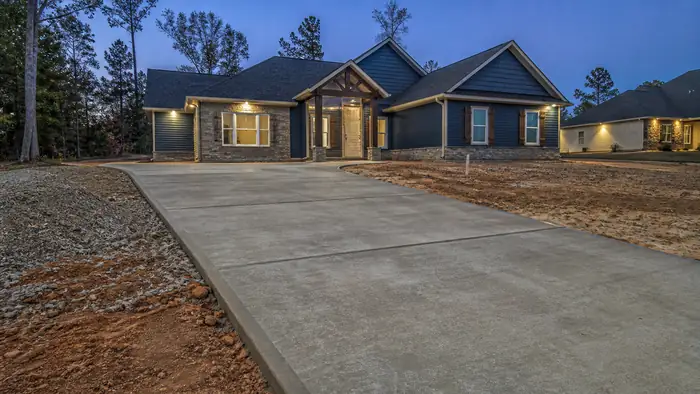
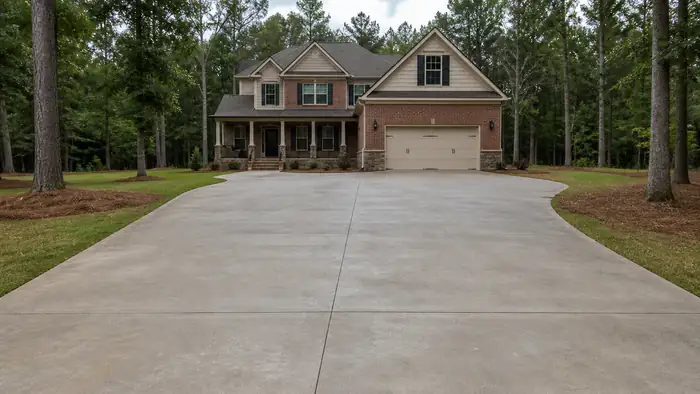
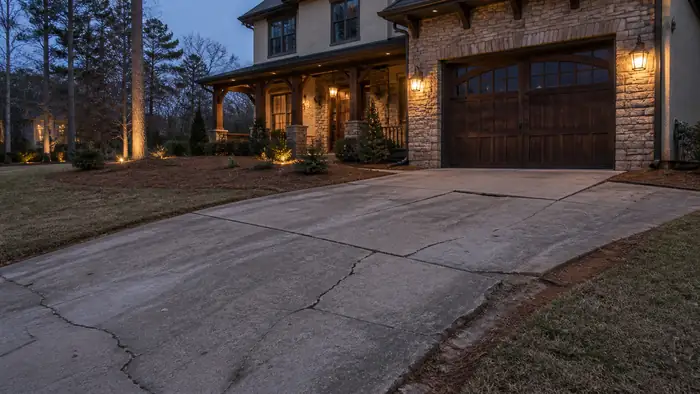
concrete driveway installation completed by a local contractor at a stacked-stone and stucco home in Warner Robins, GA, at blue hour.

Concrete Driveway Installation

A driveway fails from the bottom up. We strip out sod and soft fill, lay a compacted gravel base, and set rebar on chairs so it sits in the middle of the slab instead of on the dirt. The apron, where tires turn and trucks back in, gets poured thicker. Control joints go in at the spacing the width calls for, so cracks follow our lines. Finishes run from plain broom to stamped and exposed aggregate.

concrete flooring installation completed by a local contractor at a brick-and-siding two-story home in Warner Robins, GA, under an overcast sky.

Concrete Flooring Installation

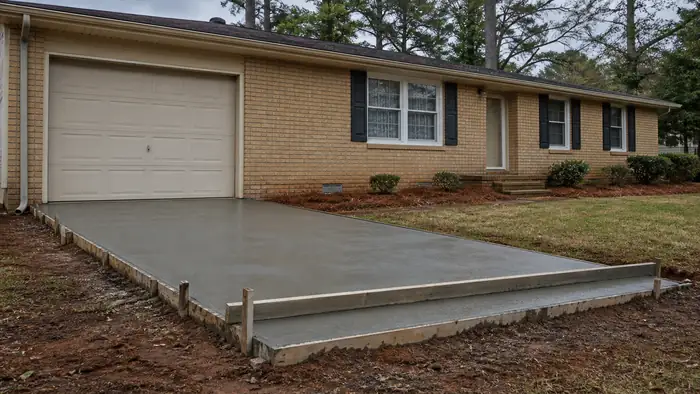
Garage floors, shop floors and slab-on-grade rooms each need a different surface. Interior slabs get a vapor barrier underneath so ground moisture does not wick up into flooring laid on top later. We power trowel to a hard, tight finish where the floor will be sealed, polished or coated. Where tires and wet boots need grip, we leave a light broom texture. Joints are saw-cut within a day of the pour, before shrinkage cracks pick their own route.

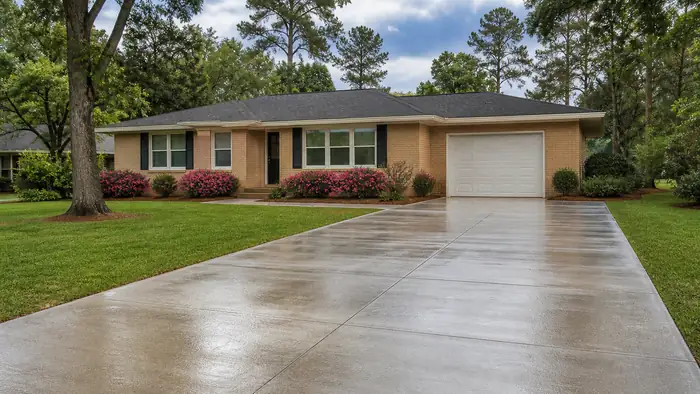
concrete slab repair completed by a local contractor at a buff-brick ranch home in Warner Robins, GA, after a rain shower.

Concrete Slab Repair

Before we patch anything, we find out why it broke. A slab that has dropped at one corner usually has washed-out or poorly compacted base under it, and with about 44" of rain a year, water finds those gaps. Settled sections can often be lifted with polyurethane foam rather than replaced. Hairline shrinkage cracks get routed and sealed. Heaved or badly spalled sections are sawn out, re-based and poured back with dowels tying into the old concrete.

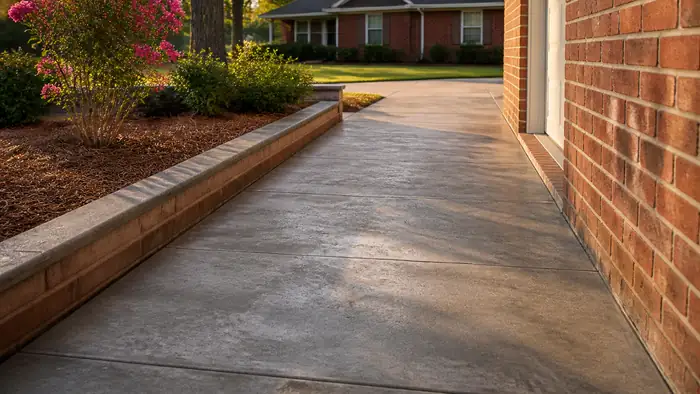
concrete sidewalk installation completed by a local contractor at a red-brick ranch home in Warner Robins, GA, in late afternoon light.

Concrete Sidewalk Installation

Sidewalks look simple, which is why so many get poured badly. We set forms to a slight cross-slope so water sheds off instead of pooling, compact the base, and tool joints at even intervals so the walk cracks in straight lines if it cracks at all. Where a walk meets a driveway or porch step, expansion joint material lets the two slabs move on their own. If a tree root lifted the old walk, we deal with the root before we pour.

Why Choose Warner Robins Premier Concrete

A slab is only as good as what sits under it, so most of our attention goes where nobody will ever look again. We compact the base in lifts, check grade before the forms go in, and set reinforcement on chairs so it ends up in the middle of the concrete instead of lying in the dirt. Control joints get laid out before the pour, not guessed at afterward. None of it is fancy. It is the part of residential and commercial construction that decides whether a surface stays flat and whole or starts cracking within a few seasons.

Water is the other thing we plan around. This part of Georgia sees about 44 inches of rain a year, and a slab that sheds it the wrong way sends it toward the house or leaves it standing on the patio. We build a slight fall into every exterior surface and talk through where the runoff will go before anything is poured. On pour day we watch the weather and the mix, not the clock. If conditions are wrong, we wait. That is the whole case for us: careful prep, straight answers, and a slab you stop thinking about once it cures. Call for a free estimate.

How a Concrete Job Runs in Perry

A worker examines an old driveway before replacement. at a stacked-stone and stucco home in Warner Robins, GA, at blue hour.

Step 1: Site Assessment

Before we quote, we walk the ground. We look at where water runs now and where it will run once a slab covers it, what the slab has to carry (a patio table, a parked truck, a shop floor), and whether roots, old footings or buried lines sit in the way. Soft spots tend to hide near downspouts and old flower beds, so we probe there. Then we measure, mark grade, talk through finishes, and build the estimate around what we found.

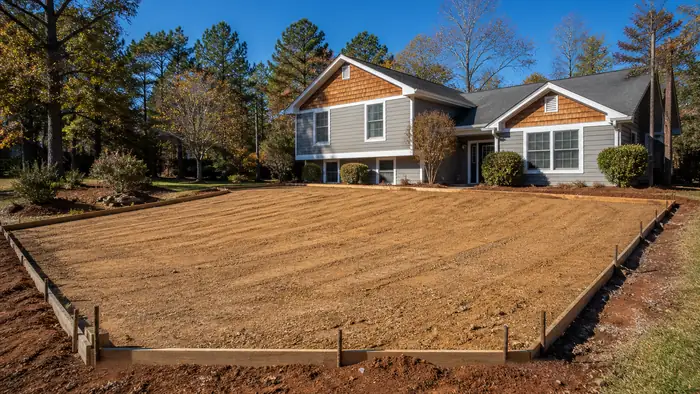
A plate compactor tamps down soil in a small excavated area. at a grey split-level home in Warner Robins, GA, in clear late-morning sun.

Step 2: Site Preparation

Most slab failures start here, not at the pour. We strip sod and topsoil down to firm subgrade, dig out anything soft or organic, and compact what remains. Crushed stone base goes in next, compacted in lifts rather than dumped in one thick layer. Grade gets set so the finished surface sheds water away from the house. Skip the compaction and you get a driveway that cracks and settles along one edge a few years later.

Wooden forms outline a patio slab before the pour. at a red-brick ranch home in Warner Robins, GA, in late afternoon light.

Step 3: Forming & Reinforcement

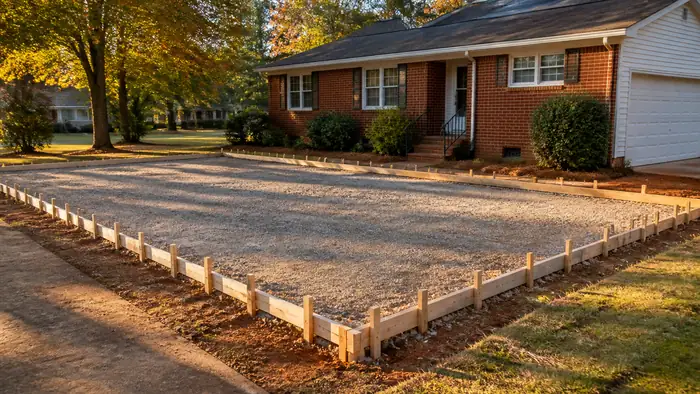
Forms are straight lumber or steel, staked tight and checked with a string line and level so the slab comes out at the thickness and pitch we planned. Where new concrete meets the house or an old walk, we set expansion joint material. Reinforcement follows the load: welded wire mesh or fiber for residential patios, a rebar grid for driveways and structural work. The steel sits up on chairs so it ends up inside the concrete. Rebar lying in the dirt does nothing.

A screed board levels fresh concrete on a small patio. at a buff-brick ranch home in Warner Robins, GA, after a rain shower.

Step 4: Pouring

Pour day comes down to timing. This area gets about 44 inches of rain a year, so we watch the forecast and move the truck rather than pour into a storm, since rain on fresh concrete washes out the surface. Concrete goes in as close to its final spot as the chute or pump allows, gets worked into corners and around the steel, then screeded flat off the forms. Extra water at the truck makes a mix easier to place and weaker once it sets. We don't add it.

A hand trowel smooths a small patio surface to a hard finish. at a painted-white-brick two-story home in Warner Robins, GA, under low winter sun.

Step 5: Finishing

The finish gets decided at the assessment and goes on while the concrete is still workable. We bull float the surface, wait for the bleed water to leave, then edge it and cut or tool control joints so any cracking follows lines we chose. A broom finish gives grip on driveways and walks. Stamped and decorative work adds color hardener, release and texture mats, and it leaves no room for delay. Troweling while water still sits on top is what makes a surface flake and dust later.

A hand sprayer applies curing compound to a finished patio. at a grey split-level home in Warner Robins, GA, in clear late-morning sun.

Step 6: Curing

Concrete keeps gaining strength for weeks after it looks done, and it needs moisture to do that. Right after finishing, we apply a curing compound or cover the slab with wet burlap or plastic so the top doesn't dry out ahead of the core. A slab that dries too fast shows it later as fine surface cracking and weak, dusty edges. Foot traffic comes back first. Vehicles wait well after that, and we tell you when your slab is ready for each.

A roller applies sealer to a stamped patio surface. at a red-brick ranch home in Warner Robins, GA, in late afternoon light.

Step 7: Sealing

Sealer goes on once the slab has cured enough to take it. On a plain broom-finished driveway, a penetrating sealer helps keep out water and oil stains without changing the look. Stamped and colored surfaces usually get a film-forming sealer that deepens the color and protects the pattern. Too much sealer, or sealer rolled over a damp slab, turns cloudy and slick. Resealing is routine maintenance, not a repair, and how often depends on traffic, sun and how the surface gets cleaned.

Choosing the Right Concrete System in Perry

A concrete system is the whole build under the finish: the base, the slab, the reinforcement and the surface on top. For a patio that carries chairs and a grill, a plain slab over a well-compacted base often does the job. A driveway takes the weight of vehicles turning on it, so we add steel. Decorative work, such as stamped concrete, is a surface choice layered onto that structure, not a substitute for it.

The right choice starts with how the slab will be used. What sits on it, how water moves across the yard, and where it meets the house all shape the mix, the reinforcement and the joint layout. Perry gets about 44 inches of rain a year, so we pitch every surface to carry water away from foundations and toward somewhere it can go. A shop floor and a backyard patio can look alike on paper. They are built differently.

Mismatches cause most of the trouble: a thin, unreinforced slab asked to hold a truck, or a stamped patio poured without control joints and left to crack wherever it pleases. Repairing that means breaking out concrete and pouring again, which is the expensive way to learn. Matching the system to the load avoids it. Call for a free estimate and tell us what the slab needs to carry. That answer decides most of the rest.

How Much Do Concrete Services Cost in the San Fernando Valley?

Most of what moves the price of a slab in Perry is sitting in plain sight on your property. Walk the spot before you call and you will already know most of what we are going to ask. These are the things we look at first.

What changes the priceWhich wayWhy
Old concrete or asphalt still in placecosts moreIt has to be broken up and hauled off before any forms go in, and that is labor and truck trips on its own.
No clear path for the truck to reach the formscosts moreIf the chute can't get there, we pump the concrete or move it by wheelbarrow, which adds equipment and crew time.
Slab that will carry vehicles or heavy equipmentcosts moreIt calls for a thicker section and heavier reinforcement than a walkway or patio.
Ground that slopes across the pour areacosts moreWe bring in fill and base material and build taller forms to get a level surface.
Water that pools or runs toward the housecosts moreWith about 44 inches of rain a year, the grade has to be corrected so water leaves the slab instead of sitting on it.
Tree roots or buried lines under the pourcosts moreRoots come out, and lines get located and worked around before we dig.
Stamped or decorative finishcosts moreColor, pattern and timing take extra hands on the day of the pour.
Firm, level base already in good shapecosts lessLess digging, less base material and less compaction before we set forms.

Bids only compare fairly when they describe the same slab. Check that each one states the thickness, the reinforcement (rebar size and spacing, or wire mesh), and how deep the gravel base goes. See whether tear-out and haul-off are included or left out. A lower number that skips the base or the steel is a different slab, not a better deal.

Get a Free Estimate

Get Free Estimates

We warranty all of our work because we believe in what we do.

Tap to call +1 478-339-5356