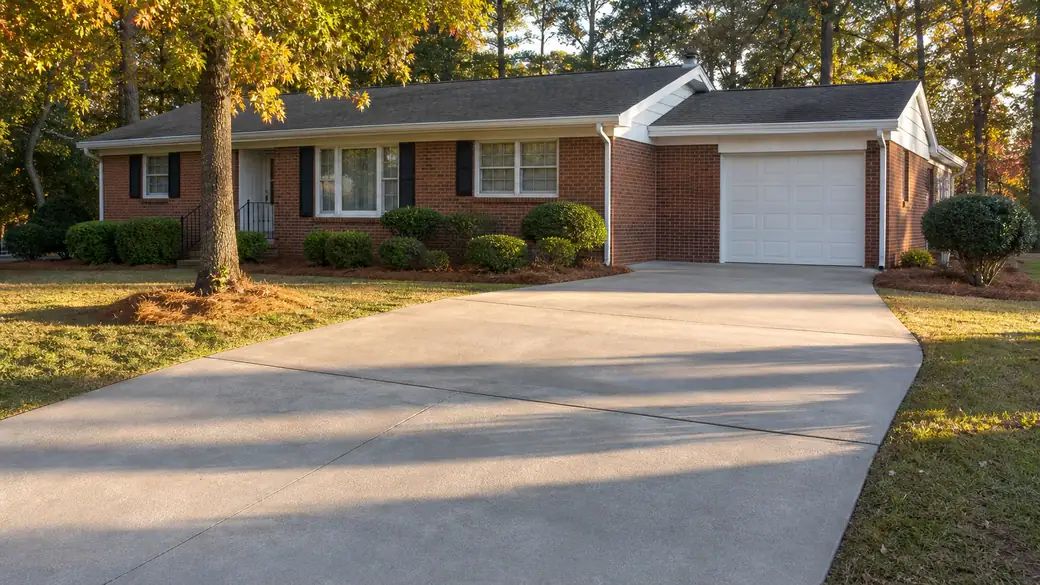
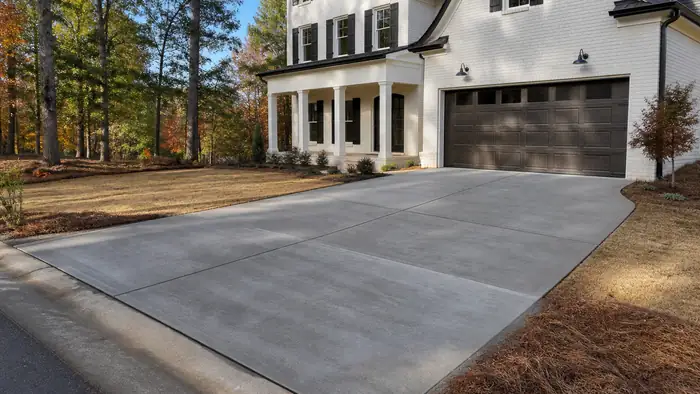
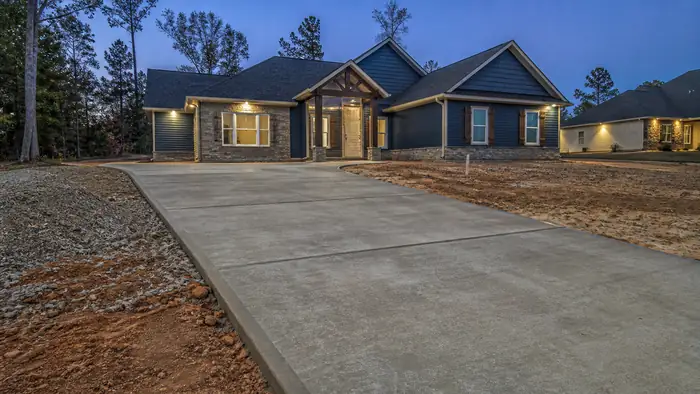
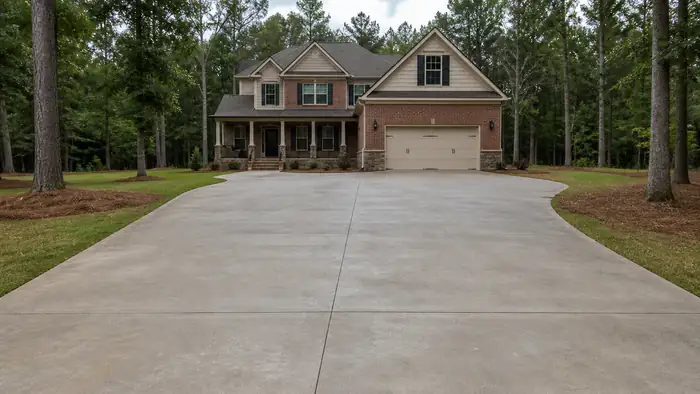
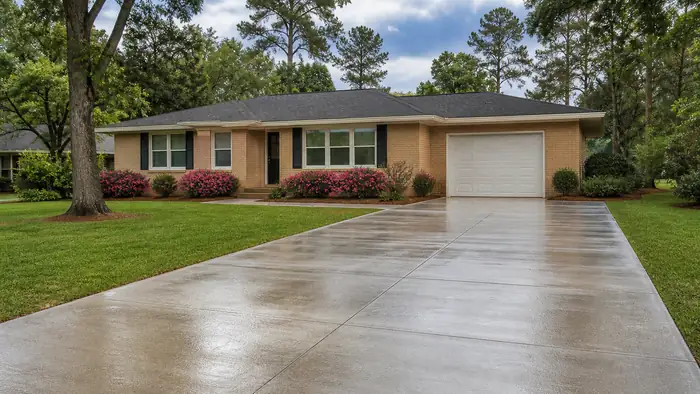
An expansion joint is a planned gap in concrete that gives a slab room to move. Concrete grows and shrinks as it warms and cools, and when it has nowhere to go it pushes against the house, the garage floor, the steps or the next slab over, then cracks wherever it likes. We set joints where a driveway meets the garage, where a patio meets the foundation, and along long runs of walk, each one filled with a compressible strip and sealed on top.
Work starts on the site itself. Houston County is hilly, and the ground changes from one block to the next, so we grade and check every property before we lay anything out. On new pours, the filler goes in against the fixed edges before the concrete truck arrives. On existing driveways and patios, we cut out the old material, clean the gap down to sound concrete, set a backer rod at the right depth and tool in fresh sealant flush with the surface.
Trouble almost always starts with a joint that has been left alone for years. With the median home here built in 1989, a lot of original filler has dried out, shrunk or rotted away, leaving an open channel. About 44 inches of rain a year finds that channel, runs under the slab and carries the base with it. Then the slab settles. It tips toward the house or lifts at one edge, and a trip hazard shows up where there used to be a clean line.
Getting it right costs time and care more than anything else. Filler has to run the full depth of the slab, or the concrete bridges over it and the joint does nothing at all. Sealant needs a dry, clean gap and a proper cure before a car rolls across it. The finished line should sit flush, with no lip for a mower wheel or a heel to catch. Done this way, a joint becomes something you stop noticing. Call for a free estimate.