+1 478-339-5356
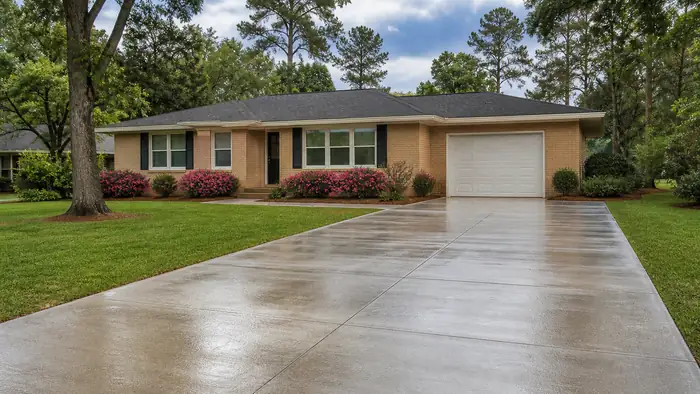
cement installation completed by a local contractor at a buff-brick ranch home in Warner Robins, GA, after a rain shower.

Cement Installation in Warner Robins, GA

Cement installation, done properly, is mostly ground work. The concrete you see on a driveway, patio or walkway is the last few inches of a job that starts well below the surface: breaking out the old slab, grading the base, compacting it, and setting reinforcement where the load calls for it. Around Warner Robins, the median home went up in 1989, so plenty of the slabs here are as old as the house they sit beside. We pour new residential and commercial surfaces, and we replace the ones that have done their time.

Every project starts with the site itself. Houston County is hilly, with about 212 feet of local relief within a few miles, but it changes from one block to the next, so we grade and test each property on its own before anything else happens. Then we set forms, lay the base, place steel or mesh, and handle the permit if the job needs one. The pour comes after all of that. Finishing, control joints and curing follow, in that order, at the pace the concrete sets and not ours.

Most concrete that fails early fails because of water or a thin base. This area sees about 44 inches of rain a year, and water that runs under a slab instead of off it will find every soft spot in the ground beneath. Slope that falls toward the house, joints cut too shallow or spaced too far apart, and a base that was never compacted all show up the same way in the end: cracks, settling, and a slab that tips. None of it is visible the week after the pour.

Getting it right costs time more than anything else. It means digging past where the old slab stopped, bringing in base material when the existing ground will not hold, carrying reinforcement through the whole pour, and working with the weather instead of racing it. Decorative and stamped concrete asks for the same groundwork plus a finish crew that has the pattern worked out before the truck backs in. Shortcuts save a day on the front end and give it back as cracks. For a free estimate on your driveway, patio or slab, give us a call.
Call +1 478-339-5356

Licensed, Bonded, and Insured ยท A combined 15 years of experience

Get Free Estimates

We warranty all of our work because we believe in what we do.

What Is Included in Cement Installation

concrete slab installation completed by a local contractor at a painted-white-brick two-story home in Warner Robins, GA, under low winter sun.

Concrete Slab Installation Cost

What a slab quote covers is the whole job, not just the pour. We excavate, bring in and compact a gravel base, set forms, lay a vapor barrier where the slab will sit under a roof, and place rebar or wire mesh. Then we pour, finish, cut control joints and cure. Houston County ground can change from one block to the next, so every site is graded and tested on its own before we price the work.

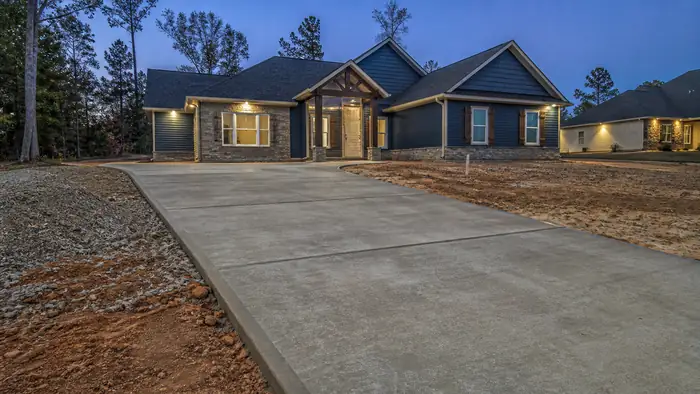
concrete driveway installation completed by a local contractor at a stacked-stone and stucco home in Warner Robins, GA, at blue hour.

Concrete Driveway Installation

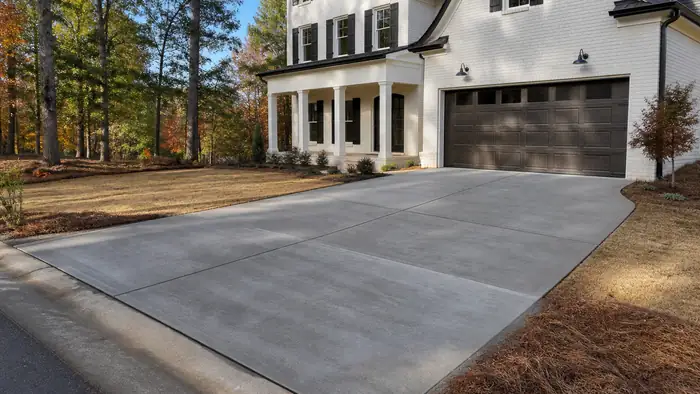
A driveway carries more weight than any other surface on the property, so we build it for that. The old surface comes out, the subgrade is compacted, and a gravel base goes down and gets compacted again. Rebar sits on chairs in the middle of the slab, not on the dirt. We thicken the edges, cut control joints before the concrete can crack on its own, and slope the whole surface to shed water. With about 44 inches of rain a year, that slope matters.

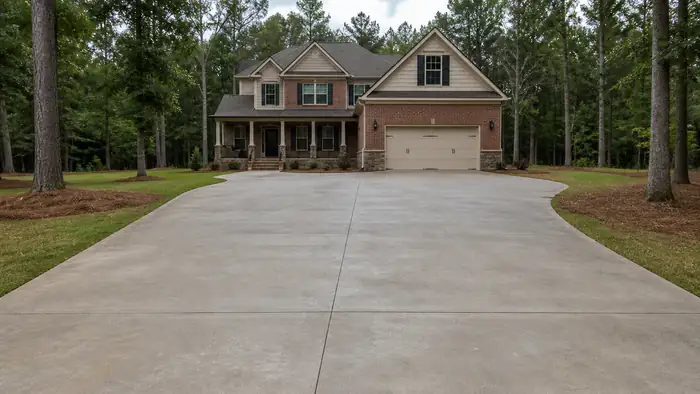
concrete flooring installation completed by a local contractor at a brick-and-siding two-story home in Warner Robins, GA, under an overcast sky.

Concrete Flooring Installation

Interior floors, garages and shop spaces get a different finish from anything outside. We lay a vapor barrier over the compacted base so ground moisture stays out of the slab, then power-trowel the surface smooth and dense. Garage floors get a slight pitch toward the door. If a floor will be stained, polished or sealed, we plan for it before the pour, because the final look depends on how the concrete was placed and cured. Commercial floors follow the same process, with reinforcement matched to the load.

concrete slab repair completed by a local contractor at a buff-brick ranch home in Warner Robins, GA, after a rain shower.

Concrete Slab Repair

Cracks, sunken sections and flaking surfaces usually start with the base, not the concrete. Water gets under a slab, washes out the fill, and the concrete drops or splits along its weakest line. The median home around Warner Robins was built in 1989, and a slab poured with a house of that age has had plenty of time for this to happen. We cut out the failed section, rebuild and compact the base, dowel the new concrete into the old, and match the finish as closely as the materials allow.

Why Choose Warner Robins Premier Concrete

Every slab we pour starts with the ground under it. Houston County is hilly, with about 212 feet of local relief within a few miles, and it changes from one block to the next. So we grade and test each site on its own before a single form goes down. A driveway in Warner Robins and a patio out toward Perry get the same process: we look at how the lot drains, where water wants to run, and what the old surface was sitting on. The area sees about 44 inches of rain a year. Water is what we plan around first, because water is what undoes concrete.

Work on site runs in a fixed order, and we don't skip steps to gain a day. We set forms, place the reinforcement the job calls for, and check grade again before the truck arrives. Then we pour, finish the surface, and cut control joints while the concrete can still take them. Curing gets the time it needs before anyone drives or builds on it. We handle the permit. Residential or commercial, stamped or plain, the sequence doesn't change, because the structural part of a slab is the part nobody sees once it's done. That is also the part we're most careful with.

Plenty of homes here date from around 1989, the median build year, so a lot of driveways and patios are decades into their service life. When one cracks, heaves or settles, the cause is usually underneath: soft fill, poor compaction, or water with nowhere to go. Pouring new concrete over those conditions buys a few good years, and then the same cracks come back. Doing it properly means taking out what has failed and rebuilding the base, which is slower than pouring over the top. We'd rather say that plainly at the start. The first question on any replacement is why the old one gave out. Call for a free estimate.

Top Decorative Concrete Styles for Warner Robins Homes

Decorative concrete is a standard slab with the finish worked in while it is still plastic, or added once it has cured. Stamped concrete is the style most people ask about: we press textured mats into the surface so it reads as slate, cobblestone or wood plank. Exposed aggregate washes back the top layer to show the stone underneath. Color comes from pigment mixed through the whole batch, or from a stain applied later. A plain broom finish framed by a stamped border sits between the two. It suits driveways well.

Every decorative job begins the way any slab does. We grade the site, compact the base, set forms and place the reinforcement before a truck arrives. The ground around here is hilly, with 212 feet of local relief within a few miles, and it changes from one block to the next, so we test each property on its own. Stamping runs on a clock. Once the concrete is placed, the crew has a narrow window to texture it before it sets too hard to take a pattern. That is why we pour patios in sections and bring enough hands to keep pace.

Most trouble with decorative work comes from water, not from the pattern. This area sees about 44 inches of rain a year, and a stamped patio without enough slope holds it in the low spots, where it stains and wears through the sealer first. Sealer laid on too heavy can also leave a textured surface slick when wet. We pitch every slab away from the house, keep the sealer coat thin, and choose deeper textures for steps and walks. Cracks can still happen in any concrete. Control joints cut into the pattern decide where they run.

Getting it right costs time more than anything else. Color samples should be poured and cured before you choose, because wet concrete looks nothing like the finished surface. Sealer needs to cure fully before anyone drives on it or sets furniture down, and it needs recoating over the years to hold its color. The median home in the area was built in 1989, so an older walk or driveway may need to come out first. New stamped work poured against a tired slab shows the difference plainly. Call for a free estimate.

What Decides the Price of Cement Installation

Two driveways of the same size can come in far apart on price, and the reasons are usually sitting right there on the property. Most of them you can check yourself before anyone measures a thing. Here is what moves the number on a concrete job, and which way.

What changes the priceWhich wayWhy
An old slab or asphalt that has to come outcosts moreBreaking it up, loading it and hauling it off is labor and truck time before any new concrete goes down. On a house built around 1989, the original slab may still be there.
Tree roots, stumps or buried lines in the pathcosts moreRoots get cut back and stumps ground out. Irrigation, cable and pipe runs have to be located, then worked around or moved.
How a mixer truck reaches the formscosts less with open accessA truck that can back up to the forms pours straight off the chute. A tight gate or a backyard pour means a pump or wheelbarrows.
Slope across the sitecosts more on a gradeHouston County is hilly and it changes block to block, so every site is graded and tested on its own. More fall means more dirt moved and taller forms.
Where water goes after a stormcosts more if it poolsWith about 44 inches of rain a year, a slab has to shed water away from the house. Low spots need fill or a drain first.
Thickness the slab needscosts more for heavy loadsA walkway carries feet. A driveway that sees a boat trailer or work truck needs more depth, and more depth is more concrete.
Reinforcementcosts more with more steelWire mesh, rebar on a set spacing, or fiber in the mix. Heavier loads call for more of it.

Putting bids side by side, check that each one lists the same thickness, the same reinforcement and the same base prep underneath. See whether tear-out and haul-off are included or left for you. A low number usually means one of those lines is missing.

Get a Free Estimate

Get Free Estimates

We warranty all of our work because we believe in what we do.

Tap to call +1 478-339-5356