+1 478-339-5356
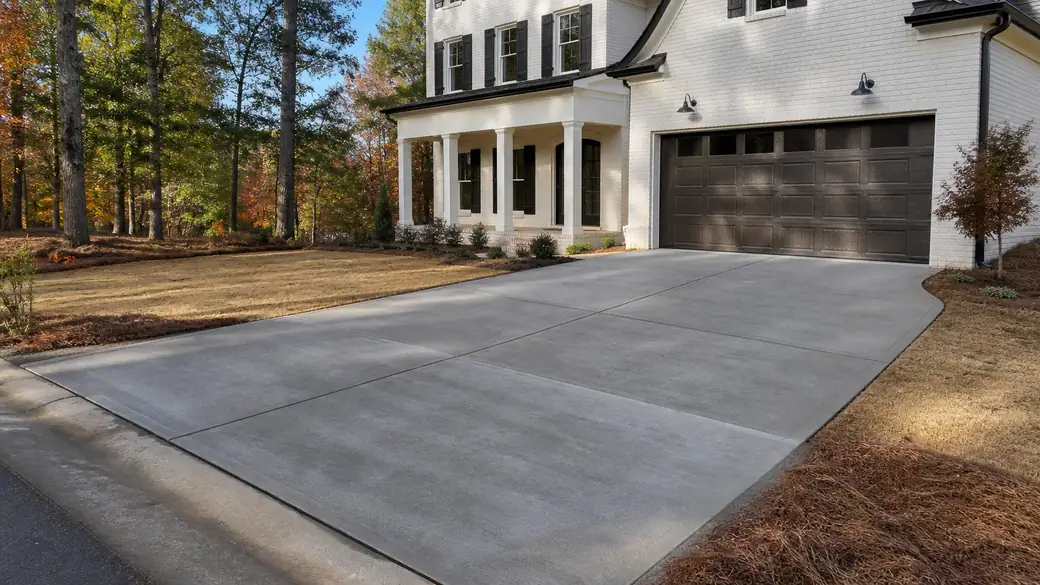
concrete slab installation completed by a local contractor at a painted-white-brick two-story home in Warner Robins, GA, under low winter sun.

Concrete Slab Installation in Fort Valley, Georgia

A concrete slab is the flat, load-bearing surface everything else sits on: a garage floor, a workshop pad, a patio, the base of a home addition. We pour residential slabs for properties across Fort Valley, and the job is the same whether the slab sits under a garden shed or runs the length of a building. It has to be level where it should be level, pitched where water needs to leave, and thick enough for whatever will stand on it. Get those right and the slab stops being something you think about. That is the whole aim.

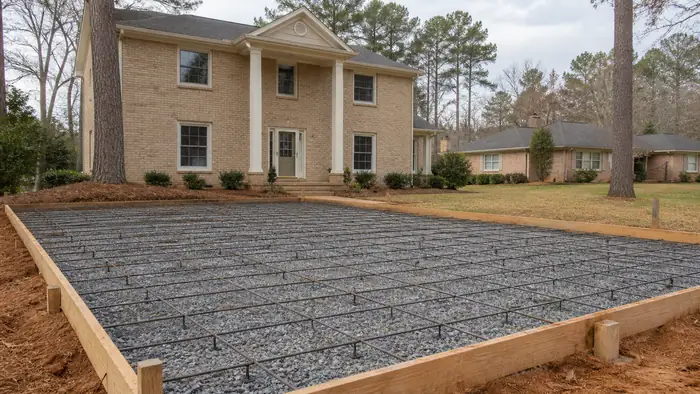
The work starts below the surface. We strip the topsoil and organic material, then build up and compact a stone base so the slab bears evenly across its whole footprint. Forms go in next, set to grade with the fall already worked out. Reinforcement follows, wire mesh or rebar depending on the load, held up on chairs so it ends up inside the concrete rather than lying underneath it. On pour day we place, screed and float the slab, cut control joints before the concrete can crack on its own schedule, and then leave it alone to cure. Rushing that last step undoes everything before it.

Most slab failures trace back to the ground or the water, not the concrete. A base that was never properly compacted settles, and the slab cracks over the soft spot. Water that pools against a foundation or sits under a patio keeps working at it, and with about 44 inches of rain a year here, drainage is not a detail to leave to chance. Getting it right takes more time up front: more digging, more base, more care with the slope. We would rather spend that time than leave you with a sunken corner. Call for a free estimate on your slab.

Call +1 478-339-5356

Licensed, Bonded, and Insured · A combined 15 years of experience

Get Free Estimates

We warranty all of our work because we believe in what we do.

Concrete Services in Fort Valley

Concrete Slab Installation Cost

The price of a slab comes down to site prep, thickness and reinforcement. A shed pad on firm, level ground is a short job. A garage or shop floor needs more base, a thicker section, rebar in place of wire mesh, and more finishing time. Access counts too: if the truck can back up to the forms, we pour straight from the chute, and if it can't, we pump or wheel it in. We price each project after walking the site, and the estimate is free.
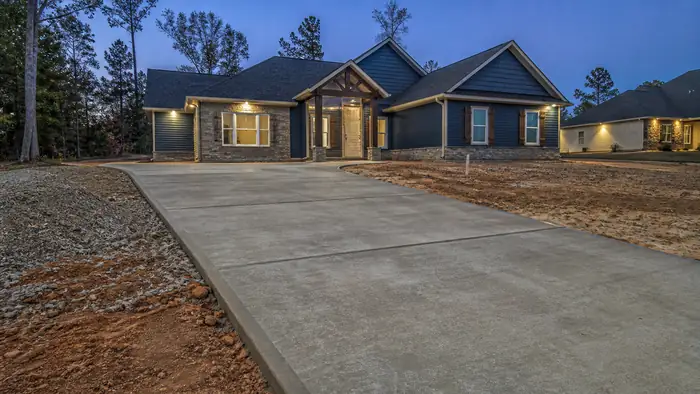
concrete driveway installation completed by a local contractor at a stacked-stone and stucco home in Warner Robins, GA, at blue hour.

Concrete Driveway Installation

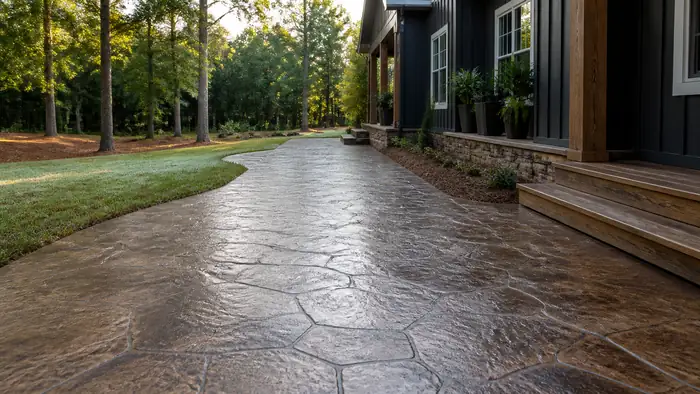
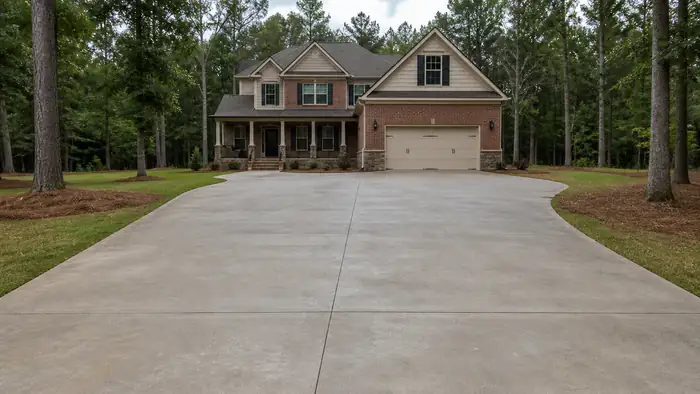
Most driveway failures start underneath. We strip out topsoil and roots, lay and compact a crushed stone base, and set the forms so the surface sheds water toward the street instead of the garage. With about 44 inches of rain a year, that pitch matters. Reinforcement sits on chairs so it ends up in the middle of the slab, not on the dirt. Control joints go in where we want the cracks to fall. Broom finish is standard, with stamped and decorative options.

concrete flooring installation completed by a local contractor at a brick-and-siding two-story home in Warner Robins, GA, under an overcast sky.

Concrete Flooring Installation

Interior floors live or die on moisture and flatness. A vapor barrier goes down under the slab so ground moisture doesn't come up through the finished flooring later. We screed and power-trowel for a tight, level surface and check it for flat while the concrete can still be worked. Garages and shops get a hard-troweled floor that takes a sealer or epoxy well. In living space, polished or stained concrete can be the finished floor itself, with nothing laid over it.

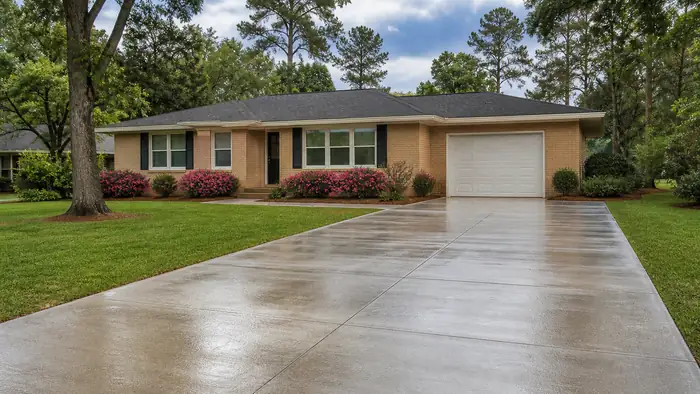
concrete slab repair completed by a local contractor at a buff-brick ranch home in Warner Robins, GA, after a rain shower.

Concrete Slab Repair

Start with why it cracked. A hairline shrinkage crack is cosmetic, and we can rout and seal it. A slab that has dropped or tilted has lost support underneath, usually from washed-out base or poor compaction, and a surface patch won't hold. For those we either fill the void and bring the slab back up, or saw out the failed section and repour it, doweled into the sound concrete. Flaking, spalled surfaces can often be resurfaced if the concrete below is solid.

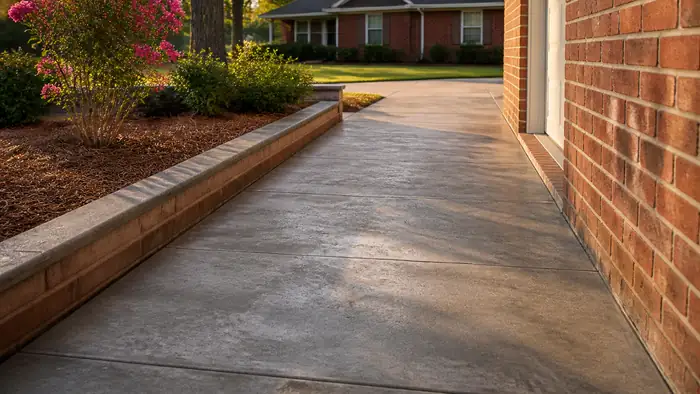
concrete sidewalk installation completed by a local contractor at a red-brick ranch home in Warner Robins, GA, in late afternoon light.

Concrete Sidewalk Installation

A walk carries less weight than a driveway but takes more foot traffic, so we pay attention to grade, joints and grip. Forms are set so water runs off to the side instead of pooling. Tooled joints go in at even spacing, edges get rounded so they don't chip, and a light broom finish keeps the surface from turning slick when wet. Where the walk meets the house, driveway or steps, expansion material lets each piece move on its own.

Why Choose Warner Robins Premier Concrete

A slab is only as good as what sits under it, so most of our attention goes where nobody will see it once the pour is done. We dig out soft material, bring in base stone, and compact it in lifts until it stops moving under the plate. Reinforcement goes in at the right height, held up on chairs instead of lying in the dirt where it does nothing. Forms get checked for grade and square before a truck is called. None of this is decorative, and none of it shows in a photo, but it decides whether a residential slab or a commercial floor stays flat.

Water is the thing we plan around most. This area gets about 44 inches of rain a year, and every inch of it has to go somewhere. A slab poured dead level, or tipped toward the house, holds puddles against the foundation and washes out its own base from the edges in. We set a slight fall away from the building on every exterior surface. Control joints go in at spacing matched to the slab thickness, so when the concrete cracks, as all concrete does, it cracks in a straight line where we put it. With average highs around 77°F, a fresh surface also dries too fast unless someone keeps it damp while it cures.

Honest scope matters as much as the pour itself. If an old slab can be saved with a repair, we say so. If the base under a cracked driveway has failed, patching the top only hides it for a season, and we say that too. We size thickness and reinforcement to what the slab actually carries, whether that is a pickup, a workshop floor, or a stamped patio behind the house, and we keep decorative work to finishes that hold up outdoors. Call for a free estimate, and we can walk the property together and talk through what it needs.

How a Concrete Job Runs in Fort Valley

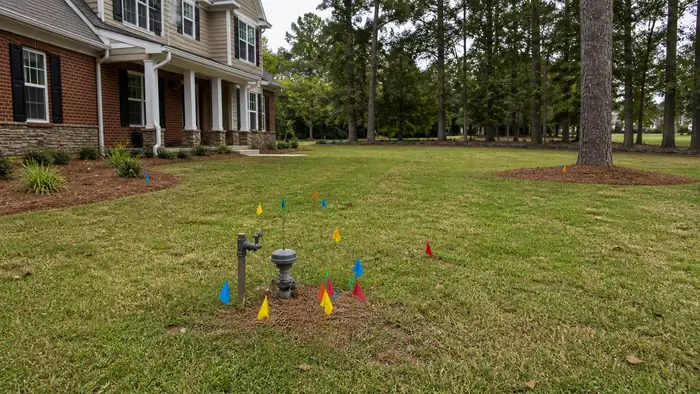
Utility flags mark buried lines before digging starts. at a brick-and-siding two-story home in Warner Robins, GA, under an overcast sky.

Step 1: Site Assessment

We start on the ground where the slab will sit. We walk it, probe for soft spots, watch where water runs after a storm, and check how the finished surface needs to meet the house, garage or existing drive. That tells us the thickness, the reinforcement and the base the job calls for. With about 44 inches of rain a year here, drainage gets as much attention as layout. We put the scope in writing before anything gets dug.

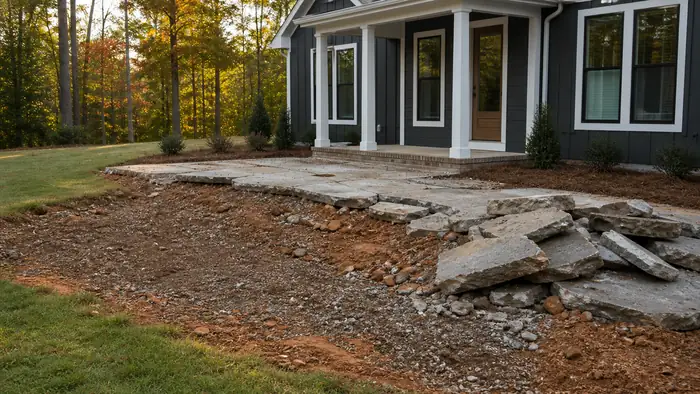
An old patio slab is broken up and hauled away. at a charcoal farmhouse-modern home in Warner Robins, GA, in early morning light.

Step 2: Site Preparation

Most slab failures begin under the concrete, not in it. We strip sod and topsoil, cut out soft or organic material, and bring the grade to height with a slight fall away from the building. Then we lay a gravel base in lifts and run a plate compactor over each one until it stops moving. Skip that and the slab settles unevenly, cracks along the low side, and holds puddles after every rain.

A worker ties rebar into a grid before a residential pour. at a tan-brick colonial in Warner Robins, GA, under bright midday cloud.

Step 3: Forming & Reinforcement

Forms set the shape, so we string them tight, stake them solid and shoot the tops level or to a planned slope. Lumber handles straight runs; flexible forms handle curves on patios and walkways. Inside, rebar sits on chairs, or wire mesh gets lifted into the middle of the slab, where it actually does its job. Steel lying in the gravel adds nothing. Driveways and anything carrying vehicles get heavier reinforcement and a thicker section than a patio.

A bull float smooths a residential walkway surface after screeding. at a red-brick ranch home in Warner Robins, GA, in late afternoon light.

Step 4: Pouring

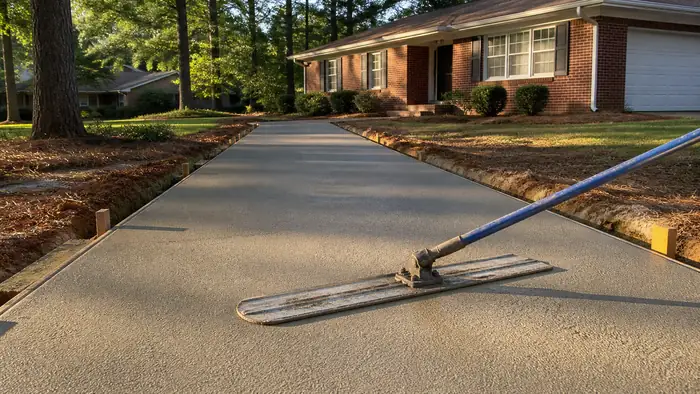
Weather decides the pour date. We watch the forecast and move a pour rather than place concrete ahead of heavy rain. The mix comes from a ready-mix plant, ordered to the strength the slab needs, and we place it continuously so no section sets up before the next one meets it. The crew moves it by chute, wheelbarrow or pump, then screeds it off the forms. Extra water at the truck makes concrete easier to spread and weaker once it cures. We don't add it.

Stamping mats are pressed into a patio surface to imprint a pattern. at a brick-and-siding two-story home in Warner Robins, GA, under an overcast sky.

Step 5: Finishing

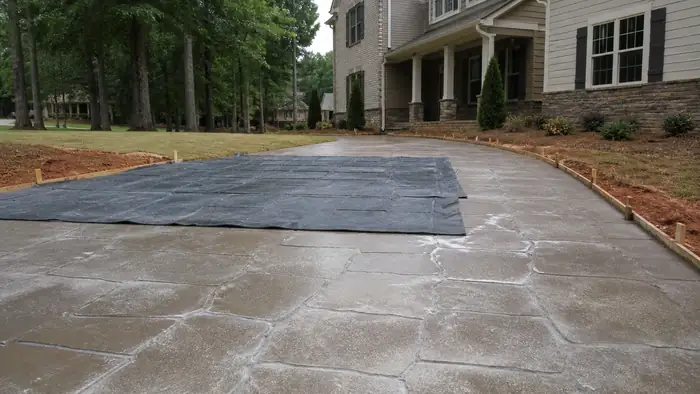
Timing matters more here than anywhere else. After screeding we bull float the surface, then wait for the bleed water to leave before touching it again. Working it wet traps water and leads to scaling and dusting later. Driveways get a broom finish for traction. Patios can be stamped, colored, smooth troweled or left as exposed aggregate. We cut control joints at planned spacing so the slab cracks where we choose, in a straight line, instead of wherever it wants.

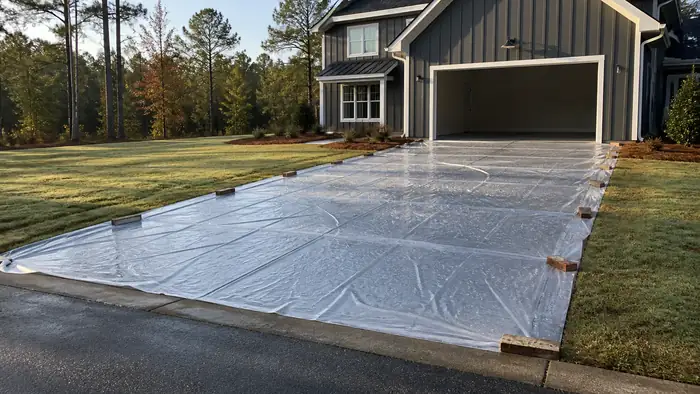
Plastic sheeting covers a curing driveway slab. at a charcoal farmhouse-modern home in Warner Robins, GA, in early morning light.

Step 6: Curing

Concrete keeps gaining strength for weeks after it looks done, and it needs moisture to do it. With average daily highs around 77°F, the top can dry faster than the slab beneath it, which brings shrinkage cracks and a weak, chalky surface. We spray a curing compound or keep the slab covered and damp. Foot traffic comes first, cars later. Driving on a new driveway too early is the most common way a good pour gets marked up.

A finished stamped surface shows a glossy sealed sheen. at a charcoal farmhouse-modern home in Warner Robins, GA, in early morning light.

Step 7: Sealing

A good sealer decides how the surface looks a few years on. Once the slab has cured, we clean it and apply a penetrating or film-forming sealer matched to the finish. Stamped and colored concrete needs it most, since the sealer holds the color and keeps the pattern from going flat and chalky. It also slows oil stains and keeps water out of the surface. Resealing comes around periodically, and we can tell you what your finish needs.

How Much Do Concrete Services Cost in the San Fernando Valley?

Every slab gets priced from the site, not from a chart, so the honest answer starts with what we find when we walk your property in Fort Valley. Two slabs of the same size can land far apart. What sits under the grass matters, and so does how close a truck can back in and where water goes after a storm. Most of it you can check yourself before you call.

What changes the priceWhich wayWhy
Old concrete, stumps or large roots where the slab will sitcosts moreIt all has to be broken out, hauled off, and the hole backfilled and compacted before we set forms.
A clear, firm path for the truck to reach the formscosts lessThe chute pours straight in. Without that path we pump or wheel the concrete, which means more crew and more equipment.
Soft or filled ground, like an old garden bed or a backfilled trenchcosts moreWe dig it out and bring in compacted base so the slab has something solid under it.
A slab that will carry a truck, trailer or heavy equipmentcosts moreThat calls for a thicker pour, heavier reinforcement, and sometimes thickened edges.
Ground that slopes toward the slab or the housecosts moreWith about 44 inches of rain a year, water needs somewhere to go. Grading and drainage come first.
Pipes, cleanouts or buried lines inside the footprintcosts moreWe locate them and work around them, and some need a sleeve before the pour.
A plain broom finish instead of stamped or decorative workcosts lessFewer steps and fewer hours on the surface while it sets.

Laying two bids side by side, check that both quote the same thickness, the same reinforcement and the same base under the slab. See whether removal and haul-off are written in or left out. A lower number that skips one of those is not the same job.

Get a Free Estimate

Get Free Estimates

We warranty all of our work because we believe in what we do.

Tap to call +1 478-339-5356