+1 478-339-5356
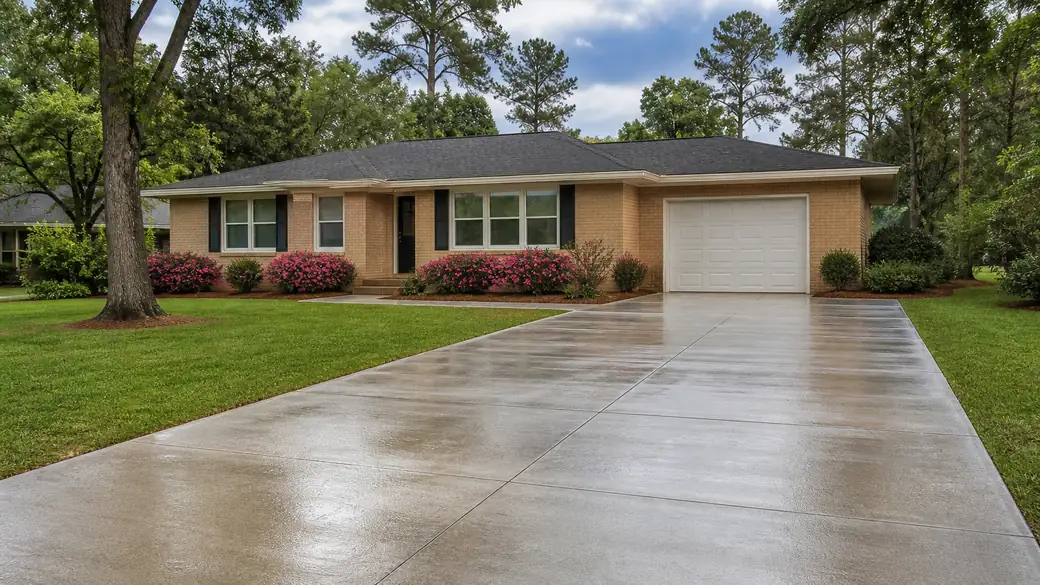
concrete slab repair completed by a local contractor at a buff-brick ranch home in Warner Robins, GA, after a rain shower.

Concrete Slab Repair in Warner Robins, GA

Concrete slab repair covers the cracked, sunken and heaved sections of a slab that still has good years left in it. In Warner Robins the median home was built in 1989, so many of the driveways, patios and garage floors we look at have been carrying cars, foot traffic and weather for a long time. Most of them do not need to come out. A crack that has opened, a panel that has dropped at the joint, or a surface that has started to scale can often be repaired in place. We work out what the slab is doing, and why, before we tell you whether it can be saved.

About 44 inches of rain falls here in a typical year, and the ground is hilly, with 212 feet of local relief within a few miles, though it changes from block to block. Water running toward or under a slab is one of the most common reasons a section settles, so we grade and test every site on its own before the concrete work starts. Then we cut out the failed section, rebuild and compact the base, set new reinforcement and pin the repair into the sound slab around it. Stamped and decorative surfaces get matched to the existing pattern as closely as it allows. We handle the permit. Call for a free estimate.

Call +1 478-339-5356

Licensed, Bonded, and Insured · A combined 15 years of experience

Get Free Estimates

We warranty all of our work because we believe in what we do.

What Is Included in Concrete Slab Repair

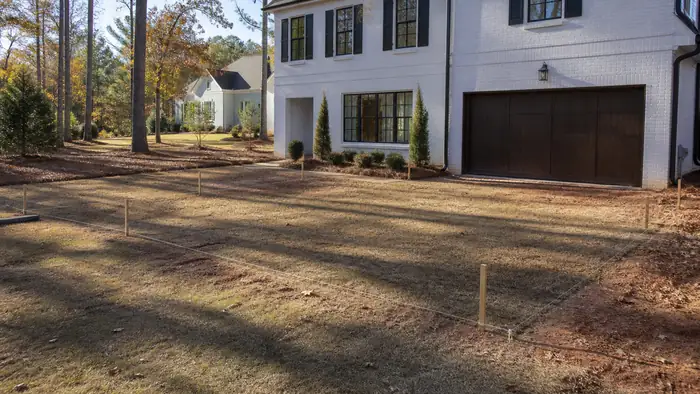
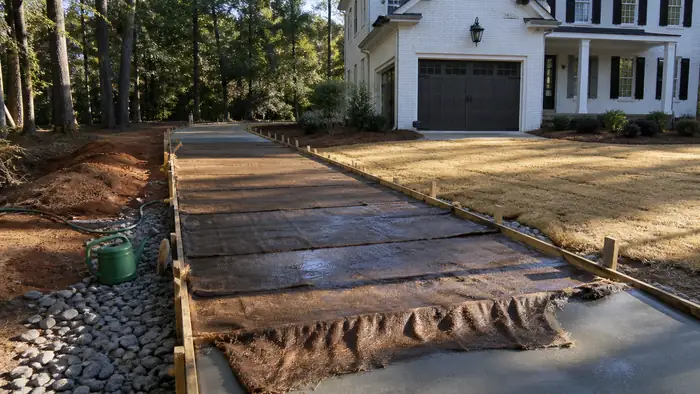
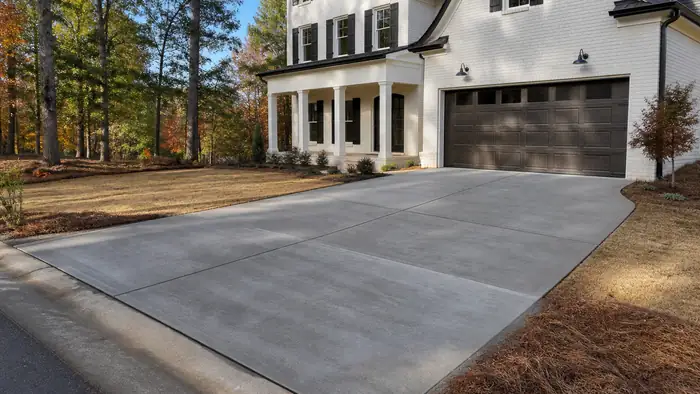
concrete slab installation completed by a local contractor at a painted-white-brick two-story home in Warner Robins, GA, under low winter sun.

Concrete Slab Installation Cost

What a slab costs depends on what sits under it and what it has to carry. Size is only part of it. Excavation, the amount of base stone the ground needs, the reinforcement (wire mesh or rebar), the thickness and the finish all move the number. A shed pad on firm, level ground is a simple job. A slab on a slope needs more fill, taller forms and more compaction. We walk the property, measure, and put the actual work in a written estimate before anything gets poured.
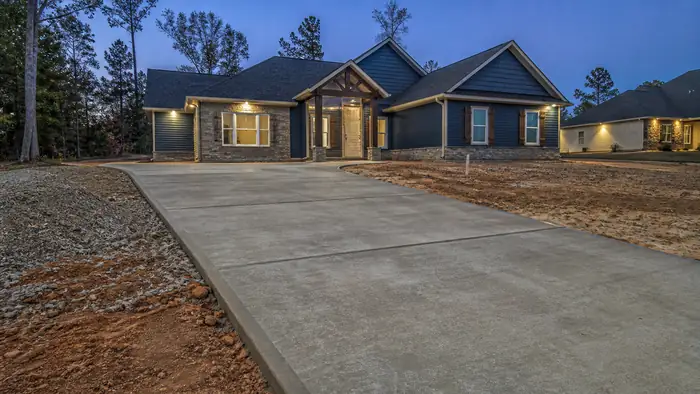
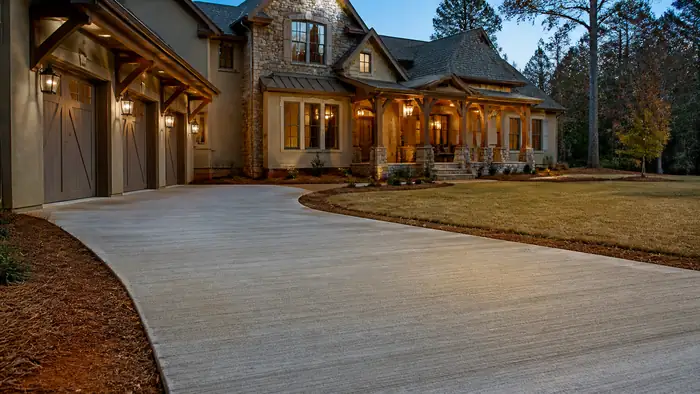
concrete driveway installation completed by a local contractor at a stacked-stone and stucco home in Warner Robins, GA, at blue hour.

Concrete Driveway Installation

A driveway fails from the bottom up, so that is where we start. We dig out the old material, compact a stone base, set forms to a grade that sheds water toward the street, and tie in rebar or mesh. Edges get thickened where tires roll off. Control joints are cut so the slab cracks where we choose, not where it wants to. Finishes run from a plain broom texture for grip to stamped and decorative surfaces that suit the house.

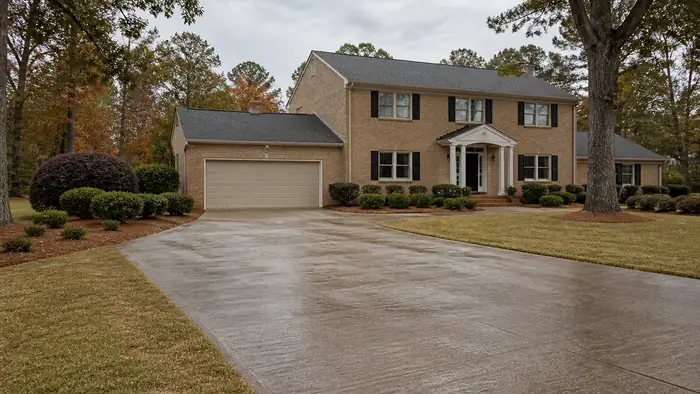
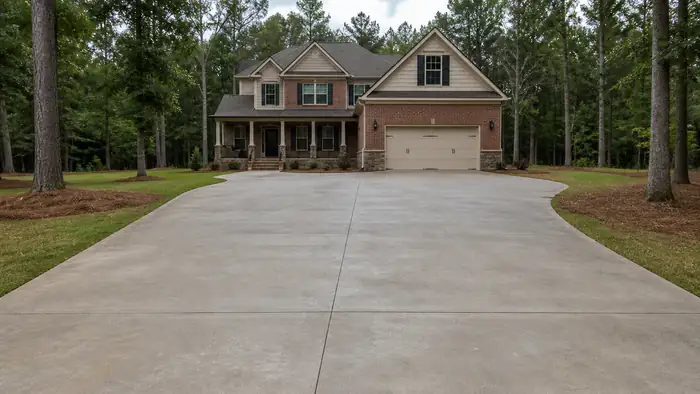
concrete flooring installation completed by a local contractor at a brick-and-siding two-story home in Warner Robins, GA, under an overcast sky.

Concrete Flooring Installation

Garage floors, shop floors and interior slabs are built for what will stand on them. That means a vapor barrier over a compacted base, reinforcement sized to the load, and a surface finished for its use: a hard steel trowel for a garage, a tighter pass for a floor that will be stained, polished or sealed. We keep the floor level where it should be level and give it a slight fall toward drains where water collects. Curing gets as much attention as the pour.

Concrete Slab Repair

Most failed slabs were sound when they were poured. The trouble is usually underneath: water getting below the concrete (the area sees about 44 inches of rain a year), roots, a plumbing leak, or a base that was never compacted. With a median home here built in 1989, plenty of slabs have had decades for that to work. We find the cause first. Then the fix fits it: routing and sealing cracks, filling voids, or cutting out a failed section and pouring it back doweled to the old concrete.

Why Choose Warner Robins Premier Concrete

A cracked or sunken slab is usually telling you something about what sits under it, so we treat every repair as a question about the base before it becomes a question about the surface. The median home here was built in 1989, which means many of the driveways, patios and garage floors we see have carried cars, weather and settling for decades. Houston County is hilly, too, with 212 feet of local relief within a few miles. That varies block to block. We grade and test each site on its own before deciding anything.

What goes wrong with slab repair is almost always the part nobody sees. A patch laid over a washed-out base cracks again. Water is usually the reason: with about 44 inches of rain a year, a slab without proper drainage and reinforcement keeps losing support underneath. We would rather tell you a section needs to come out than put down a surface fix we know will fail. We handle the permit when one is needed, choose materials for the conditions we find, and walk you through what is wrong before any work begins. Call for a free estimate.

Our Concrete Process, Step by Step

A contractor checks slope and drainage before work begins. at a painted-white-brick two-story home in Warner Robins, GA, under low winter sun.

Step 1: Site Assessment

We start by walking the damaged slab with you and working out what failed and why. A crack running straight across a driveway tells a different story than one fanning out from a corner. We check how water leaves the surface, sound the concrete for hollow spots, and shoot grades with a level. The ground here varies from block to block, so every property gets graded and tested on its own. If the repair needs a permit, we handle the permit.

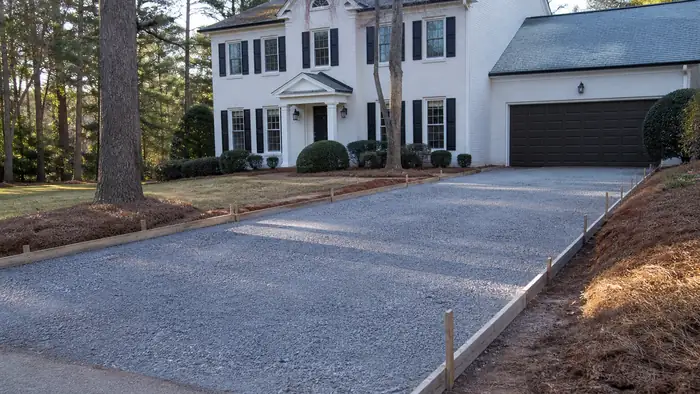
Crushed stone base is raked level inside driveway forms. at a painted-white-brick two-story home in Warner Robins, GA, under low winter sun.

Step 2: Site Preparation

Most slab failures begin underneath, so this step gets the most time. We saw-cut around the damaged section, break it out, and haul it off. Then we dig past any soft or organic material, bring in crushed stone base, and compact it in thin lifts with a plate compactor. Grade gets set so water runs away from the house. With about 44 inches of rain a year, a base that holds water is a slab that settles again.

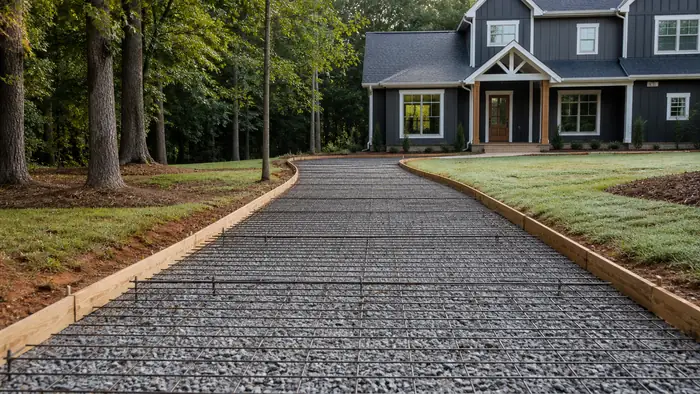
Wire mesh is unrolled across a driveway base before pouring. at a charcoal farmhouse-modern home in Warner Robins, GA, in early morning light.

Step 3: Forming & Reinforcement

Forms are dimensional lumber, staked tight and checked with a string line for pitch so the finished surface sheds water. Where new concrete meets old, we drill the existing slab and epoxy in steel dowels so the two pieces move together instead of breaking apart. Rebar or welded wire sits on plastic chairs, held in the middle of the slab where it actually works. Wire lying flat on the base is the most common shortcut we see. It adds almost nothing.

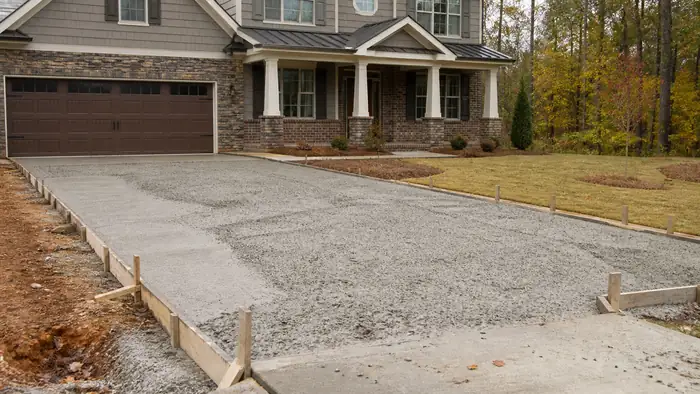
A ready-mix truck discharges concrete into a driveway form. at a brick-and-siding two-story home in Warner Robins, GA, under an overcast sky.

Step 4: Pouring

Concrete arrives from the plant with a mix matched to the job, stronger where vehicles will park and turn. We check slump at the truck and do not let anyone add water to make it spread easier, because extra water weakens the finished slab. The pour runs continuously. We place it, consolidate it along the forms and around the dowels so there are no voids, and screed it to grade before it starts to stiffen.

A broom drags across a driveway creating a slip-resistant texture. at a stacked-stone and stucco home in Warner Robins, GA, at blue hour.

Step 5: Finishing

Timing decides how this goes. We bull float right after screeding, then wait for the bleed water to leave the surface before touching it again. Working that water back in is what causes dusting and flaking later. Edges get rounded with an edger, control joints get tooled or saw-cut at a spacing that suits the slab, and outdoor surfaces get a broom finish for traction. Stamped and decorative finishes are available where a patio or walk calls for them.

Damp burlap covers a small slab section during curing. at a painted-white-brick two-story home in Warner Robins, GA, under low winter sun.

Step 6: Curing

Fresh concrete gains strength slowly, and it needs moisture to do it. With average highs around 77°F and full sun on open driveways, the top can dry out well before the slab underneath is ready. We apply a curing compound or keep the surface covered and damp through the early days. Foot traffic comes back sooner than cars do. When each is safe depends on the mix and the weather that week, and we tell you before we leave.

A sprayer applies sealer across a driveway. at a tan-brick colonial in Warner Robins, GA, under bright midday cloud.

Step 7: Sealing

Once the slab has cured, we seal it. A penetrating silane or siloxane sealer soaks into the surface and keeps out water, oil and road grime without changing how the concrete looks. Stamped and decorative work usually gets an acrylic sealer that deepens the color and adds some sheen. Joints along the house and between slabs get a flexible sealant, so rain runs off instead of down into the base. Resealing every few years keeps that protection working.

Common Concrete Slab Repair Questions From Warner Robins Owners

Which concrete slab repair method works best for uneven slabs and trip hazards in Warner Robins?

It depends on why the slab moved. If the concrete is sound and a section has simply settled, lifting it back to level with injected material is usually the cleanest fix, and it leaves the original surface in place. If the edge is cracked, crumbling or pushed up by a root, we cut that section out and pour new, with reinforcement tied into the slab around it. Small lips can often be ground flush.

What maintenance helps protect a repaired Warner Robins concrete slab from future damage?

Water does most of the damage, and this area gets about 44 inches of rain a year. Point downspouts away from the slab. Keep the joints sealed, and fill any gap that opens along an edge before water finds its way underneath. A penetrating sealer helps driveways and patios shed water and stains. Keep tree roots trimmed back from the concrete. A quick walk around after a heavy storm catches most problems while they are still small.

How much does concrete slab repair typically cost in Warner Robins?

Cost follows the method and the size of the damaged area, so every job is priced after we see it. Lifting a settled section generally costs less than tearing out and repouring, and grinding a small offset costs less than either. Access matters too. A slab the truck can back up to is simpler work than one behind a fence or down a slope. Call for a free estimate and we can talk through which repair fits your slab.

How long does concrete slab repair take in Warner Robins and when can the area reopen?

Lifting and grinding are usually finished in a single visit, and a lifted slab can take foot traffic soon after we pack up. Replaced sections take longer, because new concrete has to cure before it carries weight. People can walk on it well before a car should park on it. Warm weather speeds curing and cool, wet days slow it, so we tell you on the day which areas are ready for feet and which still need time.

What is the standard width for commercial sidewalks in Warner Robins?

No single width covers every commercial property. It is set by the code that applies to the site, accessibility requirements and the approved plans, and those change with how the property is used and how many people walk it. Retail and health care sites, both big employers around here, tend to carry heavy foot traffic. We build to the drawings and handle the permit, so the walk that goes in is the walk that passes inspection.

How much does it cost to install a 4-foot concrete retaining wall in Warner Robins?

The price comes down to the wall's length, what it holds back and how water drains behind it. A wall that tall needs a proper footing, structural reinforcement and drainage, and Houston County's hilly ground means some lots need more of each than others. Every site is graded and tested on its own before work starts, and that is what the price is built from. We handle the permit where one is required. Call for a free estimate.

Get a Free Estimate

Get Free Estimates

We warranty all of our work because we believe in what we do.

Tap to call +1 478-339-5356