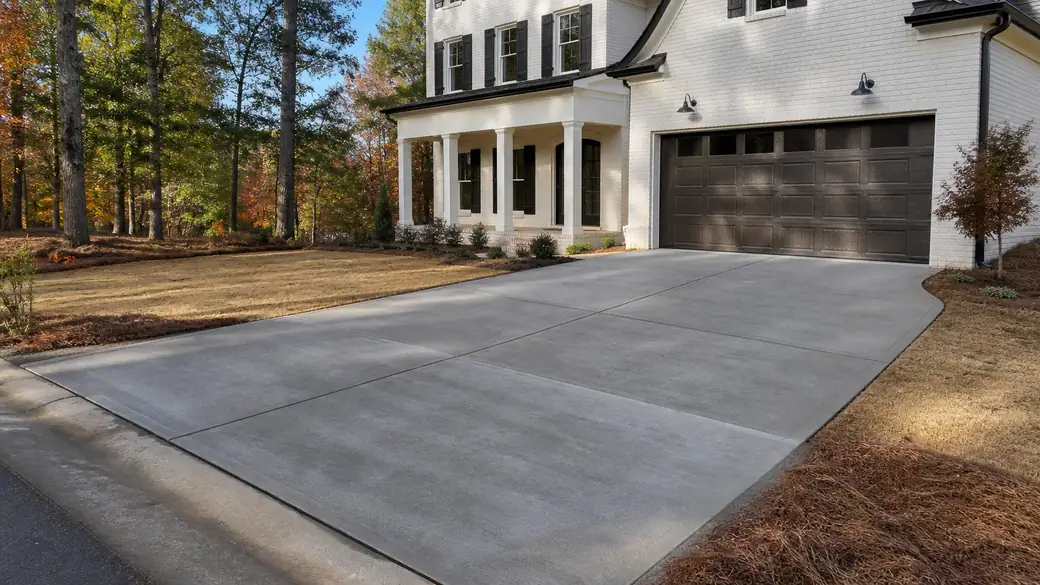
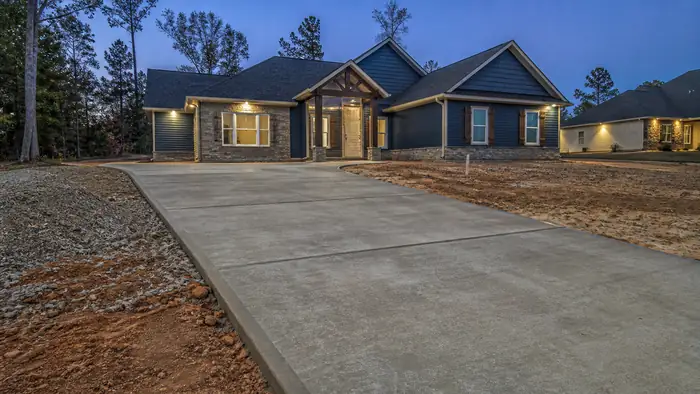
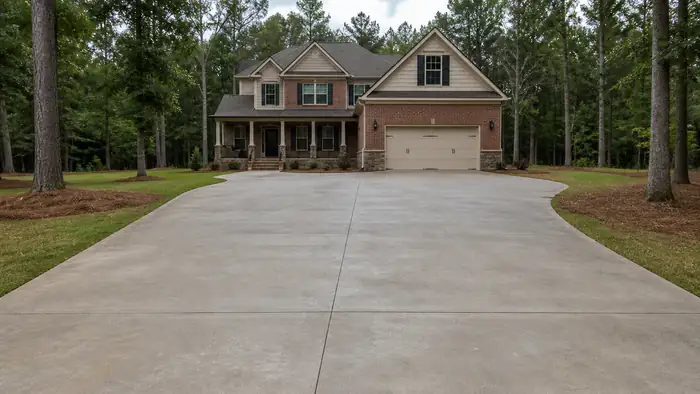
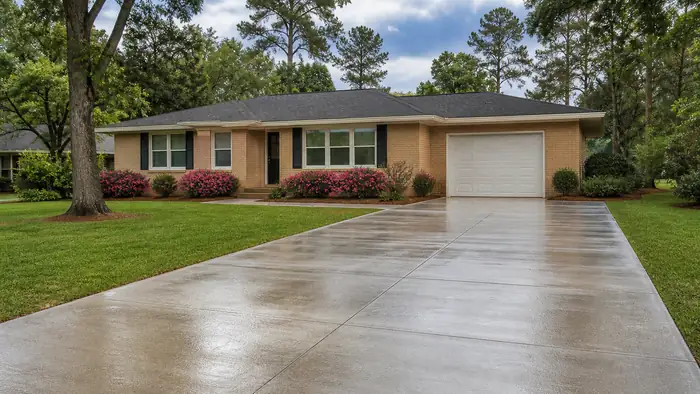
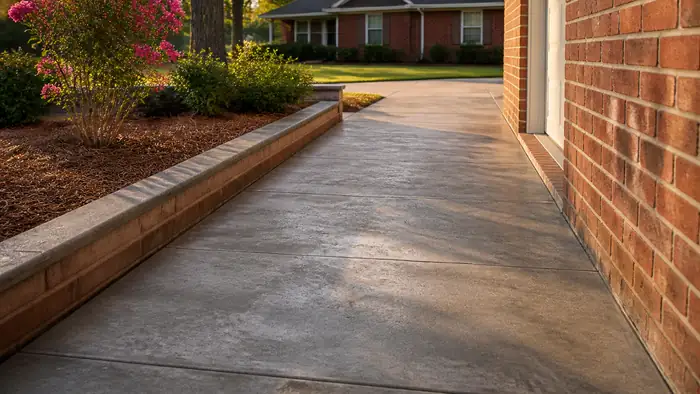
A slab is the flat, load-bearing piece of concrete that everything else sits on: a garage floor, a shed pad, a patio, the floor of a home addition. We pour slabs for residential and light commercial property in Byron, and the job runs the same way whatever the size. Get the ground right, set the forms square and level, put the reinforcement where it does its work, and finish a surface that drains the way it should. A good slab is not much to look at. It stays flat and stays in one piece for a long time.
We start by walking the site with you and talking through what the slab has to carry, because a parking pad for a truck and a pad for a hot tub are built differently. Then we strip the topsoil and anything organic, bring in a base of compacted stone, and check the grade. Forms go in next, followed by rebar or wire mesh set up on chairs so it ends up inside the concrete rather than under it. On pour day we place, screed, float and finish, cut the control joints, and keep the new slab damp while it cures.
Most slab failures start below the concrete. Soft spots left in the subgrade settle, and the slab cracks over them. Reinforcement lying flat on the dirt does nothing at all. Joints cut too late, or spaced too far apart, let the slab crack wherever it likes. Water is the other problem. With around 44 inches of rain a year here, a slab that pitches toward a wall, or sits lower than the yard around it, will hold water against the house or wash out its own edges. We set the pitch before the pour, not after.
Getting it right takes more time on the ground than on the pour. Compaction, grade checks and form work are most of the labor, and none of it shows once the concrete is down. Thickness matters too: a slab that carries vehicles needs more depth and more steel than one that holds a patio table, and we size it to the load it will see. The materials are ordinary. The care is not. If you are planning a slab, call for a free estimate and bring your questions about thickness, base and drainage.