+1 478-339-5356
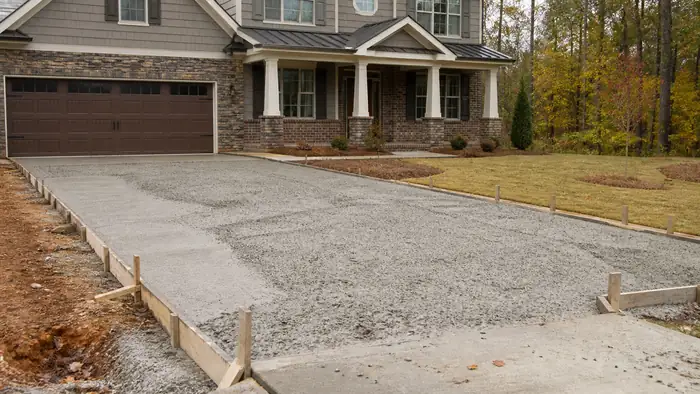
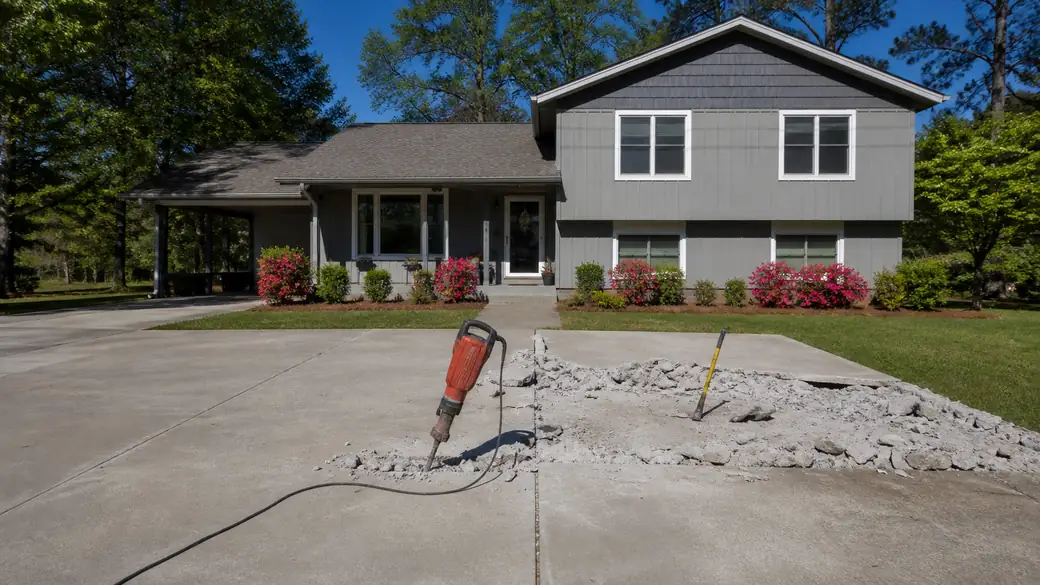
concrete demolition and removal completed by a local contractor at a grey split-level home in Warner Robins, GA, in clear late-morning sun.

Concrete Demolition And Removal in Warner Robins, GA

Old concrete comes out for a few reasons. A driveway has heaved and cracked past the point of patching. A patio slab has sunk on one side and holds water after every rain. A garage floor, a walkway, a commercial pad that no longer suits the property. Warner Robins gets about 44 inches of rain a year, and the median home here was built in 1989, so most of the slabs we look at have carried a long run of it. We break out the old surface, haul the rubble away, and leave a site that is ready for the next installation, or for nothing at all.

Removal that gets rushed leaves problems under the next slab. Old reinforcement left in the ground, a footing nobody checked for, subgrade torn up by equipment and never compacted again. The ground around Warner Robins is hilly, with 212 feet of local relief within a few miles, though it varies from block to block, so we grade and test every site on its own before work starts. Part of that is knowing where the water goes once the old surface is gone. We take on residential and commercial projects across Warner Robins and out toward Perry on the same terms. Call for a free estimate on any slab you want gone.

Call +1 478-339-5356

Licensed, Bonded, and Insured ยท A combined 15 years of experience

Get Free Estimates

We warranty all of our work because we believe in what we do.

What Is Included in Concrete Demolition And Removal

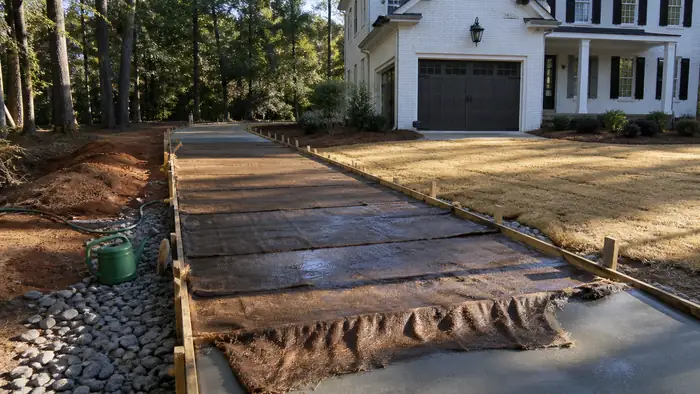
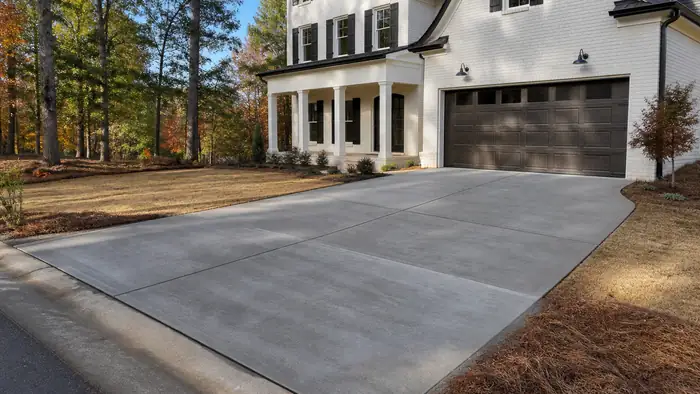
concrete slab installation completed by a local contractor at a painted-white-brick two-story home in Warner Robins, GA, under low winter sun.

Concrete Slab Installation Cost

What a slab costs depends on what is under it and what will sit on top. We break out the old surface, haul the rubble, then grade and compact the base. A shed pad and a garage floor are not the same pour: thickness, rebar or wire mesh, and the volume of concrete all change. The ground around Warner Robins is hilly and varies from block to block, so we grade and test every site on its own before we quote anything. Call for a free estimate.
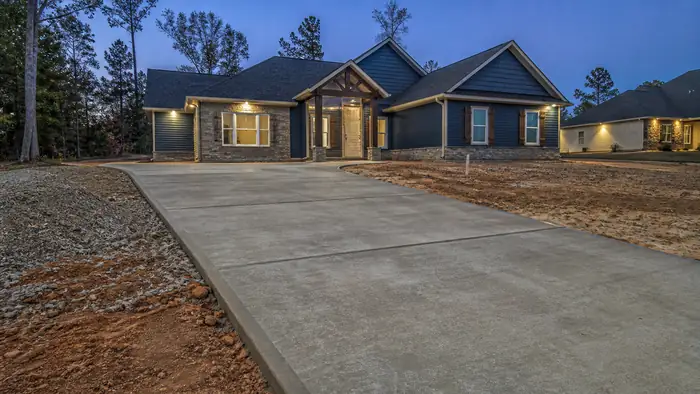
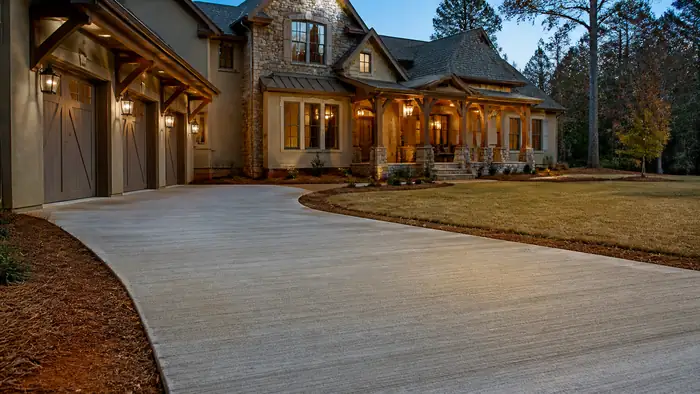
concrete driveway installation completed by a local contractor at a stacked-stone and stucco home in Warner Robins, GA, at blue hour.

Concrete Driveway Installation

Removing a cracked driveway is half the job. Once the old slab is out, we look at why it failed: thin concrete, no reinforcement, a base that washed out, or tree roots pushing up. Then we build the replacement to last. A residential driveway gets a compacted gravel base, 4 inches of concrete at minimum, and wire mesh or rebar tied in before the pour. Control joints get cut at the right spacing so the surface cracks where we planned, not where it wants to.

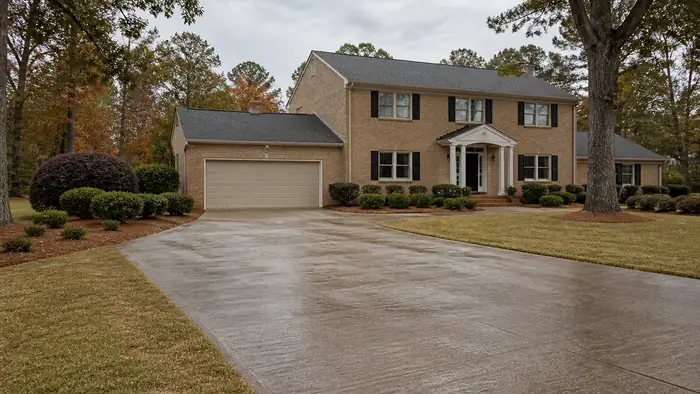
concrete flooring installation completed by a local contractor at a brick-and-siding two-story home in Warner Robins, GA, under an overcast sky.

Concrete Flooring Installation

Interior floors show every flaw, so the prep matters more than the pour. After the old slab is broken out and hauled off, we check the subgrade for soft spots and moisture, then lay a vapor barrier before any concrete goes down. The median home in Warner Robins was built in 1989, and we test any floor of that age for moisture before committing to a finish. We finish to the use: a hard trowel for a garage, or a stamped or polished surface for a living space.

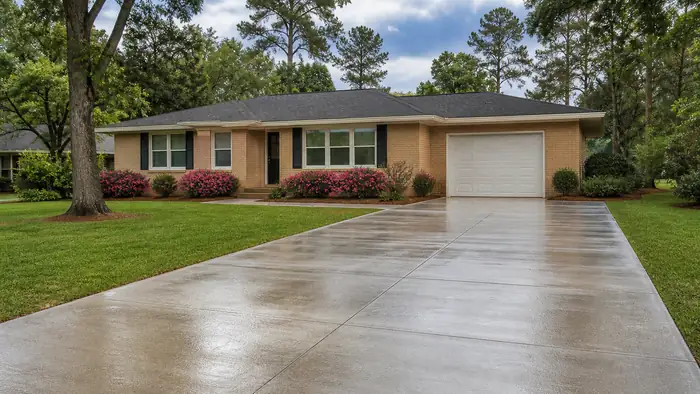
concrete slab repair completed by a local contractor at a buff-brick ranch home in Warner Robins, GA, after a rain shower.

Concrete Slab Repair

Not every slab needs to come out. A section that has settled can be lifted, a spalled surface can be ground and overlaid, and a crack can be routed and sealed while the rest of the slab stays put. Where a section has failed outright, we cut it out, dowel the new pour into the old with epoxy-set rebar, and match the finish. With about 44 inches of rain a year, we also look at drainage, since water under a slab is usually what moved it in the first place.

How a Concrete Demolition And Removal Job Runs in Warner Robins

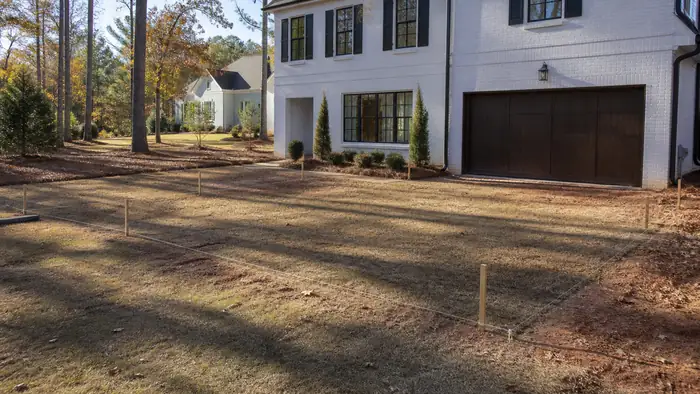
A contractor checks slope and drainage before work begins. at a painted-white-brick two-story home in Warner Robins, GA, under low winter sun.

Step 1: Site Assessment

We walk the old concrete before anyone lifts a breaker. We look at how the slab failed: settled corners, heaving at the joints, cracks that follow a tree root or a downspout. Houston County is hilly (212 ft of local relief within a few miles), though it varies from block to block, so every site is graded and tested on its own before work starts. That tells us how thick the replacement pour needs to be and where water has to go.

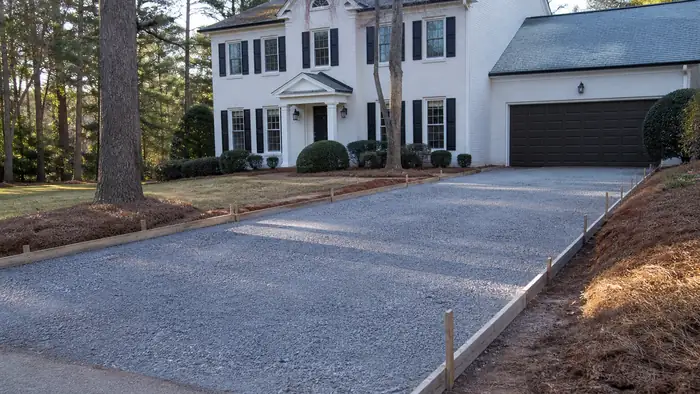
Crushed stone base is raked level inside driveway forms. at a painted-white-brick two-story home in Warner Robins, GA, under low winter sun.

Step 2: Site Preparation

Demolition comes next. A hydraulic breaker or jackhammer takes the old slab down in sections, rebar and mesh get cut free, and every piece is hauled off the property. Then we deal with what the old concrete was hiding: soft spots, roots, buried debris. The subgrade is cut to depth, compacted, and topped with four inches of crushed stone, compacted again. Most driveway failures start under the slab, not in it. This step is where we stop the next one.

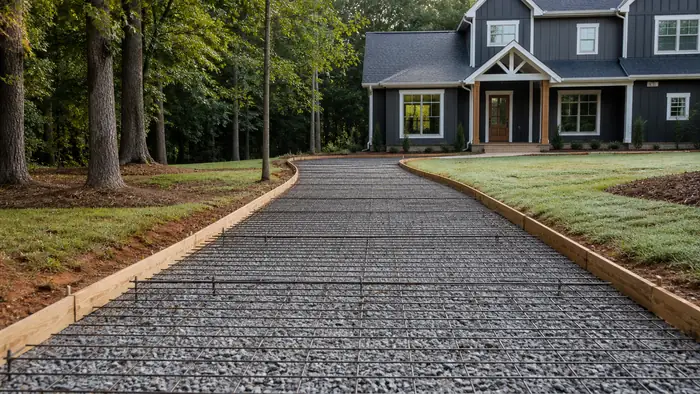
Wire mesh is unrolled across a driveway base before pouring. at a charcoal farmhouse-modern home in Warner Robins, GA, in early morning light.

Step 3: Forming & Reinforcement

Forms go in on string lines, usually 2x4 or 2x6 lumber staked tight, set to pitch water away from the house at about an eighth of an inch per foot. Inside the forms we place reinforcement: #3 or #4 rebar on 18 inch centers for driveways, or welded wire mesh on lighter residential slabs like patios. Steel sits on chairs so it ends up in the middle of the pour, not lying on the stone doing nothing.

A ready-mix truck discharges concrete into a driveway form. at a brick-and-siding two-story home in Warner Robins, GA, under an overcast sky.

Step 4: Pouring

The truck arrives with a 4,000 psi mix, and we pour a full four inches for standard driveways and five to six inches where trucks or trailers park. Nobody adds water at the chute to make it flow easier. That weakens the surface and causes scaling later. We work the concrete into the corners, vibrate around the reinforcement, and screed it flat to the forms while it is still workable. Thin spots do not get a second chance.

A broom drags across a driveway creating a slip-resistant texture. at a stacked-stone and stucco home in Warner Robins, GA, at blue hour.

Step 5: Finishing

Once the bleed water leaves, we bull float the surface, run the edges, and cut control joints every eight to ten feet at a quarter of the slab depth. Joints put the cracks where we want them. Standard work gets a broom finish for traction. Decorative and stamped surfaces get color hardener and release agent worked in now, then the pattern is pressed while the concrete can still take it. Timing is everything at this stage.

Damp burlap covers a small slab section during curing. at a painted-white-brick two-story home in Warner Robins, GA, under low winter sun.

Step 6: Curing

Concrete does not dry, it cures, and it needs moisture to do it. We spray a curing compound or keep the slab wet under plastic for the first several days. No foot traffic for 24 hours, no cars for seven days, and full design strength takes 28. Rushing this is the fastest way to turn good materials into a slab that dusts and cracks. We tell every homeowner the dates before we leave.

A sprayer applies sealer across a driveway. at a tan-brick colonial in Warner Robins, GA, under bright midday cloud.

Step 7: Sealing

Sealing waits until the concrete has cured, typically that full 28 days. On plain surfaces we use a penetrating siloxane sealer that blocks water without changing the look. Stamped and decorative work gets an acrylic sealer that brings out the color and protects the pattern. Either way it slows salt damage, oil stains, and surface wear. Resealing every few years keeps a driveway or patio looking like the day the forms came off.

Top Decorative Concrete Styles for Warner Robins Homes

Stamped concrete is the style most homeowners ask about, and it earns the attention. We press a pattern into fresh concrete, usually flagstone, slate or wood plank, then add color so the surface reads like the real material. Exposed aggregate is the plainer cousin: we wash the top layer off before it cures and leave the stone showing. It grips well underfoot when wet, which matters here with about 44 inches of rain a year. Broom finish with integral color is the quiet option. A driveway in warm tan or gray sits well against a house built around 1989, the median year for homes in Warner Robins.

A decorative slab runs like a plain one until the finishing stage. We grade and test every site on its own, because the ground is hilly and conditions change block to block, and reinforcement goes in before the truck arrives. Timing is the whole trick. Stamps have to land while the concrete is still plastic, and a crew that waits too long gets a blurred pattern no sealer will fix. Other failures we see: release agent left on the surface, sealer rolled over damp concrete, color mixed light. When a permit is required, it comes from the City of Warner Robins. Call for a free estimate, whether the house is in town or out toward Byron.

Concrete Demolition And Removal Pricing in Warner Robins, GA

Every quote we give starts with a walk of the property, because the slab tells us most of what the job costs. A patio someone poured thin and unreinforced comes out fast. A garage floor with rebar tied through it, sitting behind a fence with no gate wide enough for a skid steer, is a different day's work. Houston County is hilly, with 212 feet of local relief within a few miles, and it changes block to block, so every site is graded and tested on its own before we set a number.

What changes the priceWhich wayWhy
Slab thickness (a thin patio versus a thick commercial pad or garage floor)costs more as it gets thickerThicker concrete takes longer to break and weighs more per square foot to haul, so both the labor and the trucking go up.
Rebar or wire mesh in the pourcosts moreSteel has to be cut free and separated before the rubble goes to the recycler. Look at any cracked or chipped edge and you can usually see whether there is metal in it.
Equipment access (gate width, fence lines, retaining walls, distance from the street)costs more when access is tightIf a machine cannot reach the work, we break it by hand and wheelbarrow the pieces out, and that is the slowest way to move concrete.
Slope of the lotcosts more on steep groundMachines work slower on a grade, and the exposed sub-base has to be reshaped so water runs off it instead of sitting.
Utilities and fixtures on or beside the slab (gas lines, water lines, sprinkler heads, HVAC pads, fence posts)costs moreAnything buried near the edge gets located and worked around by hand rather than with a breaker.
Whether a new slab is going in over the same groundcosts lessHauling, grading and compaction get shared with the installation instead of being billed as a separate trip.
Standing water after raincosts moreWith about 44 inches of rain a year, a spot that stays wet means a soft sub-base that has to dry out or be built back up with stone before anything is poured.
Thickened edges or footings under the slabcosts moreA slab that turns down deep at the edge comes out with an excavator, not a breaker, and leaves a bigger hole to fill.

When you compare bids, check that each one includes haul-off and dump fees, spells out what happens to rebar and mesh, and says what the ground looks like when the crew leaves: rough grade, compacted stone, or ready for a new pour. Ask whether the price holds if the slab turns out thicker than expected. A lower number that leaves the grading and the dump fees to you is not the lower number.

Common Concrete Demolition And Removal Questions From Warner Robins Owners

What factors affect the cost of concrete demolition and removal in Warner Robins?

The size and thickness of the slab matter most, along with how much reinforcement is buried in it. A thin patio breaks apart faster than a driveway poured with rebar or wire mesh. Access counts too: whether we can bring a skid steer onto the surface or have to work by hand, and how far the debris gets carried to the truck. Haul-off tonnage and any structural footings below grade round out the estimate.

Do you handle the concrete demolition and removal permits, utility locating, and site safety in Warner Robins?

Yes. We pull whatever permit the job calls for, and we order a utility locate before any breaker touches the ground, because gas, water and irrigation lines run under more driveways than owners expect. On site we cone off the work area, keep dust down with water, and stack debris clear of the house. Residential or commercial, in Warner Robins or out toward Centerville, the safety steps are the same. You do not arrange any of it yourself.

How much does concrete demolition and removal cost in Warner Robins, GA?

The honest answer is that we price every project after seeing it, since two slabs the same size can take very different effort to break and haul. We measure the surface, probe the thickness, check for reinforcement, and look at how the truck gets in. The estimate covers demolition, removal and disposal in one figure, with nothing added later for the dump. Call for a free estimate on your property.

What concrete demolition methods do you use for Warner Robins driveways, patios, and slabs?

Most residential slabs come up with a skid steer and a hydraulic breaker, which cracks the concrete into pieces a loader can lift. Tight patios behind a fence get a walk-behind breaker or a jackhammer instead. Where a slab sits against a foundation we saw-cut a clean line first so the structural wall is never touched. Decorative and stamped surfaces break the same as plain ones. The ground here is hilly and varies block to block, so every site is graded and tested on its own before work starts.

How much does it cost to install a 4-foot concrete retaining wall in Warner Robins?

That depends on the wall more than the height. A wall at that height is holding back real soil load, so it needs a proper footing, drainage behind it, and steel reinforcement sized to the grade it retains. We look at what the wall is holding, how the ground drains, and whether an old wall or slab has to come out first. Then we price the whole installation as one project. Ask for a free estimate.

What's the difference between acid stain and water-based stain?

Acid stain reacts chemically with the minerals in cured concrete, so the color comes from inside the slab and tends toward mottled earth tones: tans, browns, and blue-greens. It varies with the surface and cannot be fully predicted. Water-based stain sits in the pores as a pigment, comes in a wider range of colors, and lays down more evenly. Acid is harder to strip if you change your mind, while water-based is easier to touch up.

Get a Free Estimate

Get Free Estimates

We warranty all of our work because we believe in what we do.

Tap to call +1 478-339-5356