+1 478-339-5356
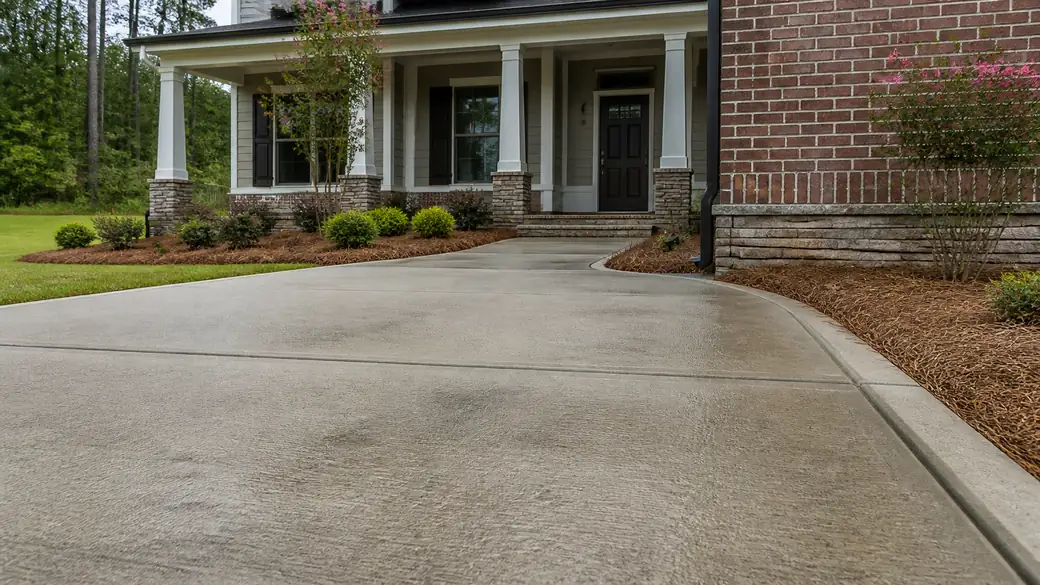
concrete foundation pouring completed by a local contractor at a brick-and-siding two-story home in Warner Robins, GA, under an overcast sky.

Concrete Foundation Pouring in Warner Robins, GA

A foundation is the one piece of concrete nobody sees once the house is up, and it carries everything built on top of it. We pour foundations for residential projects across Warner Robins: slabs on grade for new homes, additions and garages, and footings for the structural walls that need them. The median house here was built in 1989, so a good share of our work sits beside an older slab, where the new pour has to meet the existing one at the right height and tie in cleanly.

The ground comes first. Houston County has 212 feet of local relief within a few miles, and it changes from one block to the next, so we grade and test every site on its own before any forms go up. Then we set the forms, place the reinforcement, and check elevations against the plans. We handle the permit and the inspection before the pour. On pour day the concrete goes in, gets worked in around the steel, and is finished to the surface the next trade needs.

Most foundation trouble starts before the truck arrives. Water is the usual cause. With about 44 inches of rain a year, a site that drains toward the slab keeps sending water underneath it, and soft spots left in the subgrade settle unevenly. Reinforcement lying in the dirt instead of held up in the concrete does very little. A pour that dries too fast can crack at the surface. None of this shows on the first day. It shows years later as a crack across the floor or a door that no longer closes.

Getting it right costs time more than anything else. It means an extra day of grading when the site calls for it, resetting forms when an elevation is off, and waiting out a wet morning rather than pouring into standing water. We would rather move a pour than put a slab on ground that is not ready. That patience is worth it, because there is no easy way to fix a foundation once a house is sitting on it. Call for a free estimate on your foundation.

Call +1 478-339-5356

Licensed, Bonded, and Insured ยท A combined 15 years of experience

Get Free Estimates

We warranty all of our work because we believe in what we do.

What Is Included in Concrete Foundation Pouring

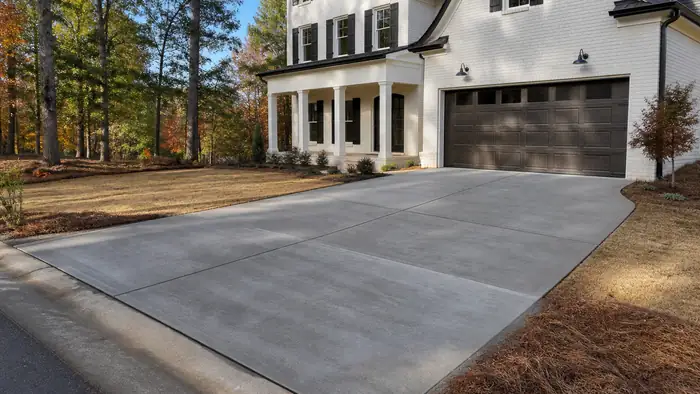
concrete slab installation completed by a local contractor at a painted-white-brick two-story home in Warner Robins, GA, under low winter sun.

Concrete Slab Installation Cost

Every line in our estimate matches work you can see on the page. That covers excavation, grading, a compacted gravel base, forms, a vapor barrier under any slab that sits beneath living space, reinforcement, the pour, finishing and curing. Houston County has real grade changes that vary block to block, so we shoot the site and test the base before we price anything. We handle the permit. The estimate is free, and nothing gets buried in a vague "site prep" line.
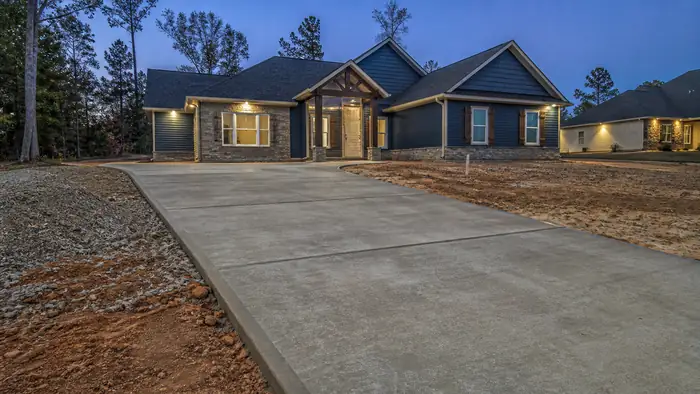
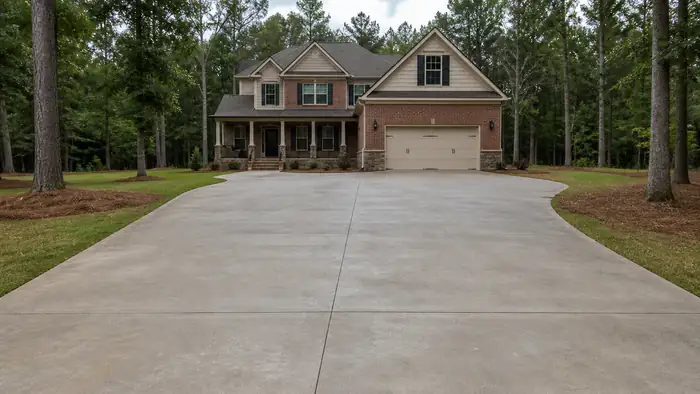
concrete driveway installation completed by a local contractor at a stacked-stone and stucco home in Warner Robins, GA, at blue hour.

Concrete Driveway Installation

A driveway takes more weight than any other slab on the property, so we build it thicker. Residential driveways go in at 4 to 5 inches, and 6 where trucks or trailers park, over compacted stone with rebar or wire mesh set on chairs so the steel stays mid-slab. Control joints are cut every 10 to 12 feet. With about 44 inches of rain a year, we slope the surface to carry water away from the garage. Broom finish is standard. Stamped finishes are an option.

concrete flooring installation completed by a local contractor at a brick-and-siding two-story home in Warner Robins, GA, under an overcast sky.

Concrete Flooring Installation

Garage floors, shop floors and interior slabs get a tighter trowel finish than outdoor work, because you walk on them, roll equipment across them and sweep them. We lay a heavy vapor barrier under interior slabs to stop ground moisture from coming up through the surface and lifting coatings or flooring later. Saw cuts go in soon after the pour so shrinkage cracks land in the joints. Commercial floors are poured to the load they will actually carry, not to a default thickness.

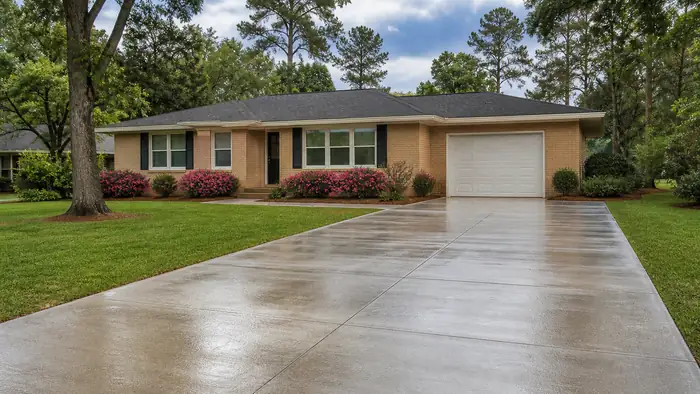
concrete slab repair completed by a local contractor at a buff-brick ranch home in Warner Robins, GA, after a rain shower.

Concrete Slab Repair

Cracks are not all the same problem. Hairline shrinkage cracks are cosmetic, and we rout and seal them. A slab that has dropped or tipped usually means the base washed out underneath, and patching the top will not fix that. The median home here was built in 1989, so plenty of original patios, walks and driveways have been settling for decades. We check drainage first, then decide between sealing, lifting, or cutting out a section and repouring it with doweled joints.

Why Choose Warner Robins Premier Concrete

A foundation is the part of a house nobody sees again once the framing goes up, so it has to be right the day it is poured. That is the standard we hold ourselves to. We pour slabs and footings for new homes, additions, garages and shops across Houston County, and we treat a small pad behind a house with the same care as a full residential slab. The median home here was built in 1989, which means a good share of our work ties new concrete into an older structure. We match the existing grade, check the old footing, and set the new reinforcement to meet it cleanly.

Every job starts with the ground itself. Houston County has 212 feet of local relief within a few miles, and conditions change from block to block, so we grade and test each site on its own before any forms go in. A lot that looks flat often is not. From there the work runs in order: excavation, compaction, forms, steel, a final check against the plans, then the pour. We keep the same crew on a project from layout through finish work. You deal with the people doing the job, and they can tell you exactly where things stand on any given day.

Rain is what we plan around most. The area sees about 44 inches a year, and fresh concrete that takes a hard shower before it sets loses strength at the surface. We watch the forecast, hold a pour when the weather turns, and keep covers on site to protect a slab that is still green. We also shape the finished grade so water runs away from the foundation instead of sitting against it. None of that shows up in a photo. It is still the difference between a slab that stays flat and one that cracks and settles. Call us for a free estimate.

Top Decorative Concrete Styles for Warner Robins Homes

Three finishes cover most of what homeowners in Warner Robins ask us for: stamped, stained and exposed aggregate. Stamped concrete has a pattern pressed into the wet surface, usually slate, flagstone, brick or wood plank, so a patio reads like laid stone without loose joints that shift and grow weeds. Stain works into a cured slab and gives it depth of color rather than a coat sitting on top. Exposed aggregate washes away the top paste to show the stone underneath. With the median home here built in 1989, many of these jobs replace a plain gray patio that has done its time.

The pattern is only as good as the slab under it. We grade and test every site on its own before work starts, because the ground here changes from one block to the next, and a sloped lot needs its fall set before any forms go in. Reinforcement goes down, the concrete is placed, and color goes in either through the mix or cast across the surface. Stamping happens in a narrow window while the concrete is firm enough to hold an impression and still soft enough to take one. Miss that window and the pattern goes shallow.

Water and timing cause most decorative failures. This area sees about 44 inches of rain a year, so a stamped patio with no pitch away from the house holds puddles in every low line of the pattern. Sealer laid over a damp surface turns cloudy. Crews that rush the stamping leave mismatched mats and visible seams, and color that is not batched the same way each time shows up as blotches between pours. Most of this cannot be corrected once the slab cures. It has to be right the day it goes down.

Doing it properly takes time more than anything else. We plan each pour around the weather, bring enough hands to stamp the whole surface in one pass, and seal only once the concrete is dry. Detailed patterns and multiple colors ask for more labor than a broom finish, and a large driveway may be poured in sections with the joints worked into the design so they read as part of it. A fresh coat of sealer every few years keeps the color from fading. Call for a free estimate, and bring photos of any finishes you like.

What Decides the Price of Concrete Foundation Pouring

A foundation price is set more by the ground and the access than by the concrete itself. Two slabs with the same footprint can come out far apart once we walk the lot. Everything below is something you can check on your own property before anyone writes a quote.

What changes the priceWhich wayWhy
An old slab, footings or tree roots in the pour areacosts moreWhatever is already in the ground has to be broken out, hauled off and the base recompacted before forms go in.
Slope across the footprintcosts moreHouston County is hilly and changes block to block, so a sloped lot needs more cut, fill and taller forms to get a level slab.
A pump or wheelbarrows instead of a direct chutecosts moreWhen the mixer can back up to the forms we pour straight off the truck. Fences, tight gates or soft lawn mean extra equipment and hands.
Thickened edges and footings under bearing wallscosts moreA structural slab carries weight at the perimeter and under walls, which means deeper digging and more concrete.
Reinforcement the plans call forcosts moreRebar grids, dowels into existing concrete and chairs holding the steel at the right depth all add material and labor.
Low spots or standing water after raincosts moreWith about 44 inches of rain a year, water that sits on the site has to be regraded or drained, with a proper gravel base, so it never ends up under the slab.
Plumbing or conduit running under the slabcosts moreSleeves and lines have to be located, set and checked before the pour, and the pour waits on them.
Level, open, already cleared groundcosts lessLess excavation and less form work means fewer hours on site.

Line competing bids up on the same points: slab thickness, footing depth, rebar size and spacing, gravel base depth, and whether demolition, haul-off, grading and the permit are included. A low number usually leaves one of those out. Ask each contractor to put them in writing, then call us for a free estimate and hold ours to the same list.

Get a Free Estimate

Get Free Estimates

We warranty all of our work because we believe in what we do.

Tap to call +1 478-339-5356