+1 478-339-5356
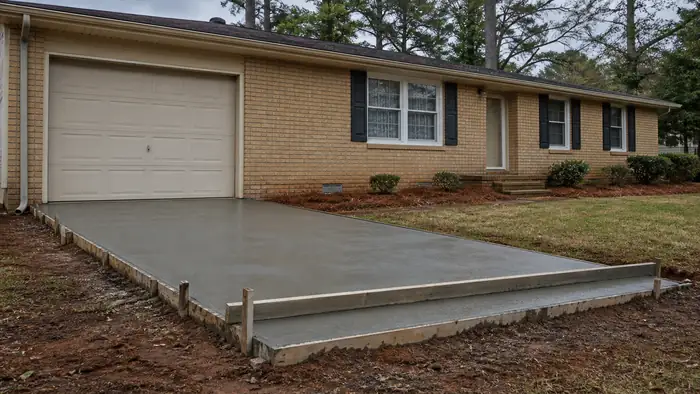
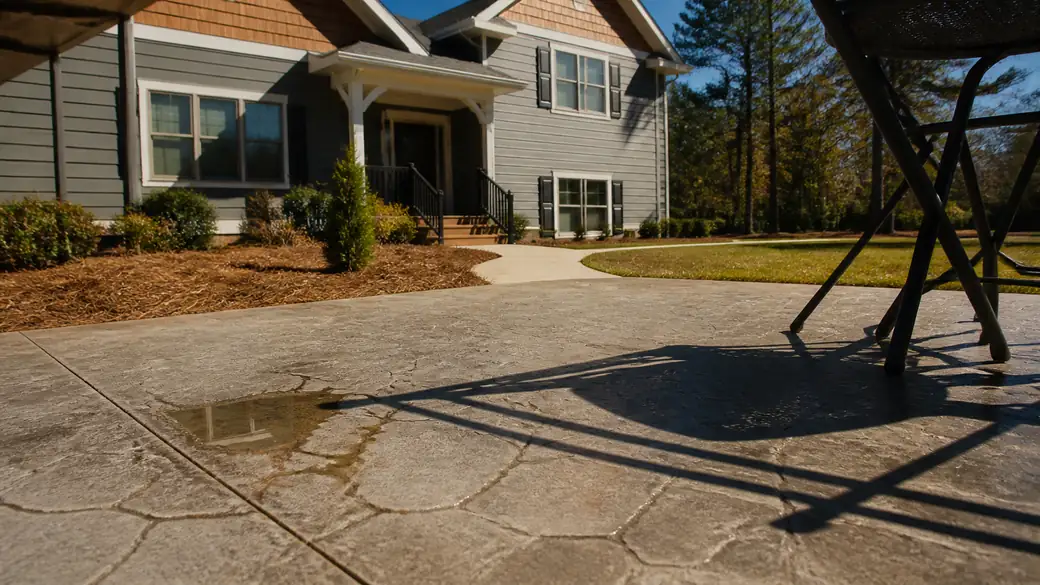
concrete patio repair completed by a local contractor at a grey split-level home in Warner Robins, GA, in clear late-morning sun.

Concrete Patio Repair in Warner Robins, GA

A concrete patio that has cracked, settled, or started to flake does not always need to come out. The median Warner Robins home was built in 1989, and decades of use show up in ways that can be fixed in place: a slab that has dropped along one edge, a surface that scales underfoot, a joint that has opened wide enough to catch a chair leg. We repair what can be repaired and tell you plainly when a section is past saving.

Water does most of the damage. Houston County is hilly, and a patio that sits below the grade of the yard takes runoff that works under the slab and washes out the base beneath it. About 44 inches of rain a year gives it plenty of chances. The surface goes next: scaling, spalling, hairline cracks that widen a little each season. Left alone, a cracked patio lets in more water, which moves more base material, which cracks it further. Catching it early keeps the project small.

Getting it right means matching the fix to the fault. A settled slab needs lifting and a base that will hold it, not a skim of new concrete over the low spot. Wide structural cracks get cut, cleaned, and tied back together with reinforcement, while surface damage takes a bonded overlay rather than a bag of patch mix that lets go by spring. Call for a free estimate, whether your patio is in Warner Robins or out toward Perry.

Call +1 478-339-5356

Licensed, Bonded, and Insured · A combined 15 years of experience

Get Free Estimates

We warranty all of our work because we believe in what we do.

What Is Included in Concrete Patio Repair

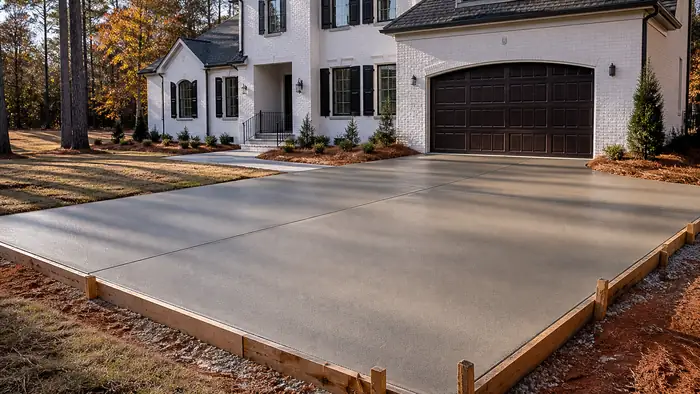
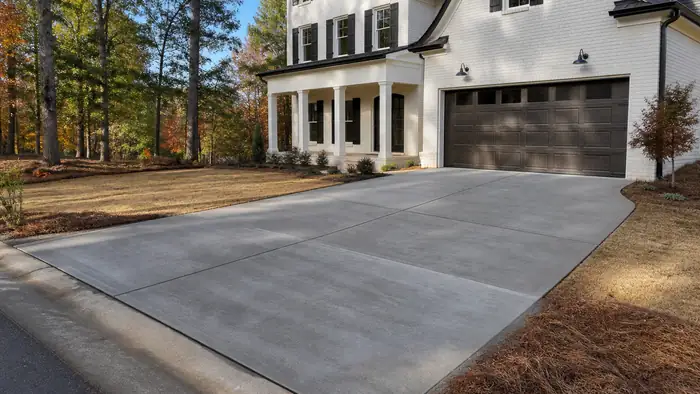
concrete slab installation completed by a local contractor at a painted-white-brick two-story home in Warner Robins, GA, under low winter sun.

Concrete Slab Installation Cost

We price every slab off the site, not off a chart. What moves the number: how much cut and fill the grade needs, whether the subgrade compacts or has to come out and be replaced with crushed stone, the thickness the load calls for, rebar or wire mesh, and the finish (broom, trowel, or stamped). The ground here is hilly and changes block to block, so we grade and test every site on its own before work starts. Call for a free estimate on your property.
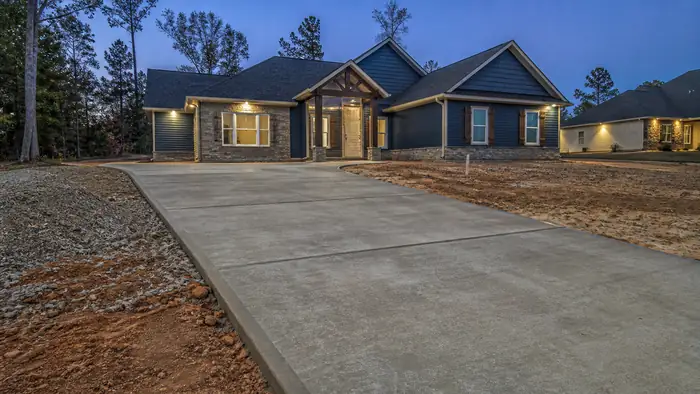
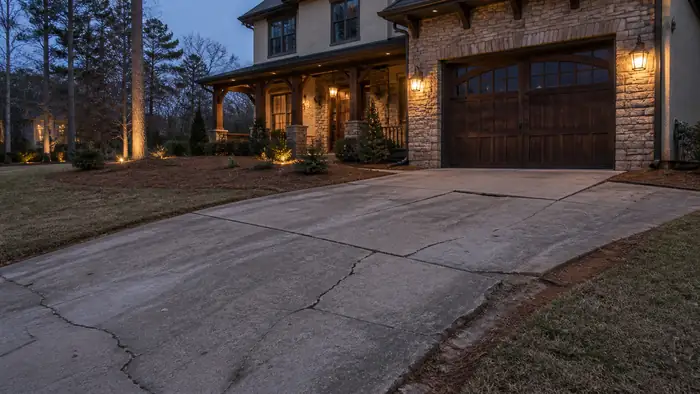
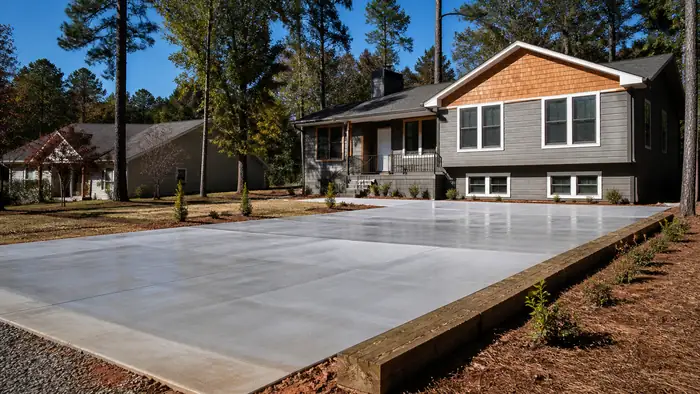
concrete driveway installation completed by a local contractor at a stacked-stone and stucco home in Warner Robins, GA, at blue hour.

Concrete Driveway Installation

A driveway carries more than a patio does, so we pour it thicker, on a compacted stone base, with reinforcement tied up in the slab rather than lying on the dirt. Control joints are cut on a grid sized to the width so shrinkage cracks land in the joints instead of across the surface. We slope the slab to shed water away from the garage and thicken the edge at the apron. A broom finish gives traction; other finishes are available if you want more than plain gray.

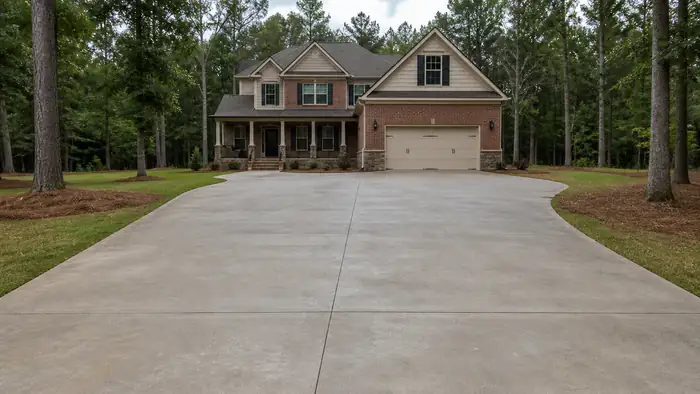
concrete flooring installation completed by a local contractor at a brick-and-siding two-story home in Warner Robins, GA, under an overcast sky.

Concrete Flooring Installation

Interior and garage floors are the same trade with a tighter tolerance. We run a moisture barrier under the slab so vapor does not push through and lift flooring later, set the reinforcement, and pour to a flat surface with a hard steel-trowel finish. Where the floor stays exposed, we seal, stain, or polish it. A garage floor gets a slight fall toward the door. Shop and commercial floors get saw-cut joints laid out around columns and equipment loads.

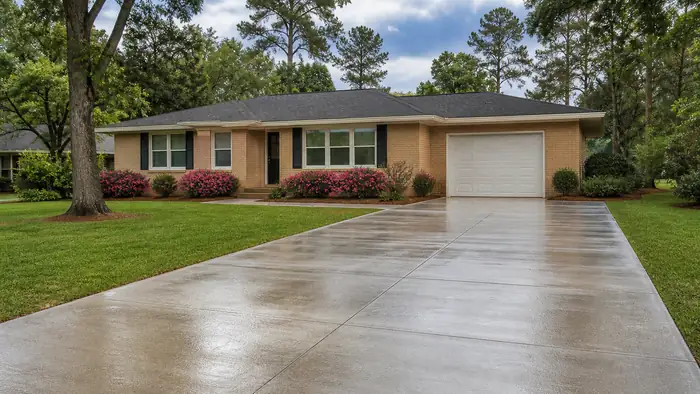
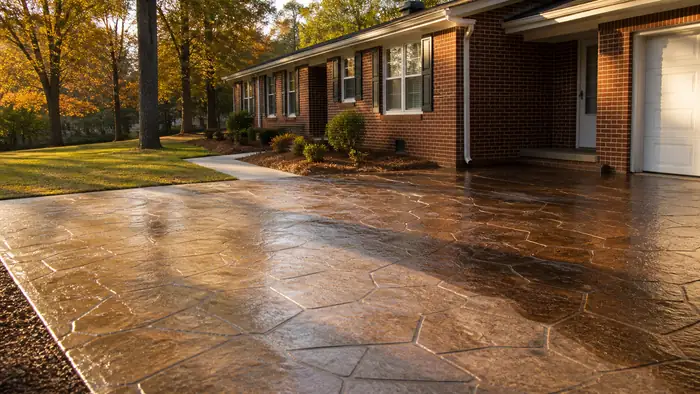
concrete slab repair completed by a local contractor at a buff-brick ranch home in Warner Robins, GA, after a rain shower.

Concrete Slab Repair

Cracks, settled corners, and spalled surfaces have different causes, so the fix differs. Hairline shrinkage cracks get routed and filled with a flexible sealant. A corner that has dropped usually means the base washed out or was never compacted; with about 44 inches of rain a year, that happens, and we either lift the panel or cut out the failed section and repour on fresh stone. Scaling and flaking get ground back and resurfaced with a bonded overlay. Plenty of homes here went up around 1989, and the original patio is often just worn through its finish.

Why Choose Warner Robins Premier Concrete

Most patios we get called to in Warner Robins were poured decades ago. The median home here dates to 1989, so the slab under your chairs has likely seen its share of rain, roots, and settling. We tell you straight whether it needs a repair or a new pour, and we do not sell a replacement where a structural fix will hold. Our crew handles residential and commercial concrete, so a cracked patio gets the same reinforcement and materials thinking as a loading dock. Every surface we touch is prepared to bond, not just patched over. That is the difference between a repair that lasts and one that opens up again.

Houston County ground is hilly, with about 212 feet of local relief within a few miles, and it changes block to block. A patio in Centerville can sit on different fill than one across town, which is why we grade and test each site on its own before any work starts. Add roughly 44 inches of rain a year and drainage becomes part of every repair, not an afterthought. We match materials to those conditions, whether the job is a plain broom finish or a stamped, decorative surface. Small jobs get the same attention as big ones. Call for a free estimate on the crack, the slab, or the whole patio.

How a Concrete Patio Repair Job Runs in Warner Robins

A worker examines an old driveway before replacement. at a stacked-stone and stucco home in Warner Robins, GA, at blue hour.

Step 1: Site Assessment

We walk the patio with you and look at what failed. Cracks that run through the slab, corners that have settled, edges that heaved, or a surface that is spalling from the top down each point to a different fix. Houston County is hilly, and it varies from block to block, so we check grade and drainage on every site before planning anything. The median home here was built in 1989, so we also check whether the original slab has any reinforcement at all.

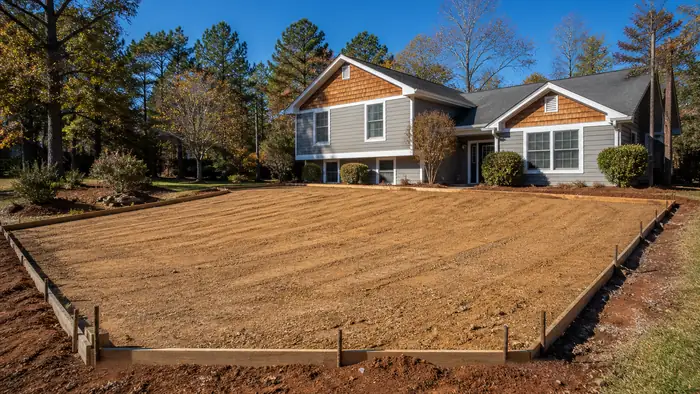
A plate compactor tamps down soil in a small excavated area. at a grey split-level home in Warner Robins, GA, in clear late-morning sun.

Step 2: Site Preparation

Bad concrete comes out before good concrete goes in. Sections that are structurally shot get saw-cut and removed, the base underneath gets dug to grade, and we compact fresh crushed stone so the new slab sits on something solid. Where only the surface has failed, we grind, clean and profile the old slab so an overlay bonds instead of peeling. Downspouts and runoff paths get routed away from the work. About 44 inches of rain a year means drainage is never an afterthought.

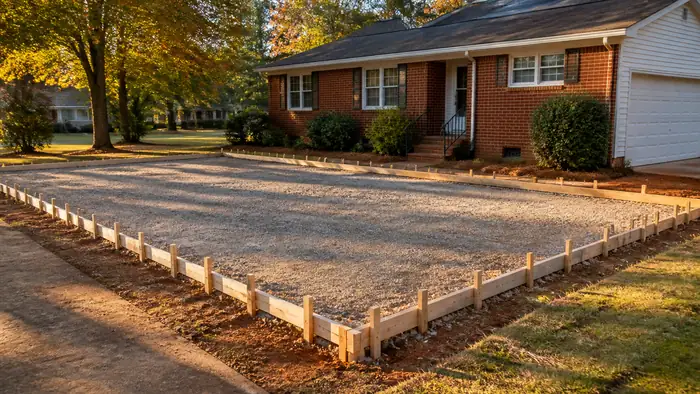
Wooden forms outline a patio slab before the pour. at a red-brick ranch home in Warner Robins, GA, in late afternoon light.

Step 3: Forming & Reinforcement

Forms go in at the finished height and pitch, sloped away from the house so water leaves the patio instead of pooling on it. For full replacement we set steel: #3 or #4 rebar on chairs at mid-slab, or welded wire mesh for lighter residential work, with dowels tied into the existing slab where new meets old. Fiber reinforcement goes into the mix as well. Control joints get planned now, not guessed at later.

A screed board levels fresh concrete on a small patio. at a buff-brick ranch home in Warner Robins, GA, after a rain shower.

Step 4: Pouring

Pouring happens in one continuous placement so there are no cold joints inside the slab. The truck delivers an air-entrained mix ordered for exterior flatwork, and we place it at a consistent slump rather than adding water on site, which weakens the surface. Screeds ride the forms to strike the slab level, then a bull float brings paste up and settles the aggregate. Overlays go down thinner, with a bonding agent under the new material.

A hand trowel smooths a small patio surface to a hard finish. at a painted-white-brick two-story home in Warner Robins, GA, under low winter sun.

Step 5: Finishing

Once bleed water has left the surface, we edge, cut control joints and choose the finish. A broom finish gives traction on plain patios. Stamped and decorative work gets release agent, stamping mats and color hardener pressed in while the concrete is still plastic, so timing matters more here than anywhere else in the project. Joints are cut deep enough to control where cracks happen. A patio that cracks at the joint is working as designed.

A hand sprayer applies curing compound to a finished patio. at a grey split-level home in Warner Robins, GA, in clear late-morning sun.

Step 6: Curing

Impatience ruins more patios than bad concrete does. Concrete gains strength through hydration, not drying, so we keep the surface moist or apply a curing compound right after finishing. Average daily highs around 77°F pull water out of a fresh slab quickly, and a slab that dries too fast shrinks, cracks and dusts. We keep foot traffic off for the first days and anything heavier off far longer. Strength keeps building for weeks after the pour.

A roller applies sealer to a stamped patio surface. at a red-brick ranch home in Warner Robins, GA, in late afternoon light.

Step 7: Sealing

The last step waits until the slab has cured enough to accept it. A penetrating sealer soaks into plain concrete and blocks water without changing the look. Stamped and colored surfaces get an acrylic sealer that deepens the color and protects the pattern from wear and stains. We apply it in thin coats so it does not blush or peel. Resealing every few years keeps a repaired patio looking like it did the day we finished, and it is the easiest maintenance on the property.

Top Decorative Concrete Styles for Warner Robins Homes

Stamped concrete is the style most homeowners here ask about, and for good reason. A patio poured or overlaid with a stamped surface takes the look of flagstone, slate, brick or wood plank while staying one solid slab. Broom finish is the plain, honest option, and it grips well when wet. Exposed aggregate shows the stone in the mix and hides dirt. Integral color and acid stain change the tone of the concrete itself rather than sitting on top of it, so nothing peels.

Most decorative work on an existing patio is an overlay or a partial replacement. We check the old slab first. If it is sound, we grind, clean and bond a decorative topping to it. If it has settled or broken, that section comes out, gets new base and reinforcement, and is poured to match. The ground here is hilly, with 212 ft of local relief within a few miles, and it varies block to block, so every site is graded and tested on its own before work starts. Where a permit is needed, it comes from the City of Warner Robins.

Color is where decorative repairs go wrong. A patch that matches on the day it is poured can read a shade off once it cures, and a stamped pattern that stops short of a clean joint always shows. Sealer matters too. This area gets about 44 inches of rain a year, and an unsealed decorative surface takes on water, fades and pits. Getting it right takes color samples set before the pour, pattern lines laid out to the existing joints, and sealer applied when the surface is fully dry.

Get a Free Estimate

Get Free Estimates

We warranty all of our work because we believe in what we do.

Tap to call +1 478-339-5356