+1 478-339-5356
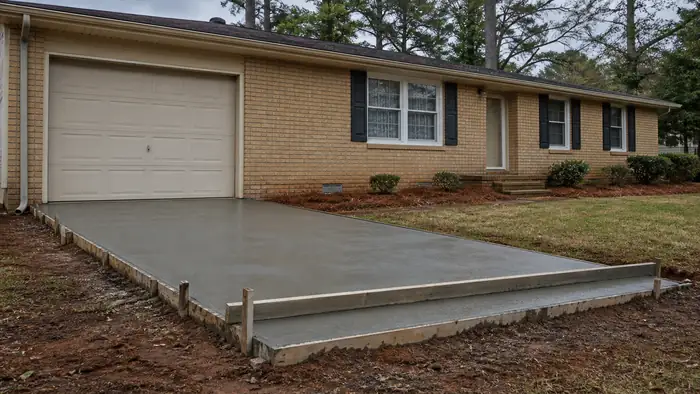
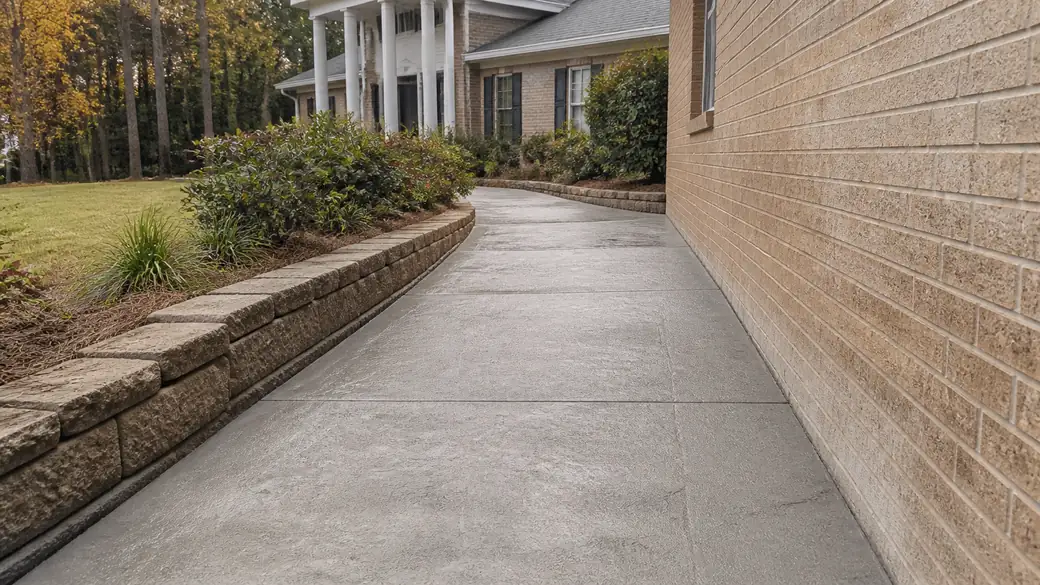
stamped concrete installation completed by a local contractor at a tan-brick colonial in Warner Robins, GA, under bright midday cloud.

Stamped Concrete Installation in Warner Robins, GA

Stamped concrete is a slab poured like any other, then pressed with textured mats while the surface is still workable, so it takes on the look of slate, flagstone, brick or wood plank. Color goes into the mix, onto the surface, or both, and a sealer finishes the job. We pour stamped patios, driveways, pool decks and walkways across Warner Robins for homeowners who want the look of laid stone without the loose joints that let weeds and ants work their way in. Underneath, it is still concrete: the same reinforcement, the same compacted base, the same structural work. The pattern is the part you see. The slab is the part that holds.

Most of the work happens before the stamps come out. The median home here was built in 1989, so a new patio often has to meet an older slab, a tired back step, or a yard that slopes the wrong way. The land is hilly, with 212 feet of relief within a few miles, and it changes from one block to the next, so we grade and test every site on its own. With about 44 inches of rain a year, water has to leave the surface and keep moving away from the foundation. Stamping has a short window, too. The crew reads the concrete and presses at the right moment, not the convenient one.

Call +1 478-339-5356

Licensed, Bonded, and Insured · A combined 15 years of experience

Get Free Estimates

We warranty all of our work because we believe in what we do.

What Is Included in Stamped Concrete Installation

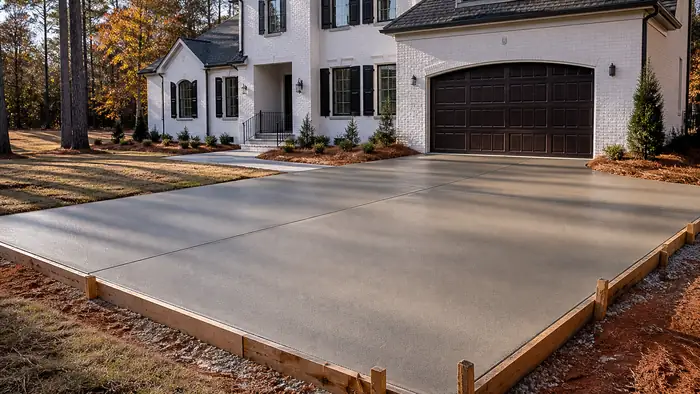
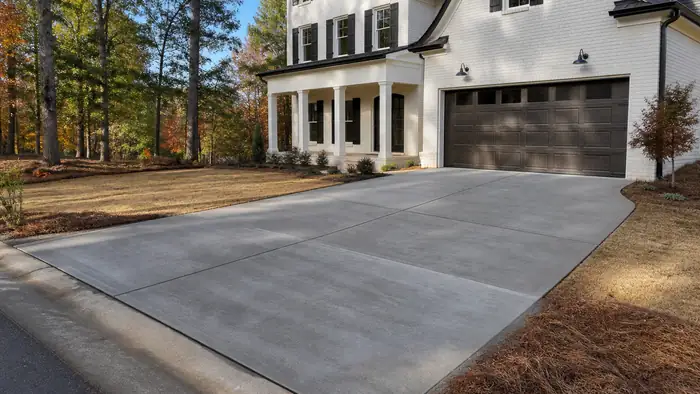
concrete slab installation completed by a local contractor at a painted-white-brick two-story home in Warner Robins, GA, under low winter sun.

Concrete Slab Installation Cost

What you pay for is more than the concrete. A quote from us covers excavation to the right depth, a compacted gravel base, forms set to a checked grade, reinforcement, the pour, finishing, control joints and curing. On a hilly lot, grading can take up more of the job than the slab itself, so we test each site before we price it. Every line item goes on paper so you can see where the money sits. Call for a free estimate.
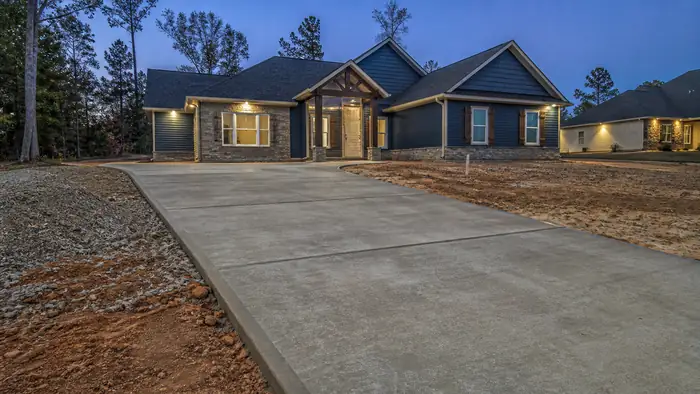
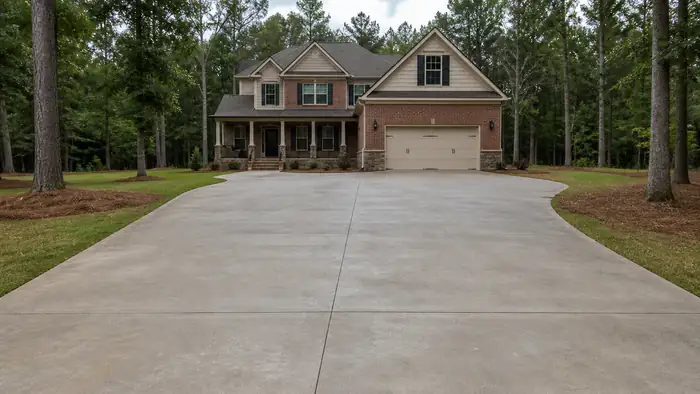
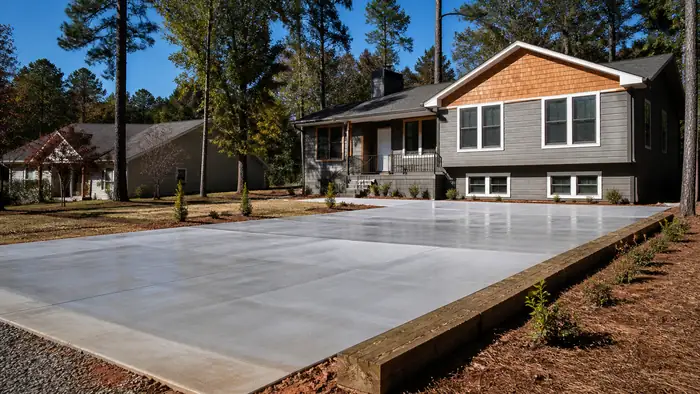
concrete driveway installation completed by a local contractor at a stacked-stone and stucco home in Warner Robins, GA, at blue hour.

Concrete Driveway Installation

A driveway carries weight a patio never sees, so we build it heavier: a deeper compacted base, a thicker slab, and rebar tied on a grid instead of mesh left lying in the dirt. The cracked driveways we tear out usually trace back to a soft base, steel that sank to the bottom, or joints cut too late. With about 44 inches of rain a year, we pitch the surface so water runs away from the garage. Stamping can cover the full width or just the borders.

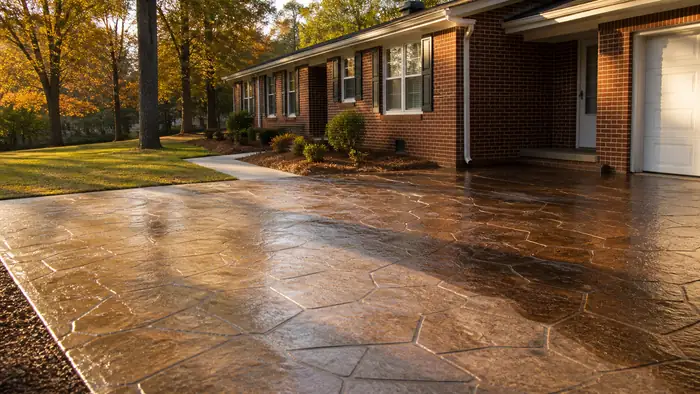
concrete flooring installation completed by a local contractor at a brick-and-siding two-story home in Warner Robins, GA, under an overcast sky.

Concrete Flooring Installation

Garage floors, shop slabs and room additions ask for flat and dry more than raw strength. We put a vapor barrier under the pour, set the forms so the finished floor is level enough for cabinets and shelving to sit true, and cure it slowly so the surface does not dust. Finish depends on the room: a hard trowel for a shop, a sealed broom finish in a garage, stain or a light stamp where the floor is part of the living space.

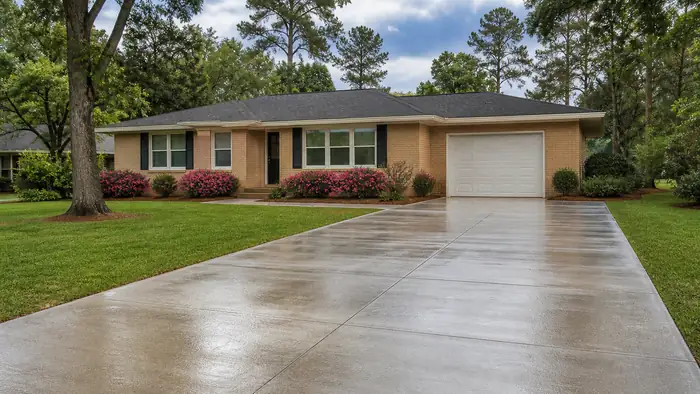
concrete slab repair completed by a local contractor at a buff-brick ranch home in Warner Robins, GA, after a rain shower.

Concrete Slab Repair

Not every cracked slab needs to come out. With the median home here built in 1989, many of the patios and driveways we see have had decades to settle at the joints. Hairline shrinkage cracks get routed and sealed. A section that has sunk can often be cut out and repoured, with doweled joints tying it to the old concrete. When the base has washed out under most of the slab, we tell you plainly and quote a replacement instead.

Why Choose Warner Robins Premier Concrete

Stamped concrete only looks right if the slab under it is right, so that is where we spend our attention. Houston County is hilly, with about 212 feet of local relief within a few miles, and it changes from one block to the next. We grade and test every site on its own before any forms go down. With roughly 44 inches of rain a year, we set the pitch so water runs off the surface and away from the house. The pattern and color come last, on a base built to carry them.

The median home in the area was built in 1989, so a new patio or driveway may well sit beside concrete poured decades ago. We plan how the new work meets the old: joint lines, step heights, and where the downspouts drain. Some owners want a stamped pattern across the whole driveway. Others are better served by a stamped border around a plain broom finish, which keeps the look while cutting back the decorative area. We tell you straight which one suits the property and why. Call us for a free estimate.

Our Concrete Process, Step by Step

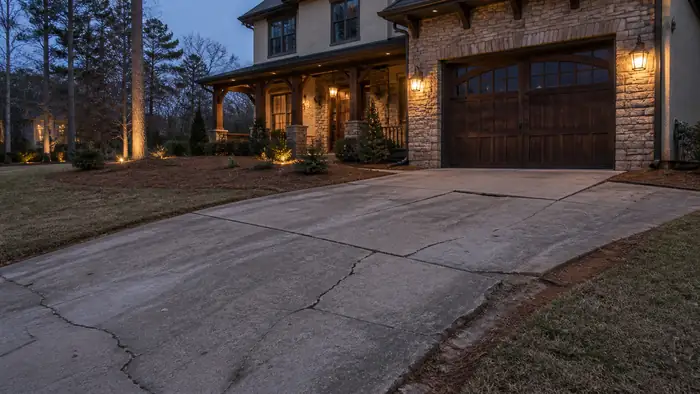
A worker examines an old driveway before replacement. at a stacked-stone and stucco home in Warner Robins, GA, at blue hour.

Step 1: Site Assessment

We walk the property before anything gets decided. The ground around Warner Robins has as much as 212 feet of relief within a few miles, and it changes from block to block, so we shoot grades on your site and test the soil where the slab will sit. We look at where roof water lands and how the yard drains toward the house. Plenty of homes here date to around 1989, so we also check whether an old patio or walk has to come out first.

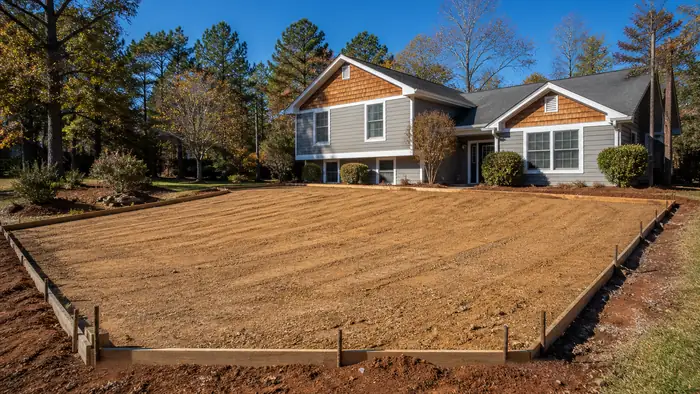
A plate compactor tamps down soil in a small excavated area. at a grey split-level home in Warner Robins, GA, in clear late-morning sun.

Step 2: Site Preparation

Most stamped work that cracks early failed below the surface. We strip sod and topsoil, cut to grade, and pitch the area so water runs away from the foundation. With about 44 inches of rain a year, that slope is not optional. Crushed stone base goes down in lifts, and each lift gets compacted with a plate compactor until it stops moving. Soft spots are dug out and replaced, never covered over. We handle the permit when the project needs one.

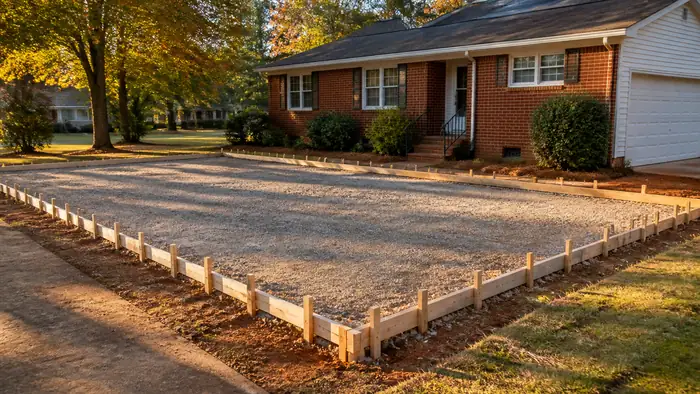
Wooden forms outline a patio slab before the pour. at a red-brick ranch home in Warner Robins, GA, in late afternoon light.

Step 3: Forming & Reinforcement

Forms go in on stakes, set to string lines and checked for pitch before any steel goes down. Straight runs use lumber. Curved patio borders use bendable hardboard so the radius stays smooth instead of faceted. For reinforcement we lay a rebar grid or welded wire mesh, raised on plastic chairs so it sits mid-depth in the slab. Steel lying on the dirt does nothing. Driveways get thickened edges and doweled joints wherever they meet existing concrete.

A screed board levels fresh concrete on a small patio. at a buff-brick ranch home in Warner Robins, GA, after a rain shower.

Step 4: Pouring

Stamped concrete gives you a short working window, so the whole day is planned around it. Integral color is mixed into the load, which means the full depth carries it and a chip shows color, not gray. We check the mix at the truck, because extra water makes concrete easy to place and weak once it hardens. The crew places it, screeds it level with the forms, and bull floats it flat. Enough hands are on site before the truck backs in.

A hand trowel smooths a small patio surface to a hard finish. at a painted-white-brick two-story home in Warner Robins, GA, under low winter sun.

Step 5: Finishing

Timing decides how a stamp turns out. Go too early and the mats sink and smear; too late and the pattern comes out shallow and patchy. Once the surface is ready, we broadcast color hardener, then a powdered release that gives the grooves their darker antiquing. Mats go down in sequence so the pattern lines up across the whole slab. Edges and corners the big mats miss get detailed by hand. Control joints are tooled to hide inside the pattern lines.

A hand sprayer applies curing compound to a finished patio. at a grey split-level home in Warner Robins, GA, in clear late-morning sun.

Step 6: Curing

A slab gains most of its strength in its first weeks, and how it dries in that time shows up for years. Letting the surface dry too fast is what causes crazing, those fine spiderweb cracks, and a dusty top layer. Average daily highs here run around 77°F, and a slab left alone in full sun dries unevenly. We keep the moisture in while it cures. Foot traffic comes first, vehicles on a driveway wait longer, and we tell you when each is safe.

A roller applies sealer to a stamped patio surface. at a red-brick ranch home in Warner Robins, GA, in late afternoon light.

Step 7: Sealing

Once the release is washed off and the slab has dried out, we roll or spray on a sealer. It deepens the color, locks in the antiquing, and keeps oil, leaves and dirt from staining the surface. Sealer laid on too thick, or over trapped moisture, turns cloudy white, so we keep coats thin. On pool decks and walkways we add a grit additive so wet concrete is not slick. Sun and traffic wear sealer down, so plan on recoating every few years.

What Decides the Price of Stamped Concrete Installation

Most of what you pay for is decided before a single stamp touches the concrete. What sits in the ground now, how a truck reaches the forms, and where water goes after a hard rain matter more than the pattern you pick. Walk your property with the list below and you will see where your project stands.

What changes the priceWhich wayWhy
An old slab, pavers or gravel in the footprintcosts moreBreaking it out and hauling it off is labor and truck time spent before any new work starts.
Tree roots, stumps or buried lines under the work areacosts moreRoots get cut back and lines get located and worked around so the slab does not crack over them later.
Open, firm access from the street to the formscosts lessA mixer that can chute straight in saves the pump or wheelbarrow crew a fenced backyard needs.
A lot that slopes across the pourcosts moreFill, compaction and sometimes a step or edge wall are needed to get a flat surface that still drains.
Water that pools or runs toward the housecosts moreWe pitch the base and slab to shed it, and may add a drain. Stamped surfaces that skip this heave and stain.
A driveway instead of a patiocosts moreVehicle loads call for a thicker slab and heavier reinforcement than chairs and a grill do.
A second release color, border or hand-tooled edgescosts moreEach adds steps while the concrete is still workable, and that means more hands on the pour.

Comparing bids? Put them side by side and check the slab thickness, the reinforcement and how it is spaced, and the depth of base prep. See whether removal and haul-off are included, how many coats of sealer are applied, and where the control joints go. A low number often leaves one of those out.

Common Stamped Concrete Installation Questions From Warner Robins Owners

What is the difference between stamped concrete and exposed aggregate?

Stamped concrete gets its look from the top. We press textured mats into the fresh surface and add color so it reads as slate, brick or stone. Exposed aggregate gets its look from inside the mix: we wash away the top layer of cement paste to uncover the stone underneath. That leaves a rougher, grippier finish. Stamped is smoother and more decorative. Both go down over the same base and reinforcement.

How long does stamped concrete last?

The slab itself lasts as long as any well-built concrete, because under the pattern it is the same structural material. What wears first is the finish. Color and sealer take the sun and about 44 inches of rain a year here, so the sealer needs a fresh coat every few years to keep the surface from fading or turning chalky. Keep up with that and the look holds.

What's the difference between stamped concrete and regular concrete?

Regular concrete is poured, leveled and broomed so it has grip and a plain gray face. Stamped concrete starts the same way, with the same base, mix and reinforcement. The difference comes in the short window after the pour, while the surface is still workable: we add color, lay a release agent and press the pattern in by hand. That takes a bigger crew and tighter timing. It also needs sealing afterward.

Do I need permits for stamped concrete patios in Warner Robins?

No, not for every patio, though some projects in Warner Robins do need one. Things like the size of the slab, where it sits on the lot, and whether it ties into the house or changes how water drains can bring a permit into play. We look at those details during the estimate and tell you plainly where your project stands. When one is required, we handle the permit.

What does stamped concrete cost in Warner Robins, GA?

That comes down to your own site and the finish you pick. Two patios the same size can land in very different places once pattern, color and prep work are counted. We would rather price the real job than post a guess on a web page. So the honest answer is a free estimate on your property. Call us and ask for one.

Do you coordinate ready-mix delivery and placement for Warner Robins job sites?

Yes. We order the mix, schedule the truck, and plan where it parks and how the concrete reaches the forms, whether that is straight off the chute, by wheelbarrow or by pump. That matters more on stamped work, since the whole slab has to be placed and patterned before it sets. Lots around here run from flat to fairly steep, so we check access on every site before we book a pour.

Get a Free Estimate

Get Free Estimates

We warranty all of our work because we believe in what we do.

Tap to call +1 478-339-5356