+1 478-339-5356
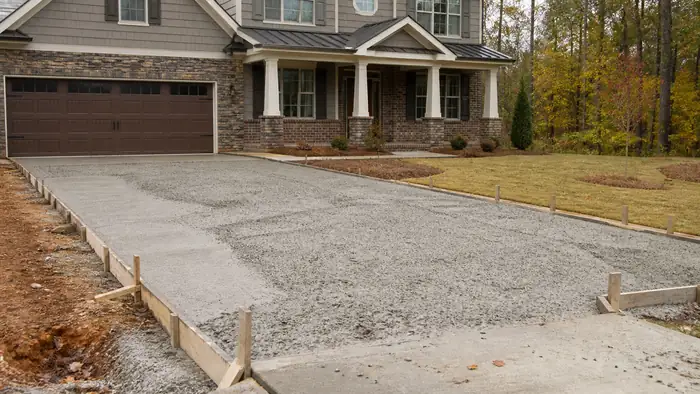
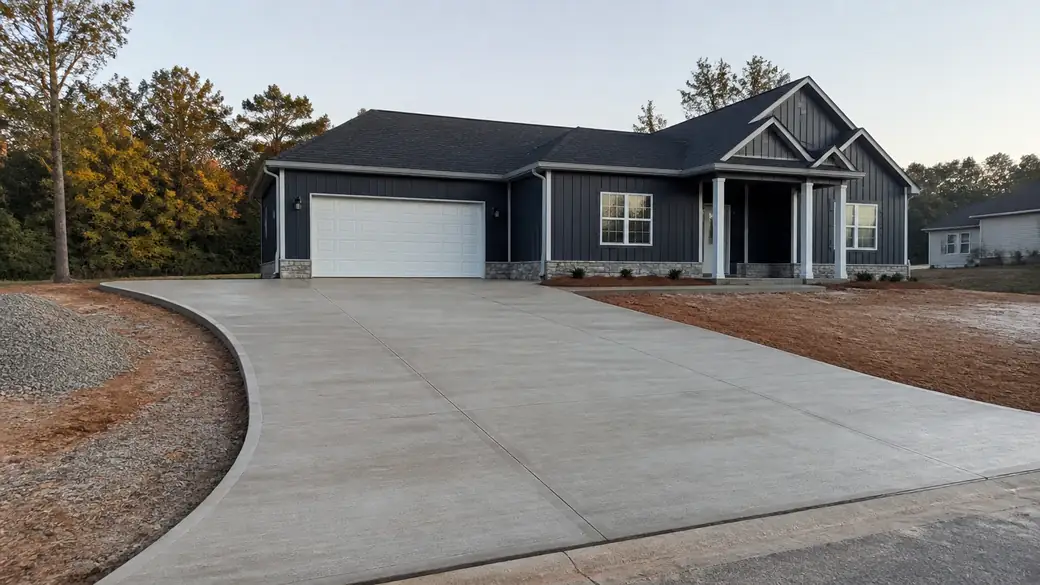
concrete installation completed by a local contractor at a charcoal farmhouse-modern home in Warner Robins, GA, in early morning light.

Concrete Installation in Warner Robins, GA

We pour concrete for homes and businesses across Warner Robins: driveways, patios, slabs, walkways, steps, and the plain structural work that never gets photographed. Residential and commercial, new construction and replacement. Most of the houses here date from around 1989, which means a lot of the original driveways and patios are past the point where patching makes sense. We tear out, regrade, and pour new. If you want a decorative finish, stamped or colored, we do that too. If you want a flat, broom-finished surface that drains right and holds up, that is most of what we do.

Houston County is hilly, with about 212 feet of local relief within a few miles, though it varies from block to block, so every site is graded and tested on its own before work starts. About 44 inches of rain a year means drainage is never an afterthought. A driveway that sends water toward the foundation is a problem we build against from the first cut. Reinforcement, base depth, and joint spacing are set for the conditions on your property, not copied from the last job. Where a permit applies, the City of Warner Robins is the permitting authority, and we pull it before we break ground. Call us for a free estimate on any residential or commercial project in Warner Robins or Centerville.

Call +1 478-339-5356

Licensed, Bonded, and Insured · A combined 15 years of experience

Get Free Estimates

We warranty all of our work because we believe in what we do.

What Is Included in Concrete Installation

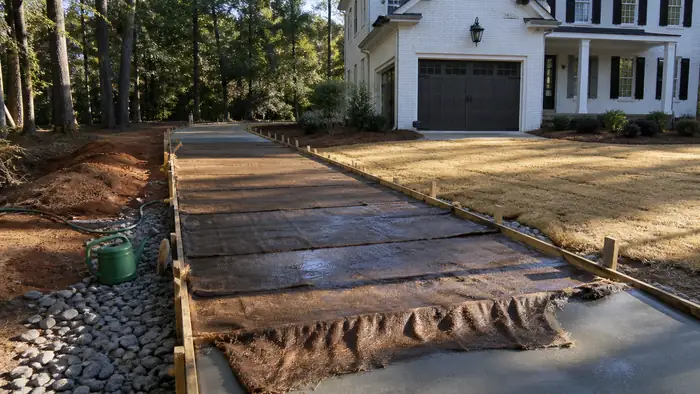
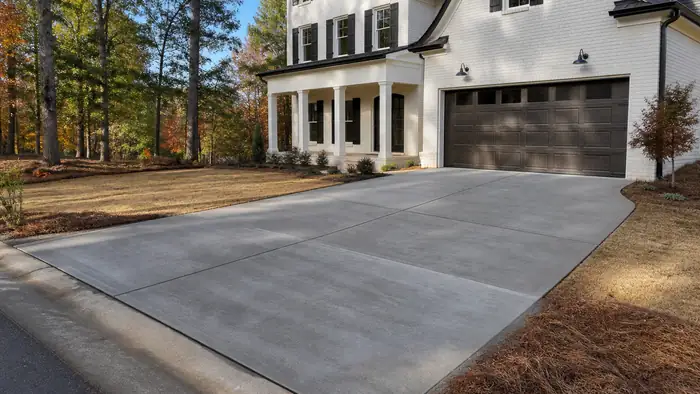
concrete slab installation completed by a local contractor at a painted-white-brick two-story home in Warner Robins, GA, under low winter sun.

Concrete Slab Installation Cost

What drives the cost of a slab is not the square footage alone. It is the site prep, the thickness, and what goes in the concrete. A 4-inch slab on compacted gravel base with wire mesh is the common residential spec. A slab carrying a shop or heavy equipment gets 5 to 6 inches and rebar on a grid. Grading matters here, since Houston County is hilly and varies block to block, so we grade and test every site before we quote it.
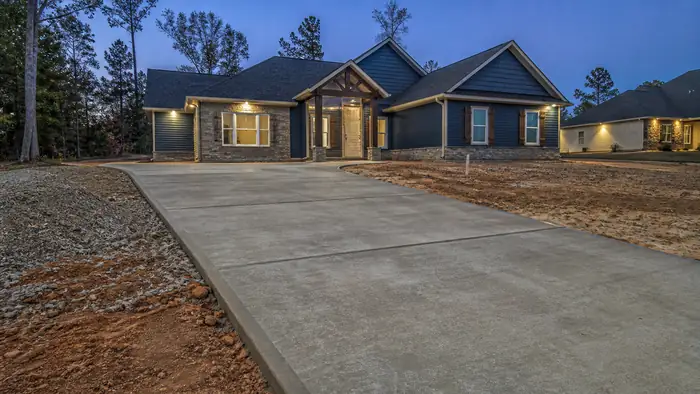
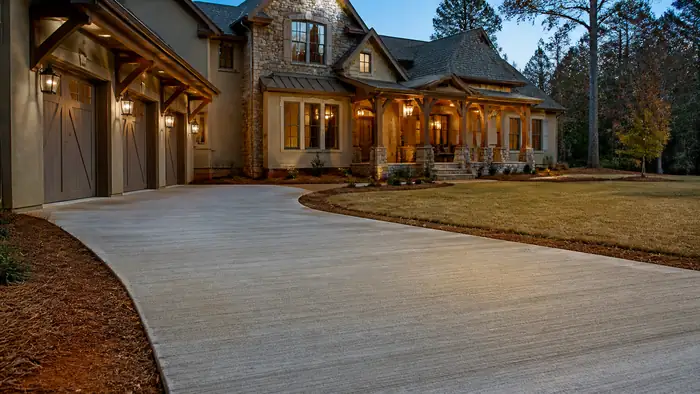
concrete driveway installation completed by a local contractor at a stacked-stone and stucco home in Warner Robins, GA, at blue hour.

Concrete Driveway Installation

A driveway that lasts starts below the surface. We strip the topsoil, set a compacted base, and pour at 4 inches minimum, thicker where trucks park. Rebar or fiber reinforcement, control joints cut at the right spacing, and a broom finish for traction. Most cracked driveways we see failed because the base settled or the joints were too far apart. Stamped and decorative finishes are available on residential driveways in Warner Robins without changing the structural work underneath.

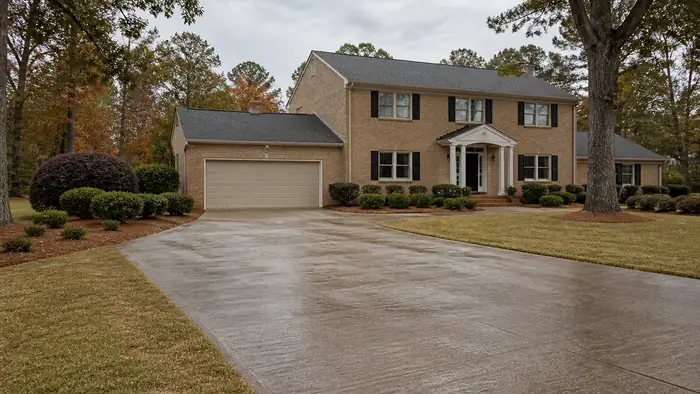
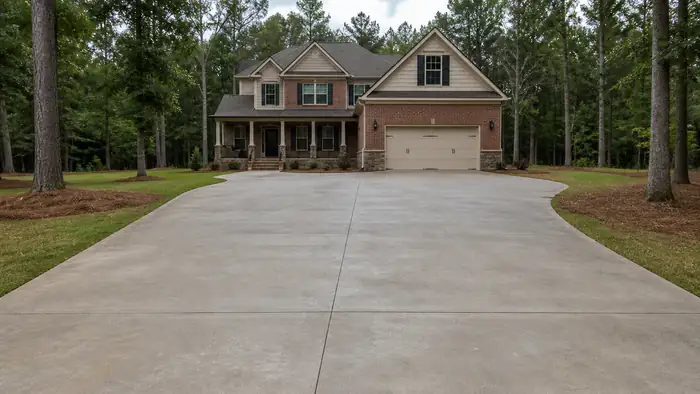
concrete flooring installation completed by a local contractor at a brick-and-siding two-story home in Warner Robins, GA, under an overcast sky.

Concrete Flooring Installation

Interior floors need a flat, level surface and a vapor barrier under the slab. Skip the barrier and moisture pushes up through the concrete, lifting tile and delaminating epoxy. We pour garage, basement, warehouse and commercial floors with proper reinforcement, then finish them steel-trowel smooth, polished, or sealed depending on the use. Floor flatness gets checked with a straightedge before we leave. A floor that holds water in the corners is a floor done wrong.

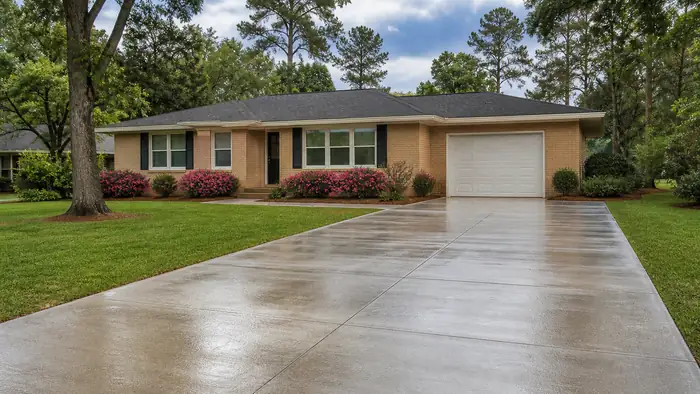
concrete slab repair completed by a local contractor at a buff-brick ranch home in Warner Robins, GA, after a rain shower.

Concrete Slab Repair

Not every cracked slab needs replacing. Hairline cracks get routed and sealed. A sunken section can often be lifted with polyurethane foam injection instead of a tear-out. Spalling and surface pitting take a bonded overlay once the loose material is ground off. Structural cracks with vertical displacement or rebar exposure are a different story, and we will say so plainly. We look at the slab, the base under it, and the drainage around it before recommending repair or replacement.

How a Concrete Installation Job Runs in Warner Robins

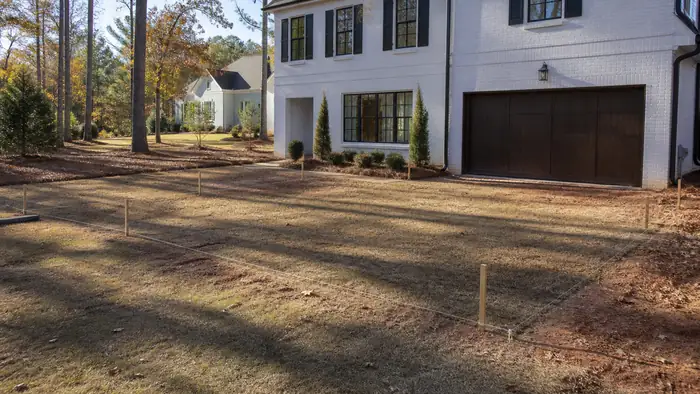
A contractor checks slope and drainage before work begins. at a painted-white-brick two-story home in Warner Robins, GA, under low winter sun.

Step 1: Site Assessment

Every job starts with us walking the property. We measure the footprint, watch where water runs after a rain, and look at what the new slab has to meet: a garage floor, a step, an existing apron. Houston County is hilly, with about 212 feet of local relief within a few miles, but it changes block to block, so we grade and test each site on its own before work starts. A probe rod finds the soft spots that would crack a driveway later.

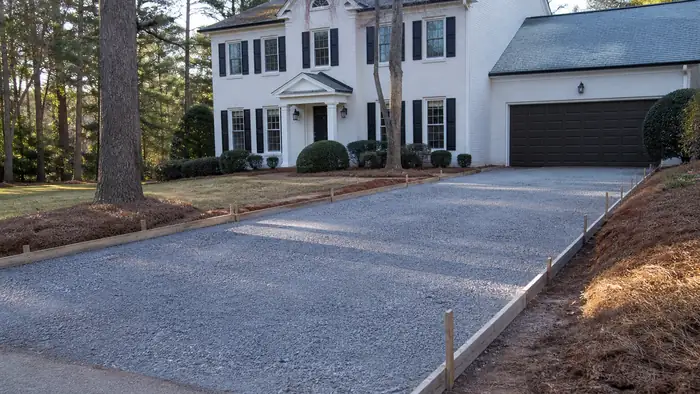
Crushed stone base is raked level inside driveway forms. at a painted-white-brick two-story home in Warner Robins, GA, under low winter sun.

Step 2: Site Preparation

Demolition comes first if there is old concrete. We break it out, haul it off, and excavate to the depth the finished slab needs, usually 4 inches of concrete over 4 inches of compacted crushed stone for a residential driveway. Soft or wet subgrade gets dug out and replaced. Then we set final grade with fall away from the house, so the 44 inches of rain this area gets in a year runs off the surface instead of pooling against your foundation.

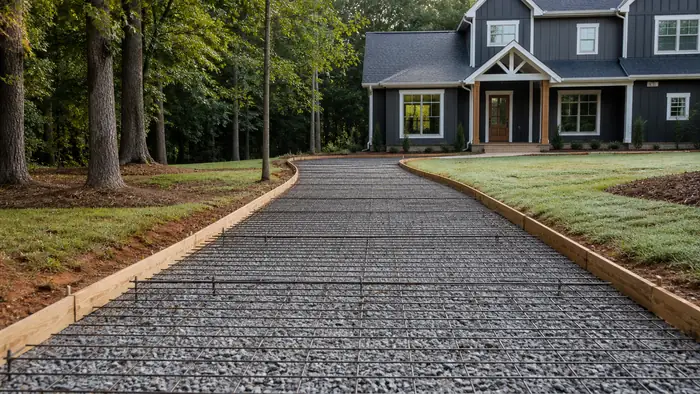
Wire mesh is unrolled across a driveway base before pouring. at a charcoal farmhouse-modern home in Warner Robins, GA, in early morning light.

Step 3: Forming & Reinforcement

Forms go up next, staked and braced so a heavy pour does not push them out of line. We check them for square and grade twice. Inside the forms we lay reinforcement: #3 rebar on 18-inch centers for driveways and patios, or 6x6 welded wire mesh on a lighter walkway, set on chairs so the steel sits in the middle of the slab. Steel lying on the gravel does nothing. Vapor barrier goes under garage and interior slabs.

A ready-mix truck discharges concrete into a driveway form. at a brick-and-siding two-story home in Warner Robins, GA, under an overcast sky.

Step 4: Pouring

The truck arrives when forms, steel and crew are all ready, because concrete does not wait. We order a 3,000 or 4,000 psi mix depending on the load it will carry, keep the water low, and place it in one continuous pour so there are no cold joints. Rakes and a come-along move it into the corners. A screed board rides the form tops to strike it level. Average daily highs here run around 77°F, so on warm days we pour early.

A broom drags across a driveway creating a slip-resistant texture. at a stacked-stone and stucco home in Warner Robins, GA, at blue hour.

Step 5: Finishing

Once the bleed water disappears, finishing begins. We bull float the surface to close it up, edge the perimeter, and cut control joints about every 10 feet on a 4-inch slab. Those joints tell the concrete where to crack, and it will crack somewhere. Broom finish is standard for driveways and walks because it grips wet tires and shoes. Stamped and other decorative surfaces get their texture in this same window, and it is a short one. Miss it and the pattern will not hold.

Damp burlap covers a small slab section during curing. at a painted-white-brick two-story home in Warner Robins, GA, under low winter sun.

Step 6: Curing

Concrete gains strength by hydrating, not by drying, so the slab has to hold its moisture for the first week. We spray a curing compound as soon as the surface will not mark, or cover it with plastic sheeting. Skip this and the top dries faster than the bottom, which shows up later as surface cracking and dusting. Foot traffic is fine after a day. Cars stay off a new driveway for about a week, and heavy trucks for a month.

A sprayer applies sealer across a driveway. at a tan-brick colonial in Warner Robins, GA, under bright midday cloud.

Step 7: Sealing

Sealing waits until the slab has cured, usually a month after the pour. We clean the surface, let it dry, and roll on a penetrating siloxane sealer for plain broom-finished concrete, or an acrylic sealer for stamped and colored work, which brings the color up and protects the release agent. Sealer keeps water, oil and salt out of the pores. The median home here was built in 1989, and older slabs often reach us having never been sealed at all. It shows.

Top Decorative Concrete Styles for Warner Robins Homes

Stamped concrete is the decorative style we pour most often around Warner Robins. The slab goes in like any other, then we press a pattern into the surface while it is still workable: flagstone, ashlar slate, wood plank, brick. Color comes from pigment mixed through the batch or a release agent worked into the stamp, and together they read like natural stone at a fraction of the labor. Exposed aggregate is the second one owners ask for. We wash the top layer of paste off before it cures so the stone in the mix shows through. A broom finish with a colored border is the quieter option, and it suits a house built in 1989 as well as a new one.

Decorative work fails at the same places plain concrete does, only it is harder to hide. A stamped patio poured on a base that was never compacted cracks along the pattern lines, and no sealer covers that. Houston County is hilly and the ground changes block to block, so we grade and test every site before work starts and let the reinforcement and slab thickness follow the site rather than a standard drawing. With about 44 inches of rain a year, drainage matters more than the pattern. We pitch decorative surfaces away from the house, cut control joints where the stamp can carry them, and seal the finish once it has cured. That is what keeps color and shape in a driveway or patio.

Concrete Installation Pricing in Warner Robins, GA

We do not quote a driveway or a patio without seeing it. Two slabs the same size can come in far apart, because most of the cost sits under the surface where a homeowner never looks. The ground here is hilly, with about 212 feet of local relief within a few miles, and it changes block to block, so every site is graded and tested on its own before we put a number on it. Here is what moves that number.

What changes the priceWhich wayWhy
Old concrete or asphalt that has to come out firstcosts moreBreaking, loading and hauling a slab is a separate day of work before any new concrete goes down
Soft or unstable fill under the sitecosts moreWe dig it out and bring in compacted gravel base, or the new slab cracks along with the ground
A truck can back straight to the pourcosts lessConcrete goes from chute to form, with no pump and no wheelbarrow crew
Pour sits behind the house or past a fence linecosts moreA pump truck or hand-carrying every load adds equipment and hours
Thicker slab with rebar or wire meshcosts moreMore material and steel, and it is what a driveway that carries a truck or trailer needs
Stamped or colored finishcosts moreExtra labor, color hardener and release, and the surface has to be worked while it sets
Site already drains away from the housecosts lessNo grading, drains or swales to build for the 44 inches of rain a year that has to go somewhere
Plain broom finish on a flat, open lotcosts lessStraightforward forming and finishing with nothing in the way

Compare bids on what they include, not on the bottom line. Look for slab thickness, whether reinforcement is rebar or mesh, how deep the gravel base goes, who hauls off the demolition, and whether grading and drainage are in the number or a change order later. A low bid that leaves those out is not lower.

Common Concrete Installation Questions From Warner Robins Owners

How much is a cubic yard of concrete delivered in Warner Robins, and what factors affect the price?

Delivered concrete is priced by the truckload, and the number moves with the job. Mix strength and any admixtures come first. Then the load size: a small pour still pays a minimum, and a short load costs more per yard than a full truck. Distance from the batch plant, pump rental, and a weekend pour all add to it. We price the whole project rather than the yard, so call for a free estimate.

What types of concrete services does Warner Robins Premier Concrete offer in Warner Robins, GA?

Driveways, patios, sidewalks, garage slabs, footings and foundations, pool decks, and stamped or colored decorative surfaces on the residential side. Commercial work covers parking pads, loading areas, dumpster pads, and structural slabs with steel reinforcement. We also cut out and replace failed concrete and pour new surfaces over properly prepared ground. Every site is graded and tested on its own before work starts, because the ground here changes from block to block.

Do I need a permit for concrete work in Warner Robins?

Yes, some of it does. Flatwork that stays on your own lot, like a patio or a walkway, often does not. Anything that touches the public right of way, changes how water drains toward a neighbor, or carries a structure usually does. We check what the job needs before the first form goes in and handle that paperwork as part of the project, so you are not guessing.

How long does concrete expansion joint installation take from site prep to final seal for Warner Robins properties?

Most expansion joint work runs about a day on site, then waits on the slab. We clean or saw the joint, set the filler board or backer rod, and place the surrounding concrete. Sealant goes in only after the slab has cured and the joint is dry, and with about 44 inches of rain a year here, dry can mean a return trip. A patio joint is a small job. A commercial slab with many joints takes longer.

Do I need permits for concrete floor installation in Warner Robins, GA?

No, not always. A slab on grade for a shed or a shop floor may be plain flatwork, while a slab that carries a house, an addition, or a garage is structural and normally gets inspected before and after the pour. The difference is what sits on it. Tell us what the floor is for, whether the property is in Warner Robins or out toward Perry, and we sort out which side it falls on during the estimate.

What design options are available for concrete pool decks?

Pool decks need a surface that stays cool underfoot and does not get slick, so the choices start there. Broom finish is the plain option. Exposed aggregate gives grip and hides wet footprints. Stamped patterns in slate, flagstone, or wood plank work well with a lighter integral color, since pale surfaces hold less heat. Add a contrasting border, a rounded coping edge, or a sealer with a grit additive. Every deck is pitched away from the water.

Get a Free Estimate

Get Free Estimates

We warranty all of our work because we believe in what we do.

Tap to call +1 478-339-5356