+1 478-339-5356
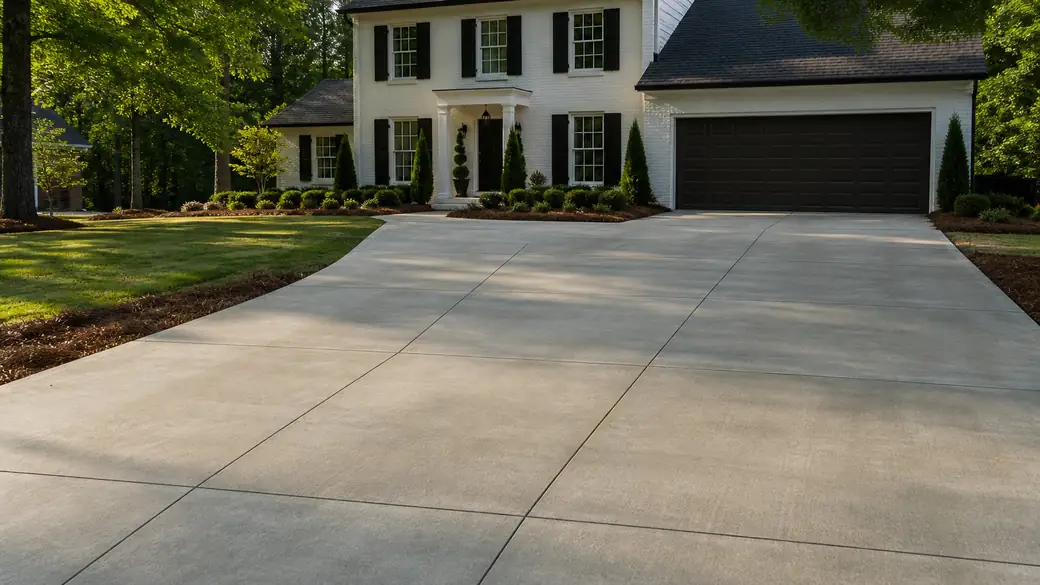
concrete construction services completed by a local contractor at a painted-white-brick two-story home in Warner Robins, GA, under low winter sun.

Concrete Construction Services in Warner Robins, GA

We pour and finish concrete for homes and businesses across Warner Robins: driveways, patios, walkways, garage and shop slabs, and the stamped or decorative surfaces people put in out back. Plenty of what we do is replacement. The median home here was built in 1989, so a lot of the original concrete has been carrying cars, foot traffic and weather for a long time, and it shows in the cracks and the low spots. Some jobs are new construction. Whichever it is, the slab gets the same attention to base, reinforcement and finish, because that is what decides how long it lasts.

Ground around here is hilly, with about 212 feet of relief within a few miles, and it changes from one block to the next. That is why we grade and test every site on its own before any forms go up, rather than assuming one lot behaves like the last. Drainage gets planned at the same time. With about 44 inches of rain a year, water needs a route away from the slab and the foundation, not under them. We handle the permit when the project calls for one. Get those two things right and the finish work has something solid to sit on. Call for a free estimate.

Call +1 478-339-5356

Licensed, Bonded, and Insured · A combined 15 years of experience

Get Free Estimates

We warranty all of our work because we believe in what we do.

What Is Included in Concrete Construction Services

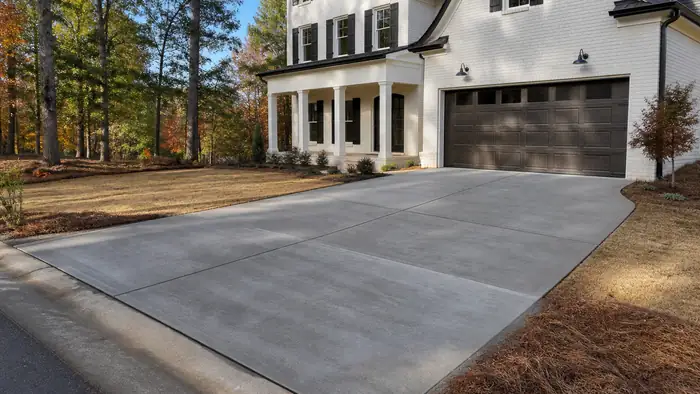
concrete slab installation completed by a local contractor at a painted-white-brick two-story home in Warner Robins, GA, under low winter sun.

Concrete Slab Installation Cost

Four things set the number: thickness, reinforcement, site prep and finish. A 4-inch slab on compacted gravel suits a patio or shed. A garage or shop floor that carries vehicles wants 6 inches with rebar set on chairs. Houston County has 212 feet of local relief, so some lots need cutting and fill before forms go up, and that dirt work can outweigh the concrete itself. We check grade, measure, and price your slab on site. Call for a free estimate.
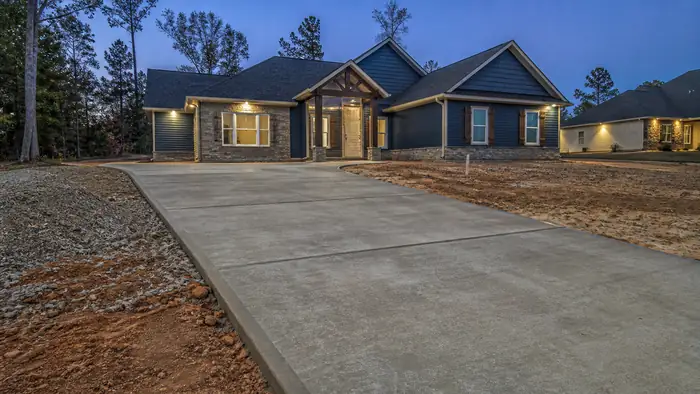
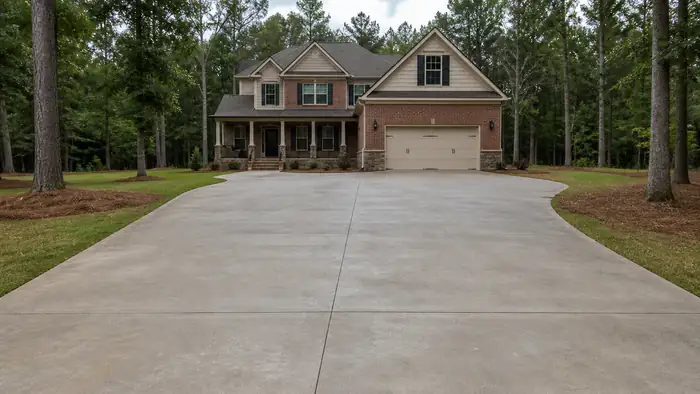
concrete driveway installation completed by a local contractor at a stacked-stone and stucco home in Warner Robins, GA, at blue hour.

Concrete Driveway Installation

Most residential driveways we pour run 4 to 5 inches, thickened at the apron where delivery trucks turn in. We compact a crushed stone base, lay rebar or wire mesh, and saw control joints at set spacing so the slab cracks where we choose. With about 44 inches of rain a year, slope matters. We pitch every surface to shed water away from the garage and off the edges. Finishes range from broom texture to exposed aggregate or stamped borders.

concrete flooring installation completed by a local contractor at a brick-and-siding two-story home in Warner Robins, GA, under an overcast sky.

Concrete Flooring Installation

Interior floors face different demands than a driveway. For a garage, shop or commercial space, we lay a vapor barrier, reinforce the slab, and power trowel the surface dense and flat. Timing is the whole job: close the surface too early and it blisters, wait too long and it finishes rough. After curing, we can grind and seal it, polish it, or leave it ready for tile or epoxy. We place joints around shelving lines and doorways, not across them.

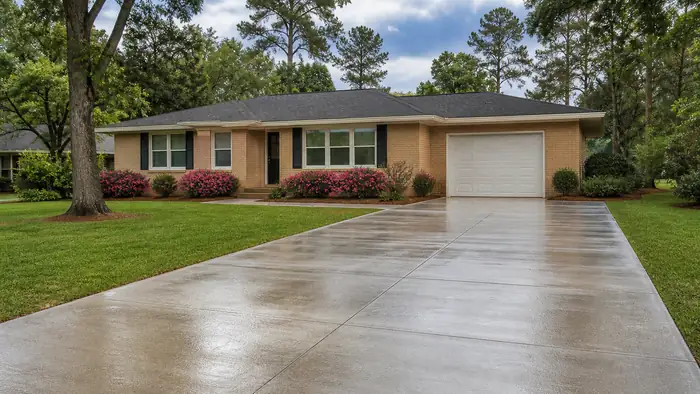
concrete slab repair completed by a local contractor at a buff-brick ranch home in Warner Robins, GA, after a rain shower.

Concrete Slab Repair

Cracks, sunken sections and flaking surfaces all have a cause, and we find it before we fix anything. The median home here was built in 1989, so plenty of original patios and driveways have carried a lot of weather. Hairline cracks get routed and sealed. Settled panels are cut out and replaced with new concrete doweled into the old. Scaled surfaces can be ground and resurfaced. If water has washed out the base, patching won't hold, and we'll say so.

Our Concrete Process, Step by Step

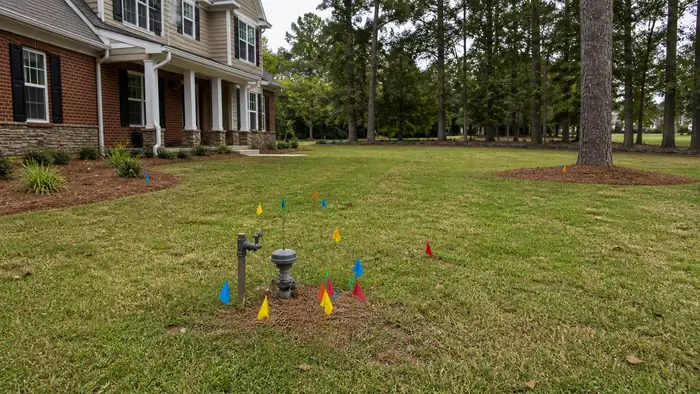
Utility flags mark buried lines before digging starts. at a brick-and-siding two-story home in Warner Robins, GA, under an overcast sky.

Step 1: Site Assessment

We walk the property before we quote anything or pick a mix. Houston County is hilly, and the ground changes from one block to the next, so every site gets graded and tested on its own terms. We check where water goes when it rains, how the existing slab or lawn sits against the house, and whether roots, soft spots or old fill are hiding under the surface. If the project needs a permit, we handle the permit.

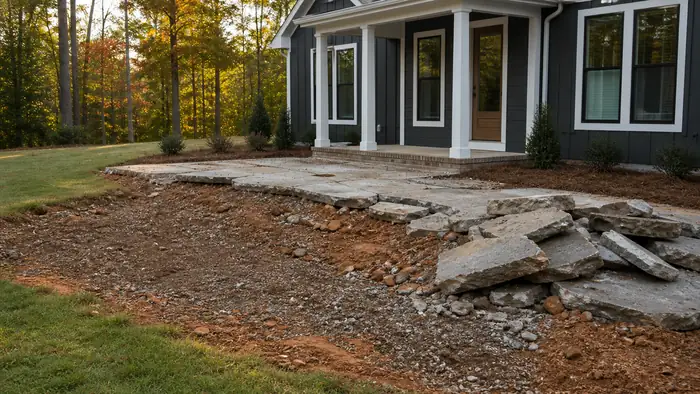
An old patio slab is broken up and hauled away. at a charcoal farmhouse-modern home in Warner Robins, GA, in early morning light.

Step 2: Site Preparation

Most cracked slabs we tear out failed from the ground up, not the top down. We dig out sod, topsoil and anything organic, then bring in crushed stone and compact it in lifts with a plate compactor until it stops moving. Grade matters here: with about 44 inches of rain a year, a slab needs a slight fall away from the foundation so water sheds instead of pooling. Nothing poured on top can make up for a soft base.

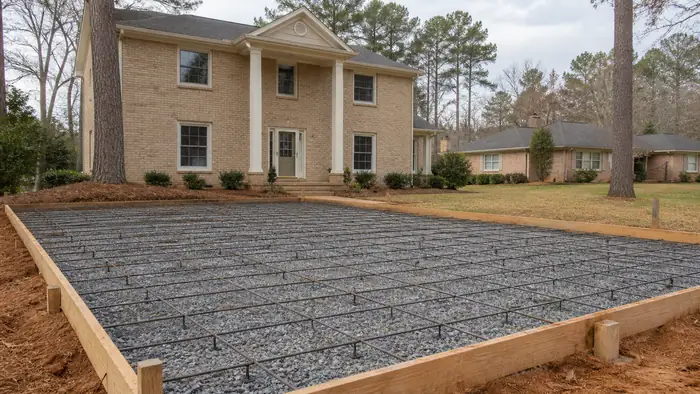
A worker ties rebar into a grid before a residential pour. at a tan-brick colonial in Warner Robins, GA, under bright midday cloud.

Step 3: Forming & Reinforcement

Forms set the shape and the finished height, so we stake them tight, string-line them and check them for pitch before any steel goes in. Driveways get rebar tied in a grid and set on chairs so it sits in the middle of the slab, not flat on the gravel where it does nothing. Patios and walks often get wire mesh or fiber in the mix instead. Where the new slab meets the house or an old slab, we add expansion joint material.

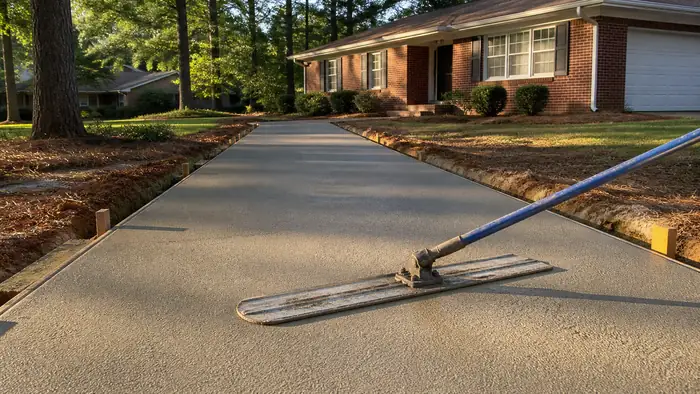
A bull float smooths a residential walkway surface after screeding. at a red-brick ranch home in Warner Robins, GA, in late afternoon light.

Step 4: Pouring

On pour day, the crew, tools and pump or chute are in place before the truck backs up, because concrete starts setting whether we are ready or not. We place it and screed it off the forms. One thing we refuse to do is add water at the truck to make it spread easier: it weakens the top of the slab and leads to dusting and cracks. Heavy rain on a fresh pour ruins the surface, so we watch the forecast closely.

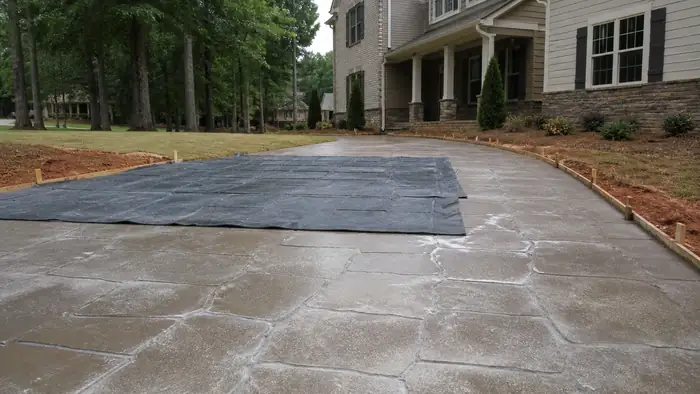
Stamping mats are pressed into a patio surface to imprint a pattern. at a brick-and-siding two-story home in Warner Robins, GA, under an overcast sky.

Step 5: Finishing

Finishing starts when the bleed water leaves the surface, not before. Working it wet traps water under the top layer, and that is where scaling and flaking come from. We bull float, edge the slab, then cut control joints to decide where the slab cracks instead of leaving it to chance. Driveways and walks get a broom finish for grip. Stamped and decorative work gets its color and pattern at this stage, while the concrete can still take an impression.

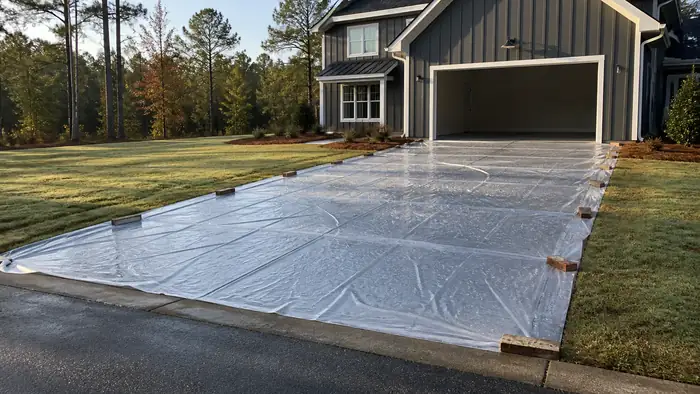
Plastic sheeting covers a curing driveway slab. at a charcoal farmhouse-modern home in Warner Robins, GA, in early morning light.

Step 6: Curing

Concrete does not dry. It cures, and it needs moisture to do it. If the surface loses water too fast, the top gets weak and crazes with fine cracks. With daily highs averaging around 77°F, sun and wind can pull water out of a new slab quickly, so we keep it damp or spray on a curing compound right after finishing. Foot traffic can come within days. Cars wait longer, because the slab keeps gaining strength for weeks.

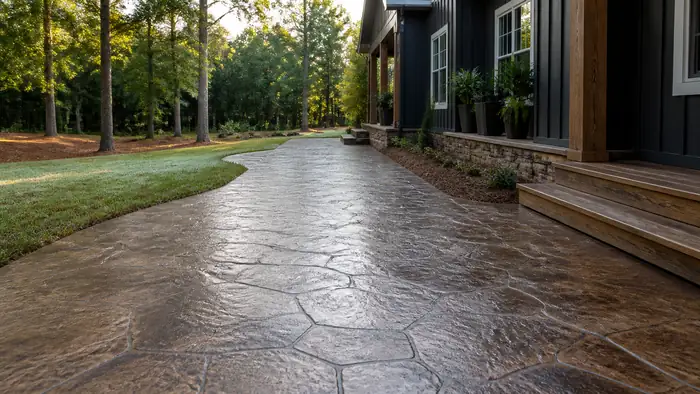
A finished stamped surface shows a glossy sealed sheen. at a charcoal farmhouse-modern home in Warner Robins, GA, in early morning light.

Step 7: Sealing

A good sealer keeps water, oil and fertilizer from soaking in and staining the surface. We wait until the slab has cured before applying it, because sealing too early traps moisture and leaves a cloudy white haze. Broom-finished driveways usually get a penetrating silane or siloxane sealer that leaves no shine. Stamped and decorative patios get an acrylic sealer that deepens the color, with a grit additive mixed in so the surface is not slick when wet. Plan on resealing every few years.

Top Decorative Concrete Styles for Warner Robins Homes

Stamped concrete is the style most owners ask for first, and for good reason. We press the pattern into the surface while it is still workable, so a patio can read as slate, flagstone or brick without the loose joints and shifting pavers those materials bring. Exposed aggregate suits driveways: we wash back the top layer to show the stone underneath, which gives tires and shoes real grip. Integral color runs through the whole slab rather than sitting on top, so a chip shows the same shade. For homes built around 1989, a broom finish with a stamped border often ties new work to the house without fighting it.

Each of these finishes has to live with about 44 inches of rain a year, and that shapes how we build them. Stamped surfaces get a slip-resistant additive in the sealer, because a smooth pattern on a wet patio step is how people get hurt. Pitch matters more than pattern. Every slab is set to shed water away from the foundation, and on sloped lots we grade and test the site before any forms go down. Reinforcement goes in the same way whether the top is decorative or plain. A good-looking surface over a poorly prepared base cracks just as fast as an ugly one.

Common Concrete Construction Services Questions From Warner Robins Owners

How much does concrete patio construction cost in Warner Robins?

The honest answer comes after we see the yard. Size is where it starts, but slope, room for the truck to get close, and the finish you want move the number more than most people expect. A plain broom finish and a stamped surface are two different jobs. We measure, check how the ground sits, and write out exactly what the work includes. Call for a free estimate and you get a figure built for your property, not a guess.

What factors affect the price of residential concrete construction in Warner Robins?

Grade comes first. Houston County has real relief, about 212 feet of rise and fall within a few miles, so one lot sits flat while the next needs cut and fill. Drainage matters too. The area sees around 44 inches of rain a year, and that water has to go somewhere other than under your slab. After that come thickness, reinforcement, removal of old concrete, and the finish. Tearing out a worn slab adds time.

Do I need a permit for concrete steps construction in Warner Robins?

Yes, often, especially when the steps tie into the house or lead up to an entry door. The rules turn on height, location, and whether a railing is required, so we confirm what applies before any forms go up. If the job needs a permit, we handle the permit and build to the requirements it sets. You do not have to sort out that paperwork yourself. Ask us about your steps and we check.

Do I need permits for concrete patio construction in Warner Robins?

No, not for every patio. A slab on grade in the back yard is usually simpler than work attached to the structure, but setbacks, drainage, and overall size can change that. We look at where the patio goes and what it connects to, then check the rules for that spot. When a permit is needed, we take care of it. Either way, the slab gets the same base preparation and reinforcement.

How much does concrete step and staircase construction cost in Warner Robins, GA?

Steps are priced by the work in them. Each riser needs its own form, and a staircase running down a slope takes more digging, more reinforcement, and more hand finishing than a flat pour. The number of steps, the width, any landings, and railings all count. So does the finish, since stamped or decorative treads take longer to get right. We give a free estimate once we have measured the rise and the run.

What types of concrete construction does Warner Robins Premier Concrete handle?

We pour driveways, patios, walkways, steps, and structural slabs for homes, along with commercial slabs and flatwork. Decorative work covers stamped patterns, colored surfaces, and exposed finishes. We also tear out and replace concrete that has cracked, settled, or started holding water. Small or large, every project gets the same attention to grade, base, and reinforcement, because those are the conditions that decide how long the concrete lasts.

Get a Free Estimate

Get Free Estimates

We warranty all of our work because we believe in what we do.

Tap to call +1 478-339-5356