+1 478-339-5356
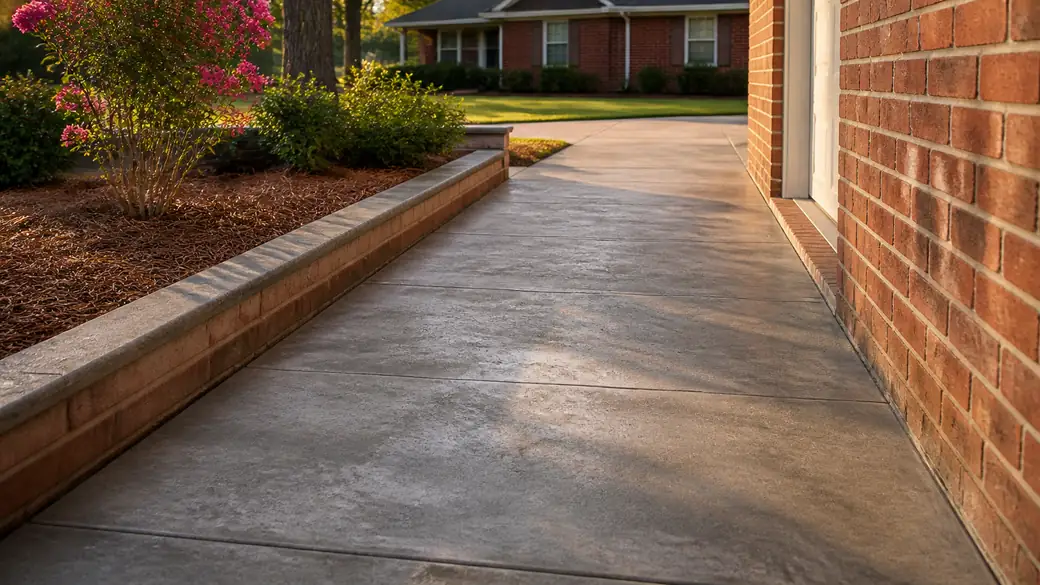
concrete sidewalk installation completed by a local contractor at a red-brick ranch home in Warner Robins, GA, in late afternoon light.

Concrete Sidewalk Installation in Warner Robins, GA

A sidewalk is the part of a property people use most and think about least. Around Warner Robins that usually means a walk from the driveway to the front door, a path along the side of the house to the back gate, or a run by the street where the old concrete has heaved and cracked. We pour new walks and replace worn ones, on residential and commercial property alike. With the median home here built in 1989, much of the concrete we tear out is original to the house and has simply done its time.

Every job starts on the ground, not on paper. We walk the route, watch where water runs, and check the grade from one end to the other, because Houston County is hilly (212 feet of local relief within a few miles) and it changes from block to block. Then we cut out the old surface, dig down to a firm base, compact it and set the forms. Reinforcement goes in before the pour. We handle the permit where one is needed. After finishing, the slab gets its control joints and time to cure before anyone walks on it.

Most failed sidewalks we see did not fail from age alone. They failed because water had nowhere to go. This area gets about 44 inches of rain a year, and a walk poured flat against a foundation, or straight across a low spot in the yard, holds that water, loses its base and starts to tilt. Tree roots lift slabs that went in too thin. Joints cut too far apart let the concrete crack wherever it likes. None of this shows on the day of the pour. It shows a few years later.

Getting it right is mostly a matter of care in the places nobody looks. We pitch the walk so it sheds water away from the house. Soft spots get dug out instead of poured over. Joints go where the cracks would want to run anyway. Heights are matched at the driveway and the steps so nobody catches a toe. That is the difference between a sidewalk you end up replacing and one you stop noticing. Call for a free estimate.

Call +1 478-339-5356

Licensed, Bonded, and Insured ยท A combined 15 years of experience

Get Free Estimates

We warranty all of our work because we believe in what we do.

What Is Included in Concrete Sidewalk Installation

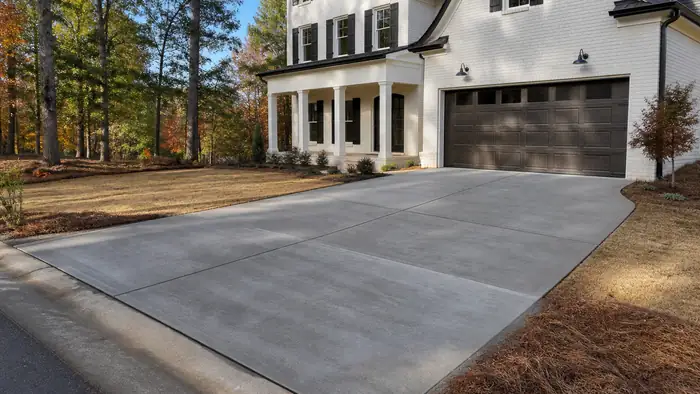
concrete slab installation completed by a local contractor at a painted-white-brick two-story home in Warner Robins, GA, under low winter sun.

Concrete Slab Installation Cost

The figure we quote covers the whole job, not just the concrete. That means cutting out sod and topsoil, grading, a compacted gravel base, forms, rebar or wire mesh set on chairs, the pour, finishing, control joints and curing. We handle the permit and haul away everything we dig out. Each of those lines is written out on the estimate, so you can see what you are paying for. Call for a free estimate. We measure the site before any figure goes on paper.
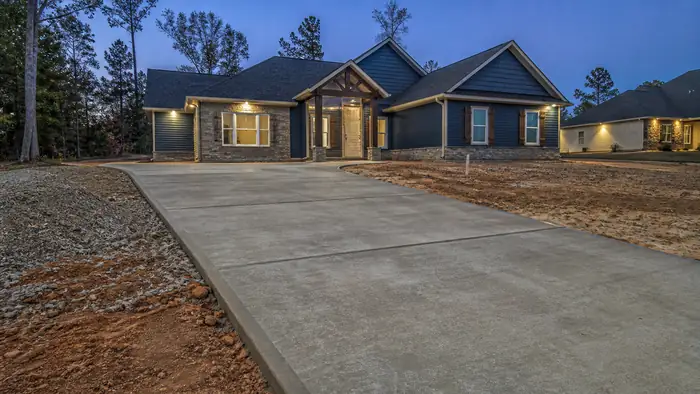
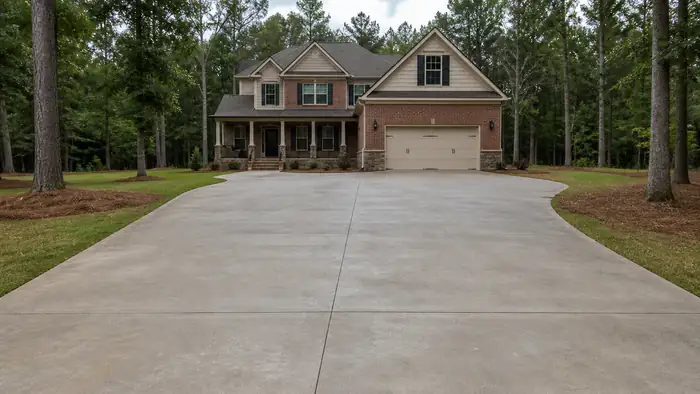
concrete driveway installation completed by a local contractor at a stacked-stone and stucco home in Warner Robins, GA, at blue hour.

Concrete Driveway Installation

A driveway carries more weight than any other flatwork on a property, so we build it thicker: five inches for cars, six where a truck or trailer parks. Rebar goes in on a grid, held up on chairs so it sits in the middle of the slab instead of lying in the dirt. Concrete cracks. Control joints make it crack in straight lines where we choose. The ground here is hilly and changes block to block, so every site is graded and tested before we set the slope that sheds water off the slab and away from the garage.

concrete flooring installation completed by a local contractor at a brick-and-siding two-story home in Warner Robins, GA, under an overcast sky.

Concrete Flooring Installation

Garage floors, shop floors, shed pads and room additions start the same way: a compacted base, a plastic vapor barrier so ground moisture cannot wick up through the slab, and reinforcement set at mid-depth. Indoors we finish with a steel trowel for a dense, smooth surface that sweeps clean. Planning an epoxy coating later? We leave the floor ready for it. The failure we see most is a floor poured with no barrier underneath. It sweats, stains, and lifts every coating put on it.

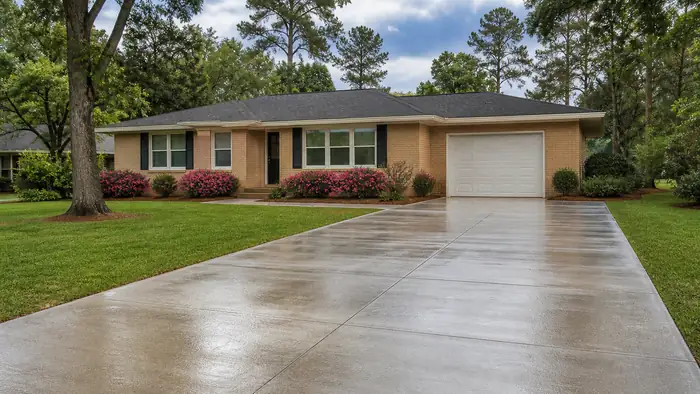
concrete slab repair completed by a local contractor at a buff-brick ranch home in Warner Robins, GA, after a rain shower.

Concrete Slab Repair

With the typical house here built around 1989, plenty of patios, walks and garage floors have had decades to settle and crack. We start by finding out why. Hairline cracks get routed and sealed. A section that has sunk or heaved gets saw cut out, and we drill dowels into the sound concrete on each side so the new pour stays level with the old. About 44 inches of rain a year will find any gap. If water is washing the base out from under a slab, patching the top only buys time.

Why Choose Warner Robins Premier Concrete

A sidewalk looks like the simplest pour on a property, and that is why so many of them crack, heave or hold water within a few seasons. We treat it as a small structural job. The walk has to carry foot traffic, mowers and the odd delivery truck tire, and it has to shed water away from the house instead of toward it. That matters in Warner Robins, where about 44 inches of rain falls in a year. A walk set even slightly low turns into a creek every time a storm comes through. Getting the pitch right is most of the job.

The work runs in a set order. We look at the ground first: Houston County is hilly, the grade changes from block to block, and every site is graded and tested on its own before a form goes down. Then we build the base, place reinforcement where the load calls for it, and pour. Control joints get cut at the right spacing so the slab cracks where we choose, not across the middle of your walk. If the project needs a permit, we handle the permit. You deal with the same crew from layout to cleanup. Nothing gets skipped because the job is small.

Most failed walks we tear out share the same few problems. The base was thin or soft. Nobody checked where the water would go. The concrete dried too fast, or someone finished the surface while it was still bleeding water, and it started to flake. The median home around here was built in 1989, so a lot of original walks have had decades of roots and settling working on them, and replacing one means fixing what broke it, not just pouring over it. We would rather do the prep once than come back to the same patch of ground. Call for a free estimate.

Top Decorative Concrete Styles for Warner Robins Homes

Most decorative walks we pour in Warner Robins use one of a few styles: stamped patterns like ashlar slate, cobblestone or running brick; exposed aggregate, where the top paste is washed away to show the stone underneath; a plain broom finish framed by a smooth or stamped border; and integral color, mixed in at the plant so it runs all the way through the slab. With the median home here built in 1989, we pick a pattern and color that sit easily beside brick and siding of that age.

Layout comes first. We set forms, cut the grade and place reinforcement before any concrete arrives, because a decorative surface shows every dip underneath it. Stamping has a short window: the slab has to be firm enough to hold the pattern but soft enough to take the mats, so we staff the pour to stamp all of it in time. Exposed aggregate gets washed at a set point in the cure. Then come saw cuts, cleanup and a sealer once the slab has dried enough to take it.

Water causes most of the trouble on decorative walks. This area sees about 44 inches of rain a year, and a stamped or sealed surface that holds a puddle turns slick and stains where the water sits. The ground is hilly too, with 212 feet of local relief within a few miles, though it changes from one block to the next, so we grade and test every site before we set a single form. A walk that runs down a slope needs the right pitch, some grip in the texture and control joints placed where the concrete actually wants to crack.

Getting it right costs time more than anything else. Decorative work needs a dry forecast, a full crew on pour day and patience while the sealer cures, and we would rather move a date than stamp a walk in poor conditions. It also takes some restraint in design. A busy pattern on a narrow sidewalk can look cluttered, so we often suggest a broom-finished field with a stamped border instead. On a longer walk up to a front porch, the full pattern earns its place.

What Decides the Price of Concrete Sidewalk Installation

Most of what moves the price of a sidewalk sits around the slab, not in it. The walk itself is a narrow strip of concrete. What it costs depends on what has to come out first, how close the truck can get, and how the ground handles water. Walk your own property with the list below and you will have a fair sense of the job before anyone quotes it.

What changes the priceWhich wayWhy
Old concrete, pavers or gravel already in placecosts moreIt has to be broken out, loaded and hauled off before we can form anything.
Tree roots running under the pathcosts moreRoots get cut back or the route shifts, or the new walk heaves the same way the old one did.
A clear driveway or lawn the mixer can back acrosscosts lessWe pour straight from the chute. Without that access, concrete moves by wheelbarrow or pump.
Slope along or across the walkcosts moreHouston County is hilly and changes block to block. More grade means more forming, sometimes steps, and slower finishing.
Low spots where water stands after raincosts moreWith about 44 inches of rain a year, a soft base gets dug out and rebuilt, or a drain goes in.
Sections that carry a mower, cart or carcosts moreA thicker slab and added reinforcement where the walk crosses a driveway or takes real weight.
Sprinkler heads, meter boxes or lines in the pathcosts moreEach one gets located, protected or moved, and the forms are cut around it.
Tying into a street sidewalk or curbcosts moreWork at the public edge usually needs a permit. We handle the permit.

When bids come in, line them up item by item. Check the slab thickness, the base material and depth, and whether the reinforcement is wire, rebar or nothing. Look for control joint spacing, removal and haul-off, and who pulls the permit. A lower number that leaves one of those out is quoting a different sidewalk.

Get a Free Estimate

Get Free Estimates

We warranty all of our work because we believe in what we do.

Tap to call +1 478-339-5356