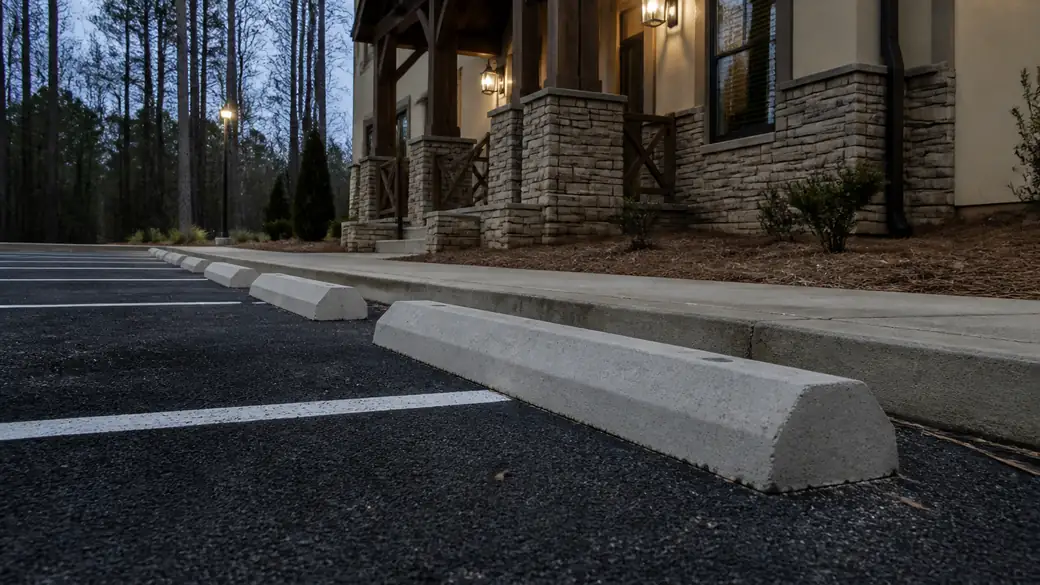
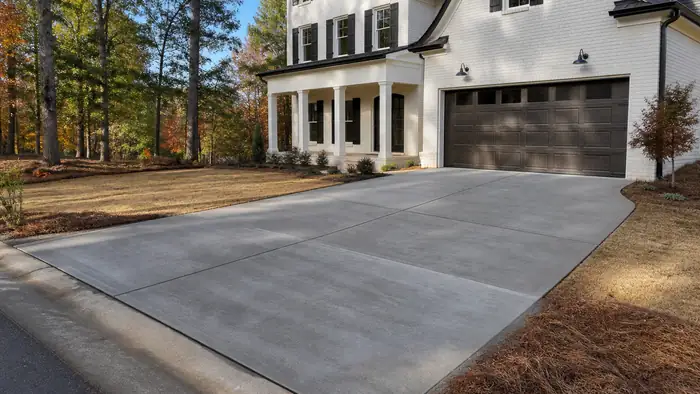
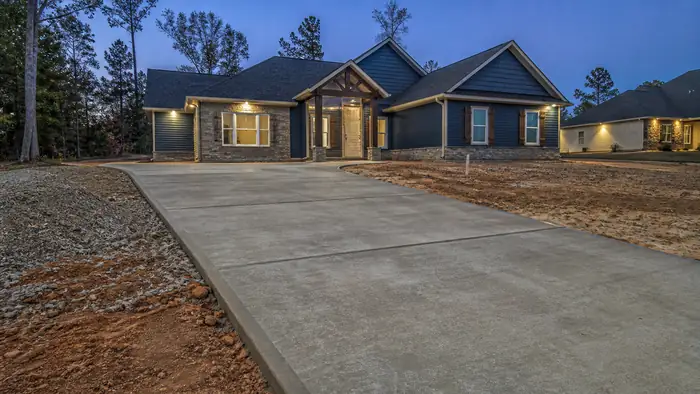
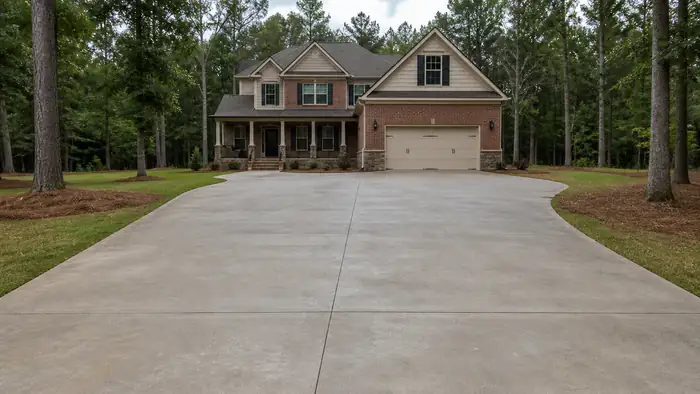
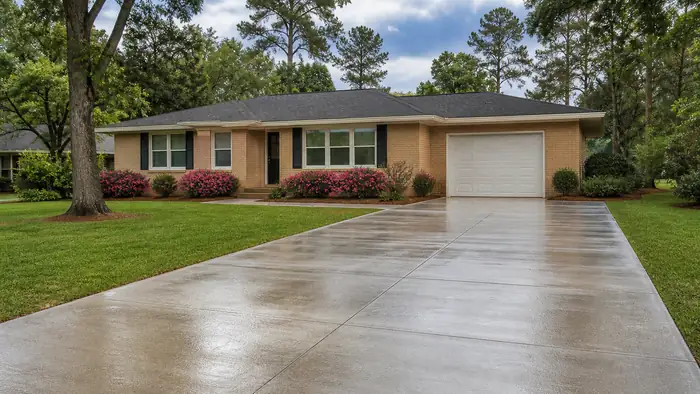
A concrete parking lot is a structural slab built to take cars, delivery vans and loaded trucks turning on it every day without breaking up at the edges. We build them in Warner Robins for clinics, schools, churches, shops and offices, and for residential properties that need more room than a driveway gives. Health care, education and retail are among the largest employers in the area, and all three depend on a lot people can pull into without a second thought. That is the kind of surface we set out to build.
Every job starts with the ground. Houston County is hilly, with 212 feet of local relief within a few miles, but it varies from block to block, so we grade and test each site on its own before any concrete is ordered. Then we build the base, compacted and shaped to the slopes the drainage calls for. Reinforcement goes in next, matched to the traffic the lot will carry. We place the slab in sections, cut control joints at the right time, and let it cure properly. We handle the permit.
Water ruins more lots than weight does. The area sees about 44 inches of rain a year, and a lot that sheds it badly will pond in the low corners, soften the base underneath and crack along the wheel paths. Slabs poured too thin over loose fill settle and split. Joints cut late let the concrete pick its own crack lines, which are never straight. None of this shows on the day of the pour. Tear out a failed lot, though, and you usually find one of these problems underneath, often more than one.
Getting it right mostly costs attention. It means testing before grading, grading before base, and not rushing a pour because the trucks are already booked. It means the right materials and the right reinforcement instead of whatever happens to be on hand. That work disappears once the concrete is down. It is also the difference between a lot you forget about and one you are patching every year. If you are planning a new lot or replacing an old one, call for a free estimate.