+1 478-339-5356
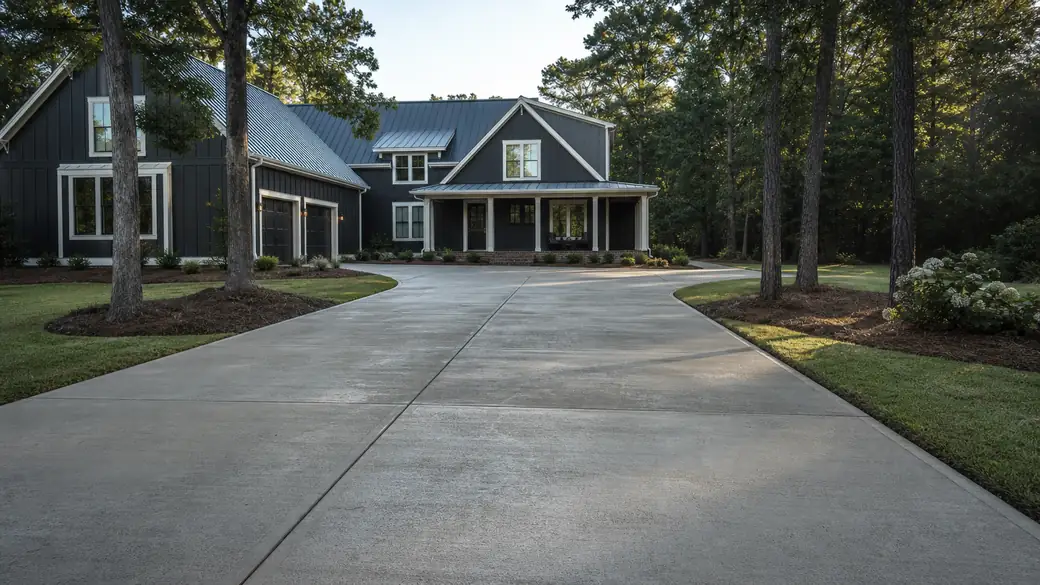
commercial concrete construction completed by a local contractor at a charcoal farmhouse-modern home in Warner Robins, GA, in early morning light.

Commercial Concrete Construction in Warner Robins, GA

We pour commercial concrete in Warner Robins: parking areas, loading pads, sidewalks, dumpster pads, and the structural slabs that sit under shops, offices and clinics. The two largest industries in this county of 82,990 people are educational services with health care and social assistance (18.6% of employment) and retail trade (15.5%). A lot of what we build here carries foot traffic, delivery trucks and carts every day. That use decides the job. A slab under a storefront and a pad where box trucks turn are different pours, so we set the thickness, reinforcement and joint layout for the load each surface will actually see.

Ground comes next. Houston County is hilly, with 212 feet of local relief within a few miles, and it changes from one block to the next. Every site gets graded and tested on its own before a form goes down. Rain matters too. About 44 inches falls here in a year, and a commercial surface has to shed all of it, so we build in slope and drainage that move water off the pavement instead of letting it pool on top or run underneath. We handle the permit. Call for a free estimate.

Call +1 478-339-5356

Licensed, Bonded, and Insured · A combined 15 years of experience

Get Free Estimates

We warranty all of our work because we believe in what we do.

What Is Included in Commercial Concrete Construction

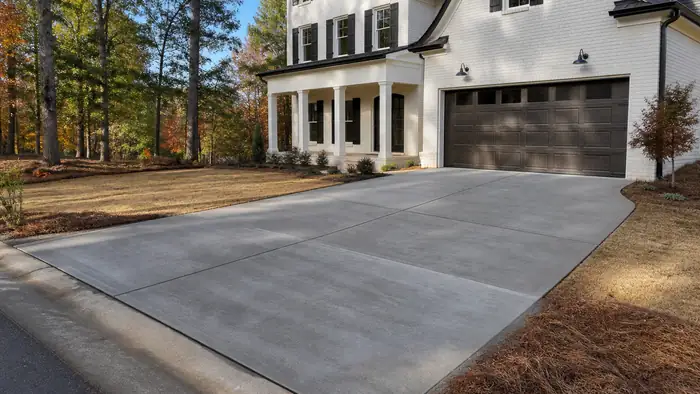
concrete slab installation completed by a local contractor at a painted-white-brick two-story home in Warner Robins, GA, under low winter sun.

Concrete Slab Installation Cost

The quote covers what sits under the concrete as much as the concrete itself. Houston County is hilly and the ground changes from one block to the next, so every site is graded and tested on its own. We compact a gravel base, lay a vapor barrier and set rebar on chairs so the steel ends up inside the slab, not on the dirt. Thickness follows the load. A stockroom and a forklift aisle are not the same slab.
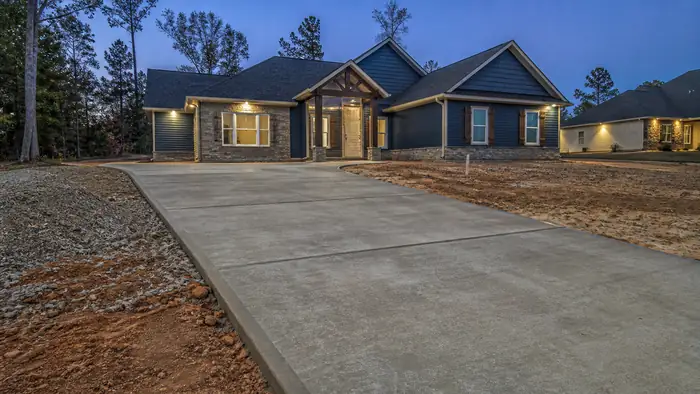
concrete driveway installation completed by a local contractor at a stacked-stone and stucco home in Warner Robins, GA, at blue hour.

Concrete Driveway Installation

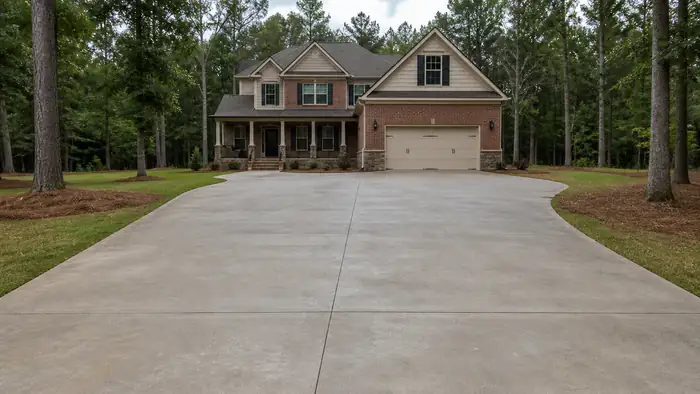
A commercial driveway takes turning trucks, not just parked cars, so we size the base and reinforcement for the heaviest thing that will use it. Houston County gets about 44 inches of rain a year. Every driveway is sloped to move water off the surface and away from the building. Control joints are cut soon after the pour, spaced so cracks land in the joints instead of across the middle. Broom finish is standard. Stamped or decorative borders are an option.

concrete flooring installation completed by a local contractor at a brick-and-siding two-story home in Warner Robins, GA, under an overcast sky.

Concrete Flooring Installation

Interior floors live or die on the finish. For warehouse and shop space we power-trowel to a hard, dense surface, then harden and seal it so it holds up under pallet jacks without dusting. Retail and office floors can be ground and polished, or stained, so the slab itself is the finished floor. We check flatness while the concrete is still workable. A low spot under racking or a checkout lane is hard to fix later and impossible to hide.

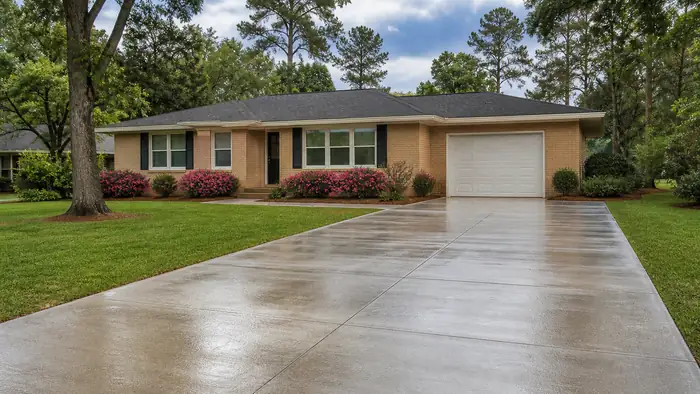
concrete slab repair completed by a local contractor at a buff-brick ranch home in Warner Robins, GA, after a rain shower.

Concrete Slab Repair

Before we fix a crack, we find out why it is there. Hairline shrinkage cracks get routed and sealed. Settled sections can often be lifted by injecting material underneath rather than tearing them out. Spalled or scaling surfaces are ground back to sound concrete and resurfaced with a bonded overlay. Where the base has washed out or the steel has rusted through, a patch only buys time, and we say so plainly when a section should come out and be poured again.

Our Concrete Process, Step by Step

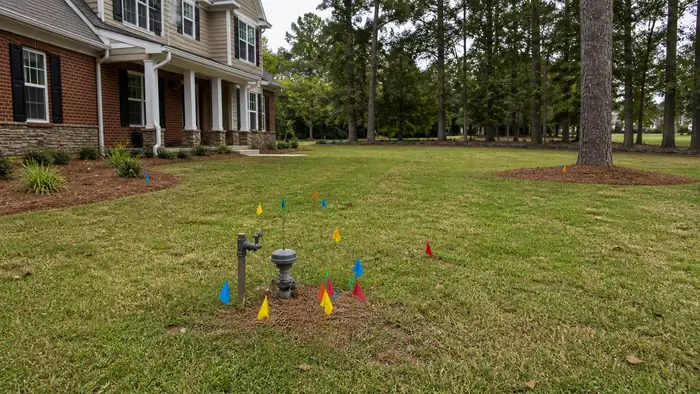
Utility flags mark buried lines before digging starts. at a brick-and-siding two-story home in Warner Robins, GA, under an overcast sky.

Step 1: Site Assessment

Before anything is drawn up, we walk the property with a level and a probe. Houston County has about 212 feet of local relief within a few miles, and it changes from block to block, so every site is graded and tested on its own. We look at where water runs now, where it will run once the slab is down, what traffic the surface will carry, and what is in the way: old concrete, roots, buried utilities. We handle the permit from there.

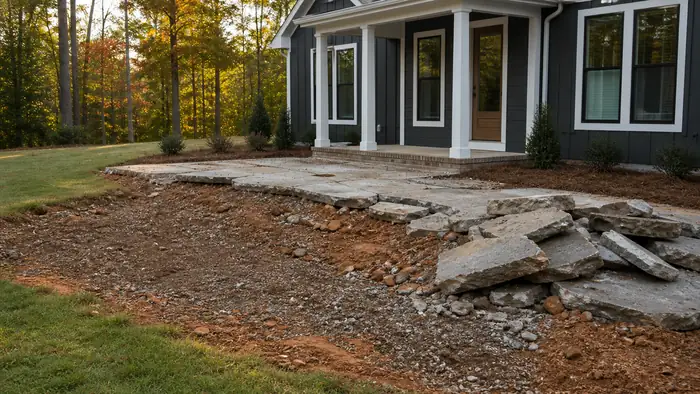
An old patio slab is broken up and hauled away. at a charcoal farmhouse-modern home in Warner Robins, GA, in early morning light.

Step 2: Site Preparation

Most slabs that fail were poured on bad ground. We strip topsoil and anything organic, cut to grade, and set the slope so water leaves the surface instead of sitting on it. Then comes a gravel base, placed in lifts and run with a plate compactor or roller until it stops moving underfoot. Soft spots get dug out and replaced, not covered over. Where a slab meets a building, the fall is set away from the wall.

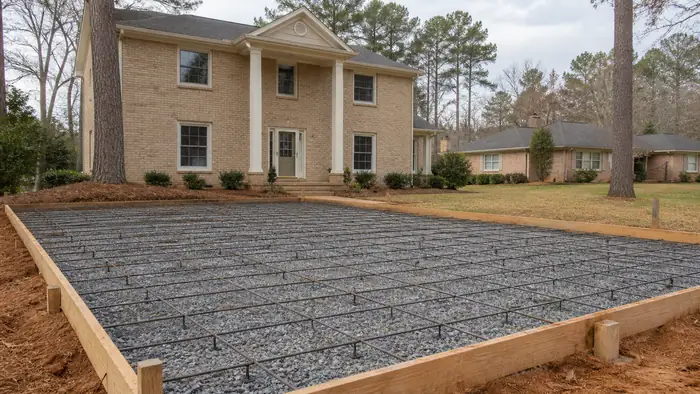
A worker ties rebar into a grid before a residential pour. at a tan-brick colonial in Warner Robins, GA, under bright midday cloud.

Step 3: Forming & Reinforcement

Forms go in next: straight lumber or steel, staked tight and set to string lines so the finished height is right at every corner. Reinforcement follows the load. Sidewalks and light pads usually take welded wire mesh, while parking areas, loading aprons and dumpster pads get rebar tied on a grid. Either way it sits on chairs so it lands mid-depth in the slab, not on the bottom where it does nothing. Edges get thickened where vehicles cross.

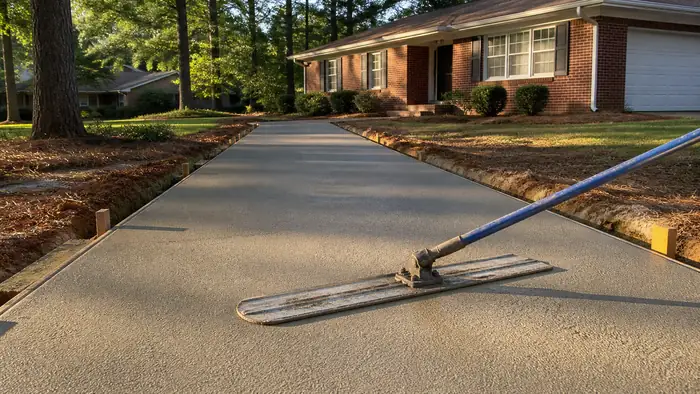
A bull float smooths a residential walkway surface after screeding. at a red-brick ranch home in Warner Robins, GA, in late afternoon light.

Step 4: Pouring

Concrete arrives from the plant batched for the job, with the mix chosen for the slab rather than for whatever flows easiest. We check it at the chute. Adding water on site makes it easier to place and weaker at the surface, so we don't do it. The pour goes in continuously, raked into the corners, consolidated so there are no voids against the forms, and screeded to the grade we set. On larger commercial slabs, the sequence is planned so no section sits waiting.

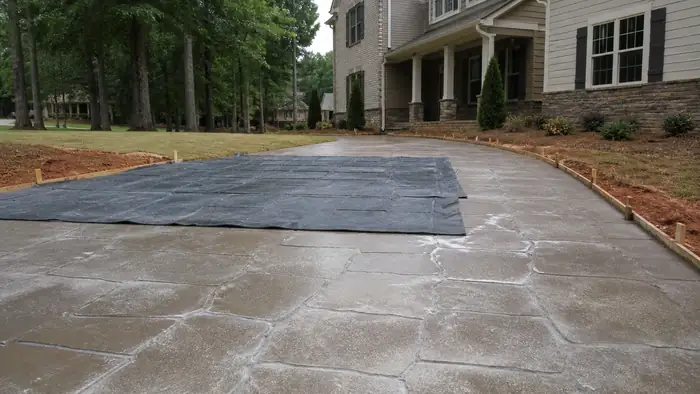
Stamping mats are pressed into a patio surface to imprint a pattern. at a brick-and-siding two-story home in Warner Robins, GA, under an overcast sky.

Step 5: Finishing

Timing decides the finish. We float once the bleed water is gone, then trowel or broom depending on what the surface is for. Walkways and ramps get a broom texture for traction in the wet. Interior floors get a hard trowel. Decorative work, stamped or colored, happens in this same window. Control joints are cut or tooled at planned spacing so the slab cracks where we tell it to, along a straight line, instead of wandering across the middle.

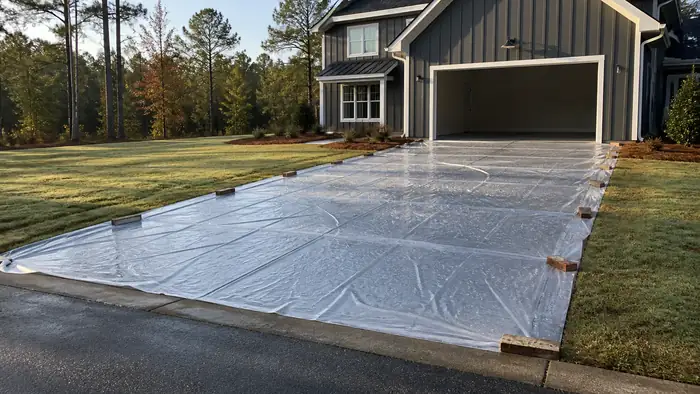
Plastic sheeting covers a curing driveway slab. at a charcoal farmhouse-modern home in Warner Robins, GA, in early morning light.

Step 6: Curing

Here is the step people rush. Concrete keeps gaining strength for weeks, and it needs moisture to do it. With average daily highs around 77°F, a bare slab dries at the surface too fast, which shows up later as dusting, scaling and fine cracking. We apply a curing compound or keep the surface covered and damp through the early days. Foot traffic comes first. Cars and delivery trucks wait until the slab is ready for them, and we tell you when that is.

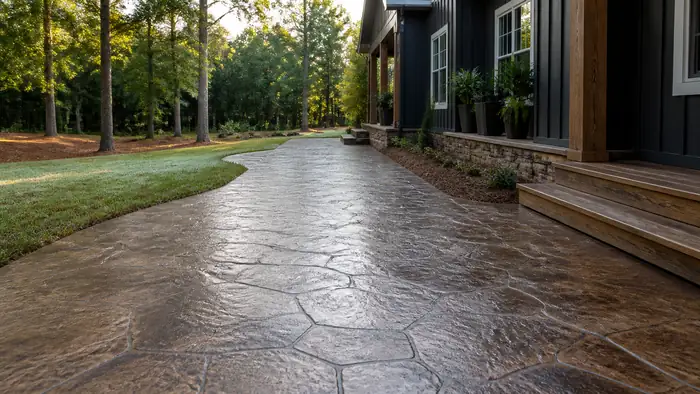
A finished stamped surface shows a glossy sealed sheen. at a charcoal farmhouse-modern home in Warner Robins, GA, in early morning light.

Step 7: Sealing

A good sealer is what keeps the surface looking the way it did the day it was finished. With about 44" of rain a year, water is the thing we are keeping out. Broom-finished driveways and walks get a penetrating sealer that soaks in and leaves no film. Stamped and colored work gets an acrylic sealer that holds the color and brings it up. The concrete has to be clean and dry first, and the sealer goes on thin, in even coats, never puddled.

Top Decorative Concrete Styles for Warner Robins Homes

Stamped concrete is the style most homeowners picture first for a patio or driveway. An ashlar slate or cobblestone pattern, pressed into the slab while it is still workable, gives the look of cut stone without the loose joints that let weeds through. Exposed aggregate is the other one worth a look: we wash back the top layer to bring out the stone underneath, and that finish holds its grip underfoot. In a town where the median house was built in 1989, the brick and trim often already carry the color. On those homes a plain broom finish with a stained border can do more than a busy pattern.

Color goes in two ways. Integral color is mixed into the concrete before it arrives, so a chip or scrape shows the same shade underneath, while a surface stain wears faster where tires turn. With about 44 inches of rain a year, we watch sealer and texture closely on stamped work, because a glossy seal over a deep pattern gets slick when wet. On walkways and pool decks we add grit to the sealer. Slope matters too. The ground here is hilly and changes from block to block, so we grade and test each site before forming, then set the fall so water runs off the pattern instead of sitting in it.

What Decides the Price of Commercial Concrete Construction

Most of what a concrete job costs is settled before the first yard is poured. It sits in what is already on the ground, how a truck can reach the work, and what the slab has to carry once it cures. You can check nearly all of it yourself with a slow walk around the property.

What changes the priceWhich wayWhy
Old concrete or asphalt where the new slab goescosts moreIt has to be broken out, loaded and hauled off before we can grade, and thick or reinforced slabs take longer to break.
A clear path for the mixer to back up to the formscosts lessWe pour straight off the chute. When a truck cannot get close, we bring in a pump or move concrete by wheelbarrow.
Slope across the pour areacosts moreGround here is hilly and changes block to block, so a sloped site needs cut, fill and sometimes a formed edge before it sits level.
Water that pools where the slab will sitcosts moreWith about 44 inches of rain a year, we add base, drains or regrading so the slab does not stay wet underneath.
Slab thickness for the loadthicker costs moreDelivery trucks, dumpsters and forklifts need more depth than foot traffic, which means more concrete and more base.
Rebar instead of wire meshcosts moreA tied rebar grid takes more steel and more hours, but heavy loads and wide pours call for it.
Buried lines, stumps or soft groundcosts moreUtilities get located and worked around, and soft spots are dug out and replaced with compacted stone.

When you compare bids, read what each one includes rather than the total at the bottom. Look for slab thickness, reinforcement type and spacing, base depth, who removes the old material, and where the control joints go. A bid that leaves those out is not cheaper. It is quoting a different job.

Common Commercial Concrete Construction Questions From Warner Robins Owners

What specific areas and neighborhoods do you serve outside of Warner Robins?

Our work runs through the towns and back roads around Warner Robins, well past the city limits. That means older subdivisions, newer ones still filling in, commercial lots along the main roads, and rural properties at the end of long gravel drives. A site out in the country gets the same crew, the same mix and the same attention as one a few streets over. Call with the address if you want to confirm we cover it.

What areas beyond Warner Robins does Warner Robins Premier Concrete serve?

Beyond the city, we cover the surrounding towns, and we don't keep tiers or favorites among them. A retail pad in Perry is staffed, formed and poured exactly the way one inside Warner Robins would be. Distance doesn't change how we compact the base, place the steel or cure the slab. Travel is part of the job. It is never a reason to cut a corner on the work itself.

How deep do commercial foundations need to be in Warner Robins?

Depth comes from the building, not a rule of thumb. Footing depth and width are set by the structural design: what the walls and roof weigh, what the floor has to carry, and what the ground underneath can bear. The ground here is hilly, with 212 feet of local relief within a few miles, and it changes from block to block. So every site is graded and tested on its own before we dig. We handle the permit.

How does the climate in Warner Robins affect patio longevity and what does your company do to mitigate these effects?

Rain is the bigger factor. The area sees about 44 inches a year, with average daily highs around 77°F and lows around 57°F. Water that sits on a patio, or runs under its edge and softens the base, is what shortens its life. We slope every patio away from the building, set it on a compacted base, add reinforcement, and cut control joints so any cracking happens where we choose. Then we cure it properly and seal the surface.

What types of commercial projects does Warner Robins Premier Concrete handle?

Most of our commercial work is structural slabs and flatwork: building foundations, parking areas, sidewalks, curbs, ramps, loading pads and dumpster pads. Health care, education and retail are among the area's largest employers, so we build with that traffic in mind. Clinic entrances, school walkways and storefront lots all need even surfaces, sensible slopes and joints that won't catch a wheel or a heel. Decorative and stamped finishes work at building entries too.

What's the difference between acid stain and water-based stain?

Acid stain is a chemical reaction. It soaks into the concrete and reacts with the lime already in it, leaving mottled, variegated color in a fairly narrow range of browns, tans and muted greens. No two slabs come out alike. Water-based stain doesn't react; it settles into the pores and colors them, which gives a much wider palette, more even results and less odor while it goes on. Both need a sealer afterward.

Get a Free Estimate

Get Free Estimates

We warranty all of our work because we believe in what we do.

Tap to call +1 478-339-5356