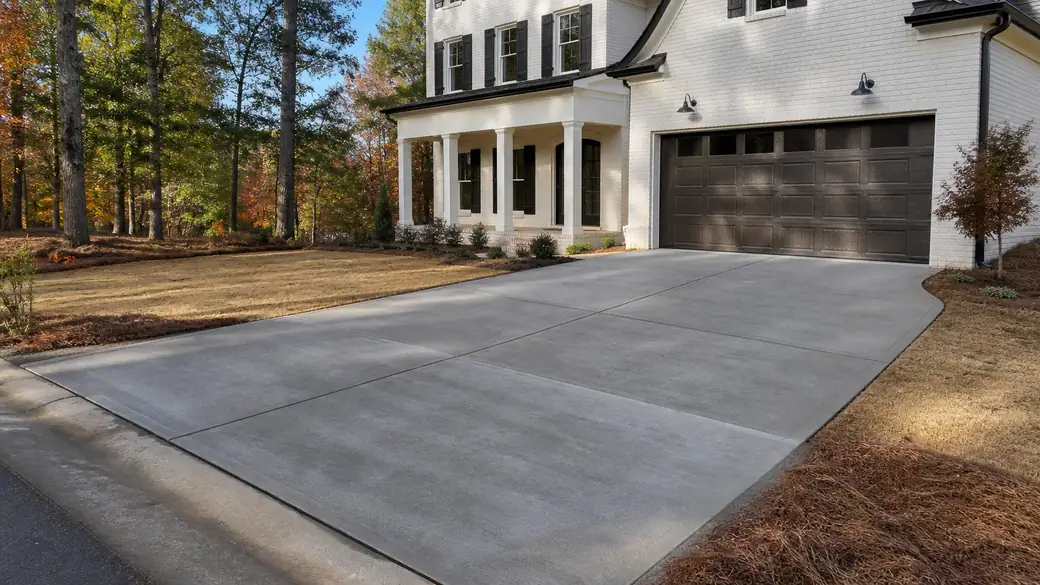
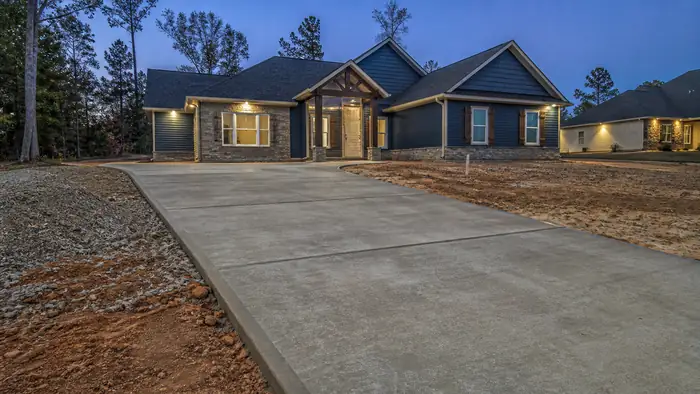
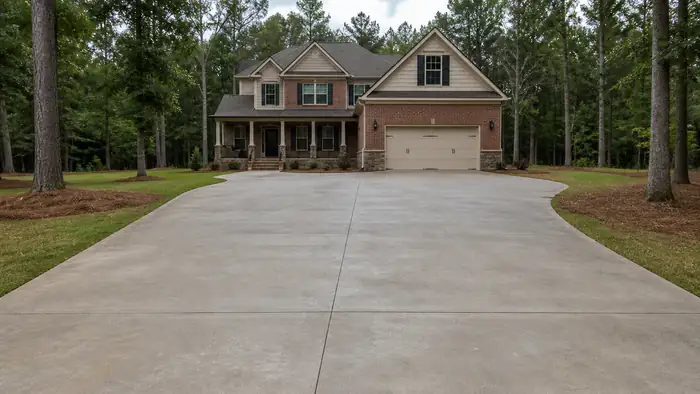
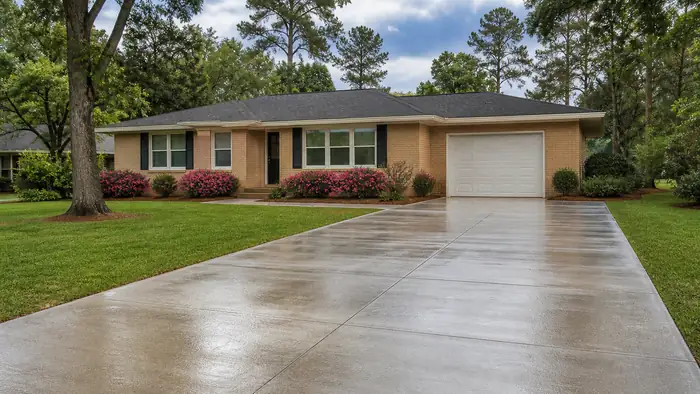
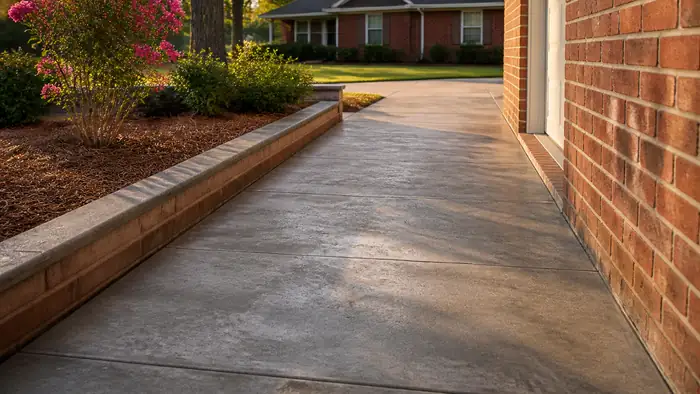
A concrete slab is the flat, load-bearing piece that everything else sits on: a shop floor, a carport, a patio off the back door, the pad under a storage building. In Unadilla we pour slabs for residential and commercial property, from a single backyard pad to the floor of a working building. The job is the same at any size. Get the ground right, set the forms true, place the right reinforcement, and finish the surface for what it will carry. Driveways and stamped or decorative work start the same way.
Most of the work happens before the truck arrives. We walk the site, mark out the slab, and dig out topsoil and anything soft until we reach ground that will hold. Then comes a compacted gravel base, forms staked to grade, and rebar or wire mesh set on chairs so it ends up inside the concrete instead of lying under it. On pour day we place, screed and float the slab, cut control joints, and finish it. After that it cures. Nobody drives on it early.
Cracks are where most slabs fail, and nearly all of them trace back to prep. A base that was never compacted settles. Mesh left lying on the dirt does nothing. Joints cut too shallow, or spaced too far apart, let the slab choose where to crack. Water is the other problem. This area gets about 44 inches of rain a year, so a slab needs a slight pitch and somewhere for runoff to go, not a low corner where it pools against a foundation wall. Those mistakes stay hidden for a season, then show.
Doing it right costs time more than anything else. It means an extra day on base work, the right thickness for the load rather than the thinnest pour that will set up, and waiting on the weather instead of racing it. It means reinforcement matched to what the slab will carry: a patio for chairs and a grill is not a pad for a truck or a loaded trailer. We would rather talk through those conditions on your property before a single form goes in. Call for a free estimate, and tell us what the slab has to hold.